


Demonstrating Empathy in Challenging Situations
- By Kathleen Stephany1
-
View Affiliations Hide Affiliations1 Full Time Nurse Educator in the Faculty of Health SciencesDouglas CollegeBC Canada
- Source: Cultivating Empathy: Inspiring Health Professionals to Communicate More Effectively (Revised Edition) , pp 125-150
- Publication Date: January 2022
- Language: English


Demonstrating Empathy in Challenging Situations, Page 1 of 1
< Previous page | Next page > /docserver/preview/fulltext/9789815036480/chapter-6-1.gif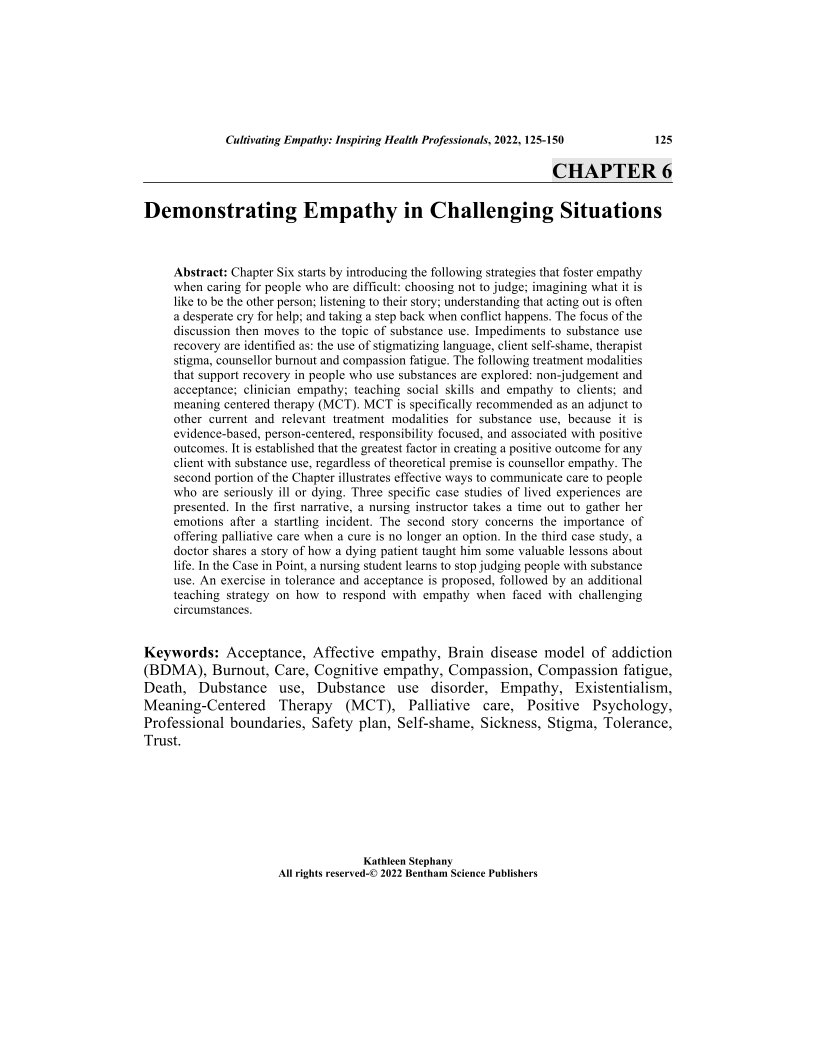
<div>Chapter Six starts by introducing the following strategies that foster empathy</div><div>when caring for people who are difficult: choosing not to judge; imagining what it is</div><div>like to be the other person; listening to their story; understanding that acting out is often</div><div>a desperate cry for help; and taking a step back when conflict happens. The focus of the</div><div>discussion then moves to the topic of substance use. Impediments to substance use</div><div>recovery are identified as: the use of stigmatizing language, client self-shame, therapist</div><div>stigma, counsellor burnout and compassion fatigue. The following treatment modalities</div><div>that support recovery in people who use substances are explored: non-judgement and</div><div>acceptance; clinician empathy; teaching social skills and empathy to clients; and</div><div>meaning centered therapy (MCT). MCT is specifically recommended as an adjunct to</div><div>other current and relevant treatment modalities for substance use, because it is</div><div>evidence-based, person-centered, responsibility focused, and associated with positive</div><div>outcomes. It is established that the greatest factor in creating a positive outcome for any</div><div>client with substance use, regardless of theoretical premise is counsellor empathy. The</div><div>second portion of the Chapter illustrates effective ways to communicate care to people</div><div>who are seriously ill or dying. Three specific case studies of lived experiences are</div><div>presented. In the first narrative, a nursing instructor takes a time out to gather her</div><div>emotions after a startling incident. The second story concerns the importance of</div><div>offering palliative care when a cure is no longer an option. In the third case study, a</div><div>doctor shares a story of how a dying patient taught him some valuable lessons about</div><div>life. In the Case in Point, a nursing student learns to stop judging people with substance</div><div>use. An exercise in tolerance and acceptance is proposed, followed by an additional</div><div>teaching strategy on how to respond with empathy when faced with challenging</div><div>circumstances.</div>
-
From This Site
/content/books/9789815036480.chapter-6dcterms_subject,pub_keyword-contentType:Journal -contentType:Figure -contentType:Table -contentType:SupplementaryData105
