


How to Be Empathetic?
- By Kathleen Stephany1
-
View Affiliations Hide Affiliations1 Full Time Nurse Educator in the Faculty of Health SciencesDouglas CollegeBC Canada
- Source: Cultivating Empathy: Inspiring Health Professionals to Communicate More Effectively (Revised Edition) , pp 97-124
- Publication Date: January 2022
- Language: English


How to Be Empathetic?, Page 1 of 1
< Previous page | Next page > /docserver/preview/fulltext/9789815036480/chapter-5-1.gif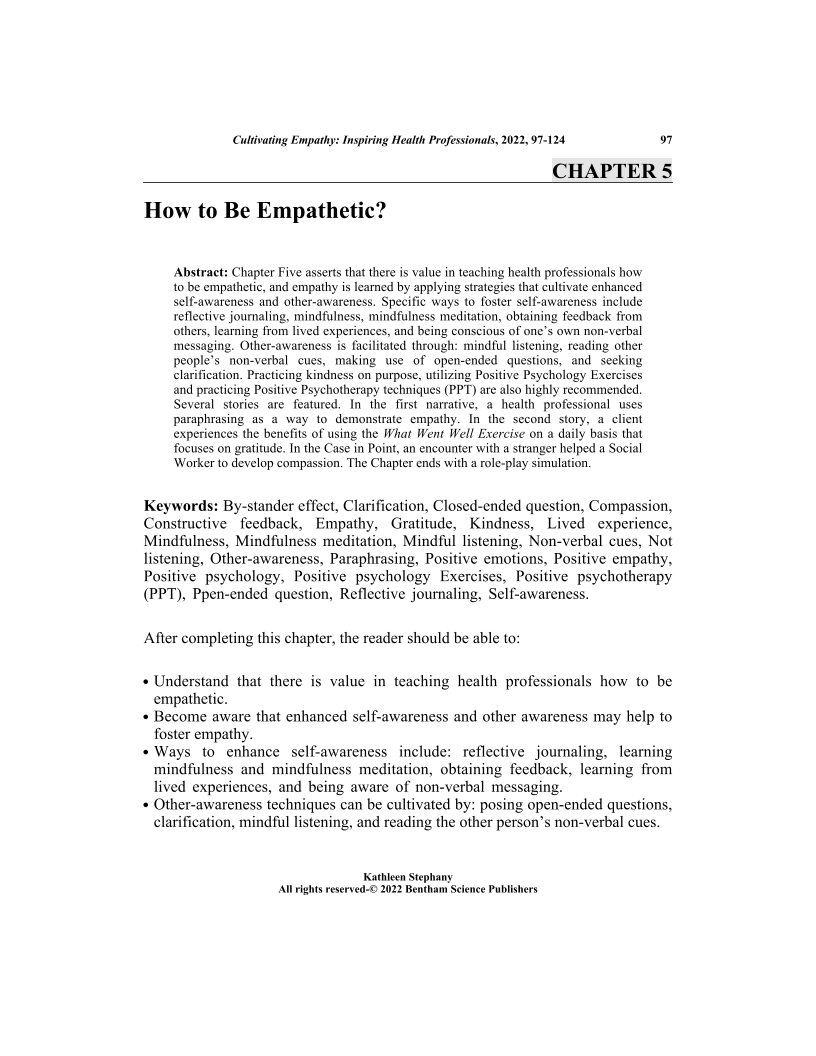
<div>Chapter Five asserts that there is value in teaching health professionals how</div><div>to be empathetic, and empathy is learned by applying strategies that cultivate enhanced</div><div>self-awareness and other-awareness. Specific ways to foster self-awareness include</div><div>reflective journaling, mindfulness, mindfulness meditation, obtaining feedback from</div><div>others, learning from lived experiences, and being conscious of one's own non-verbal</div><div>messaging. Other-awareness is facilitated through: mindful listening, reading other</div><div>people's non-verbal cues, making use of open-ended questions, and seeking</div><div>clarification. Practicing kindness on purpose, utilizing Positive Psychology Exercises</div><div>and practicing Positive Psychotherapy techniques (PPT) are also highly recommended.</div><div>Several stories are featured. In the first narrative, a health professional uses</div><div>paraphrasing as a way to demonstrate empathy. In the second story, a client</div><div>experiences the benefits of using the What Went Well Exercise on a daily basis that</div><div>focuses on gratitude. In the Case in Point, an encounter with a stranger helped a Social</div><div>Worker to develop compassion. The Chapter ends with a role-play simulation. </div>
-
From This Site
/content/books/9789815036480.chapter-5dcterms_subject,pub_keyword-contentType:Journal -contentType:Figure -contentType:Table -contentType:SupplementaryData105
