


Synthesis and Applications of Small Fluorescent Molecules
- Authors: Avni Sharma1, Sakshi Rana2, Monika Mangla3, Bala Dhiman4, Ajay Sharma5, Atul P. Singh6, Rajesh K. Yadav7
-
View Affiliations Hide Affiliations1 Department of Chemistry, UIS, Chandigarh University, Mohali, Punjab, India 2 Department of Chemistry, UIS, Chandigarh University, Mohali, Punjab, India 3 Department of Chemistry, UIS, Chandigarh University, Mohali, Punjab, India 4 Department of Chemistry, UIS, Chandigarh University, Mohali, Punjab, India 5 Department of Chemistry, UIS, Chandigarh University, Mohali, Punjab, India 6 Department of Chemistry, UIS, Chandigarh University, Mohali, Punjab, India 7 Department of Chemistry and Environmental Science, Madan Mohan Malaviya University of Technology, Gorakhpur, U.P., India
- Source: Advances in Organic Synthesis: Volume 15 , pp 151-183
- Publication Date: October 2021
- Language: English


Synthesis and Applications of Small Fluorescent Molecules, Page 1 of 1
< Previous page | Next page > /docserver/preview/fulltext/9789814998482/chapter-4-1.gif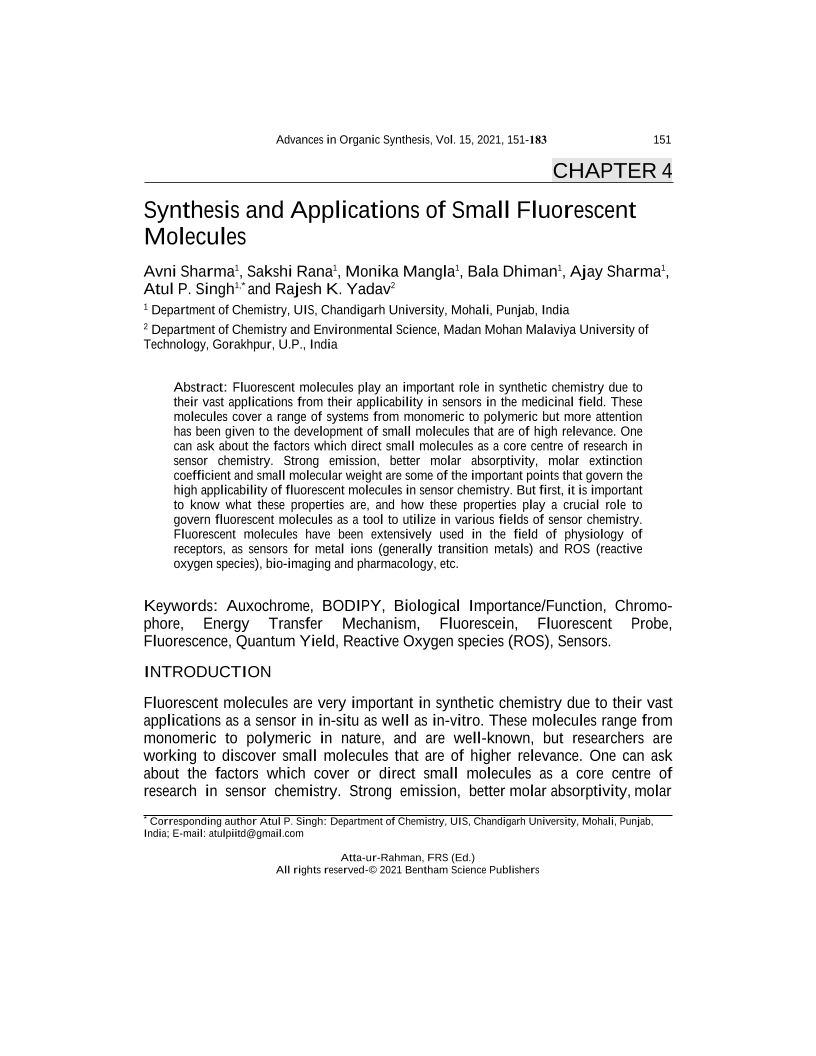
Fluorescent molecules play an important role in synthetic chemistry due to their vast applications from their applicability in sensors in the medicinal field. These molecules cover a range of systems from monomeric to polymeric but more attention has been given to the development of small molecules that are of high relevance. One can ask about the factors which direct small molecules as a core centre of research in sensor chemistry. Strong emission, better molar absorptivity, molar extinction coefficient and small molecular weight are some of the important points that govern the high applicability of fluorescent molecules in sensor chemistry. But first, it is important to know what these properties are, and how these properties play a crucial role to govern fluorescent molecules as a tool to utilize in various fields of sensor chemistry. Fluorescent molecules have been extensively used in the field of physiology of receptors, as sensors for metal ions (generally transition metals) and ROS (reactive oxygen species), bio-imaging and pharmacology, etc.
-
From This Site
/content/books/9789814998482.chapter-4dcterms_subject,pub_keyword-contentType:Journal -contentType:Figure -contentType:Table -contentType:SupplementaryData105
