


Gold and Silver Nanoparticle Synthesis by Pyrus and Eurya: Environment-Friendly Therapeutic Agents
- Authors: Dhara Shukla1, Padma S. Vankar2
-
View Affiliations Hide Affiliations1 Shree R. International, Chakeri II, Kanpur, India 2 Bombay Textile Research Association, Mumbai, India
- Source: Medicinal and Environmental Chemistry: Experimental Advances and Simulations (Part II) , pp 220-237
- Publication Date: September 2021
- Language: English


Gold and Silver Nanoparticle Synthesis by Pyrus and Eurya: Environment-Friendly Therapeutic Agents, Page 1 of 1
< Previous page | Next page > /docserver/preview/fulltext/9789814998307/chapter-10-1.gif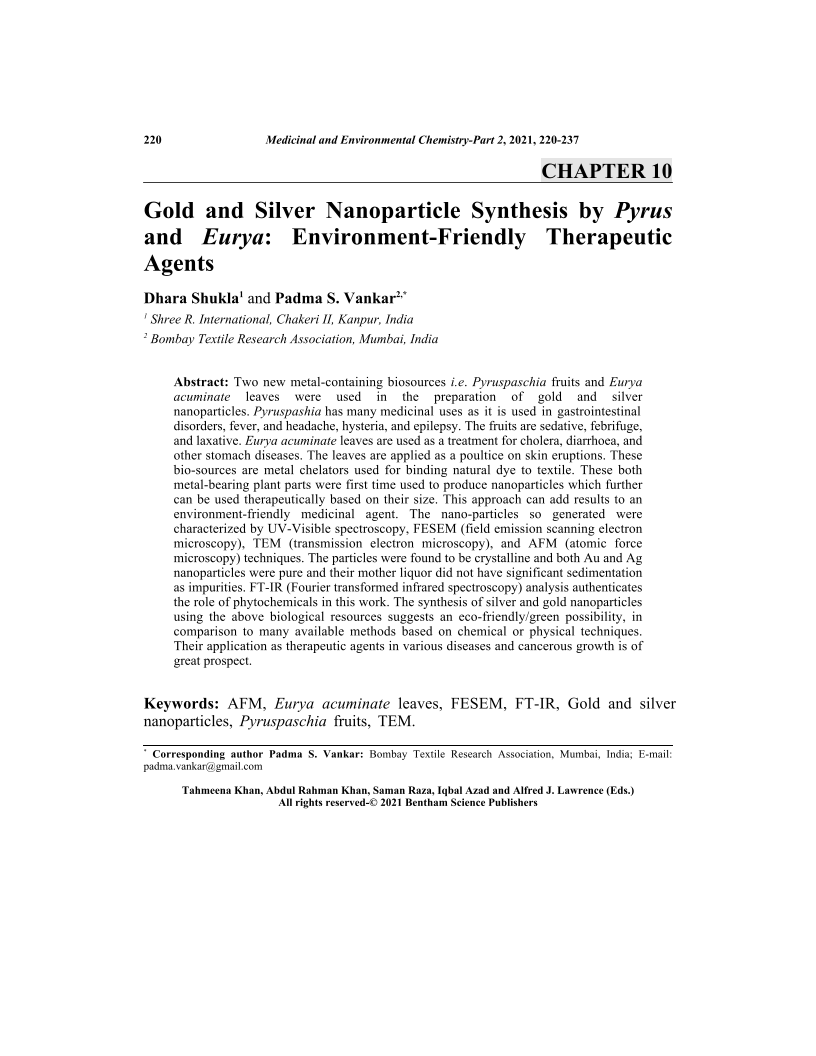
Two new metal-containing biosources i.e. Pyruspaschia fruits and Eurya acuminate leaves were used in the preparation of gold and silver nanoparticles.Pyruspashia has many medicinal uses as it is used in gastrointestinal disorders, fever, and headache, hysteria, and epilepsy. The fruits are sedative, febrifuge, and laxative. Eurya acuminate leaves are used as a treatment for cholera, diarrhoea, and other stomach diseases. The leaves are applied as a poultice on skin eruptions. These bio-sources are metal chelators used for binding natural dye to textile. These both metal-bearing plant parts were first time used to produce nanoparticles which further can be used therapeutically based on their size. This approach can add results to an environment-friendly medicinal agent. The nano-particles so generated were characterized by UV-Visible spectroscopy, FESEM (field emission scanning electron microscopy), TEM (transmission electron microscopy), and AFM (atomic force microscopy) techniques. The particles were found to be crystalline and both Au and Ag nanoparticles were pure and their mother liquor did not have significant sedimentation as impurities. FT-IR (Fourier transformed infrared spectroscopy) analysis authenticates the role of phytochemicals in this work. The synthesis of silver and gold nanoparticles using the above biological resources suggests an eco-friendly/green possibility, in comparison to many available methods based on chemical or physical techniques. Their application as therapeutic agents in various diseases and cancerous growth is of great prospect.
-
From This Site
/content/books/9789814998307.chapter-10dcterms_subject,pub_keyword-contentType:Journal -contentType:Figure -contentType:Table -contentType:SupplementaryData105
