


Osteosarcoma Cell Culture and Maintenance to Detect the Apoptotic Effect of Some Promising Compounds by Potent Markers viz. DNA
- Authors: Asif Jafri1, Juhi Rais2, Sudhir Kumar3, Md Arshad4
-
View Affiliations Hide Affiliations1 Molecular Endocrinology Lab, Department of Zoology, University of Lucknow, Lucknow, India 2 Molecular Endocrinology Lab, Department of Zoology, University of Lucknow, Lucknow, India 3 Molecular Endocrinology Lab, Department of Zoology, University of Lucknow, Lucknow, India 4 Molecular Endocrinology Lab, Department of Zoology, University of Lucknow, Lucknow, India
- Source: Protocols used in Molecular Biology , pp 114-119
- Publication Date: January 2020
- Language: English


Osteosarcoma Cell Culture and Maintenance to Detect the Apoptotic Effect of Some Promising Compounds by Potent Markers viz. DNA, Page 1 of 1
< Previous page | Next page > /docserver/preview/fulltext/9789811439315/chapter-11-1.gif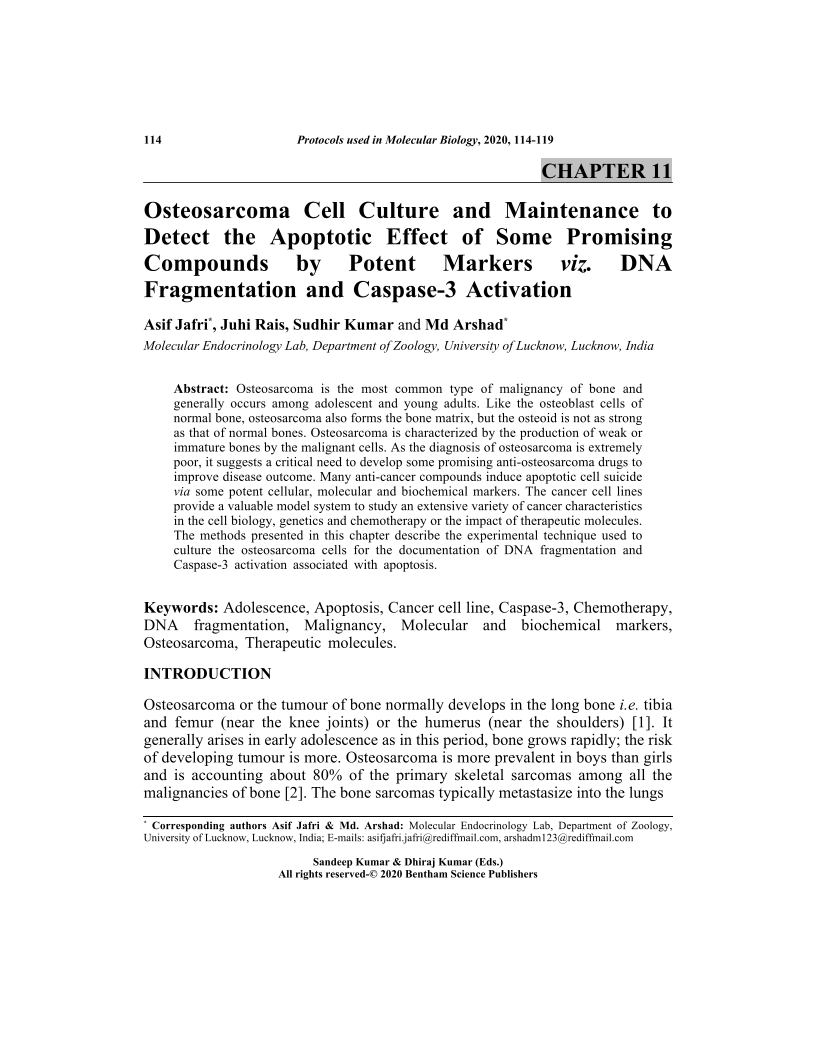
Osteosarcoma is the most common type of malignancy of bone and generally occurs among adolescent and young adults. Like the osteoblast cells of normal bone, osteosarcoma also forms the bone matrix, but the osteoid is not as strong as that of normal bones. Osteosarcoma is characterized by the production of weak or immature bones by the malignant cells. As the diagnosis of osteosarcoma is extremely poor, it suggests a critical need to develop some promising anti-osteosarcoma drugs to improve disease outcome. Many anti-cancer compounds induce apoptotic cell suicide via some potent cellular, molecular and biochemical markers. The cancer cell lines provide a valuable model system to study an extensive variety of cancer characteristics in the cell biology, genetics and chemotherapy or the impact of therapeutic molecules. The methods presented in this chapter describe the experimental technique used to culture the osteosarcoma cells for the documentation of DNA fragmentation and Caspase-3 activation associated with apoptosis.
-
From This Site
/content/books/9789811439315.chapter-11dcterms_subject,pub_keyword-contentType:Journal -contentType:Figure -contentType:Table -contentType:SupplementaryData105
