


Biochemical Mechanisms of Aluminium and Other Metals Exposure, Their Brain Entry Mechanisms, Effects on Blood Brain Barrier and Important Pharmacokinetic Parameters in Neurological Disorders
- Authors: Sara Ishaq1, Amna Liaqat2, Armeen Hameed3, Touqeer Ahmed4
-
View Affiliations Hide Affiliations1 Neurobiology Laboratory, Department of Healthcare Biotechnology, Atta ur-Rahman School of Applied Biosciences, National University of Sciences and Technology, Sector H-12, Islamabad 44000, Pakistan 2 Neurobiology Laboratory, Department of Healthcare Biotechnology, Atta-ur-Rahman School of Applied Biosciences, National University of Sciences and Technology, Sector H-12, Islamabad 44000, Pakistan 3 Neurobiology Laboratory, Department of Healthcare Biotechnology, Atta-ur-Rahman School of Applied Biosciences, National University of Sciences and Technology, Sector H-12, Islamabad 44000, Pakistan 4 Neurobiology Laboratory, Department of Healthcare Biotechnology, Atta-ur-Rahman School of Applied Biosciences, National University of Sciences and Technology, Sector H-12, Islamabad 44000, Pakistan
- Source: Biochemical Mechanisms of Aluminium Induced Neurological Disorders , pp 1-32
- Publication Date: December 2021
- Language: English


Biochemical Mechanisms of Aluminium and Other Metals Exposure, Their Brain Entry Mechanisms, Effects on Blood Brain Barrier and Important Pharmacokinetic Parameters in Neurological Disorders, Page 1 of 1
< Previous page | Next page > /docserver/preview/fulltext/9781681088839/chapter-1-1.gif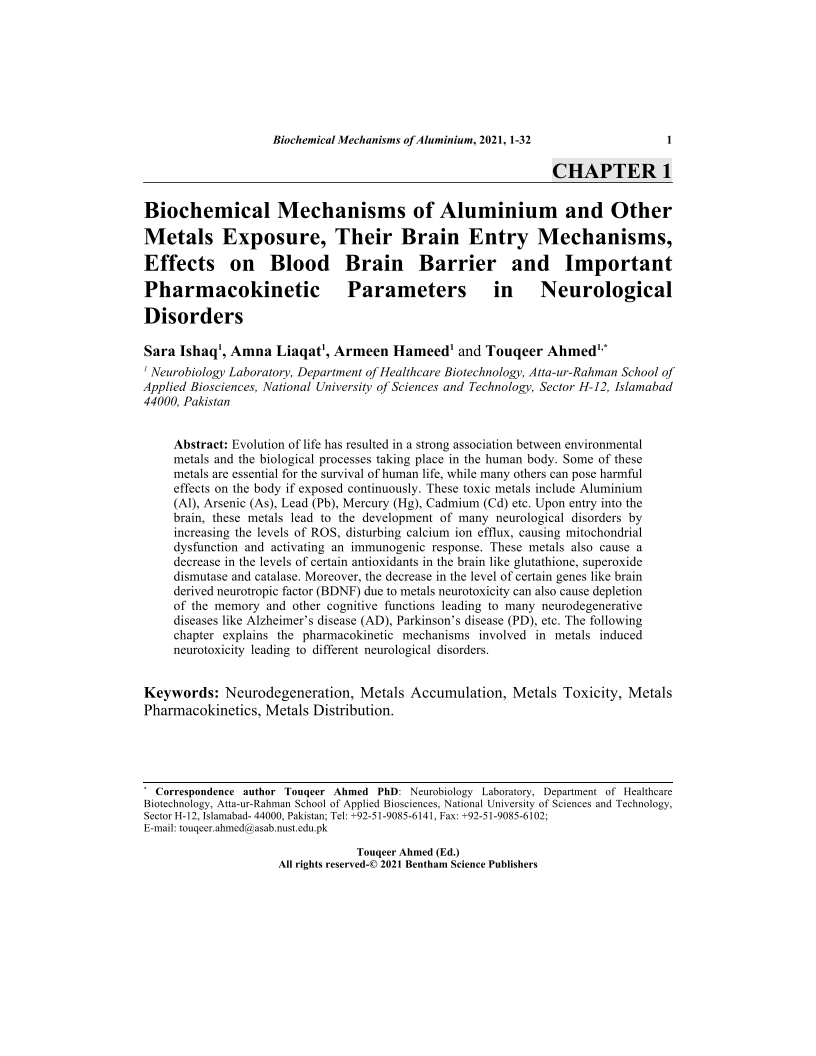
Evolution of life has resulted in a strong association between environmental metals and the biological processes taking place in the human body. Some of these metals are essential for the survival of human life, while many others can pose harmful effects on the body if exposed continuously. These toxic metals include Aluminium (Al), Arsenic (As), Lead (Pb), Mercury (Hg), Cadmium (Cd) etc. Upon entry into the brain, these metals lead to the development of many neurological disorders by increasing the levels of ROS, disturbing calcium ion efflux, causing mitochondrial dysfunction and activating an immunogenic response. These metals also cause a decrease in the levels of certain antioxidants in the brain like glutathione, superoxide dismutase and catalase. Moreover, the decrease in the level of certain genes like brain derived neurotropic factor (BDNF) due to metals neurotoxicity can also cause depletion of the memory and other cognitive functions leading to many neurodegenerative diseases like Alzheimers disease (AD), Parkinsons disease (PD), etc. The following chapter explains the pharmacokinetic mechanisms involved in metals induced neurotoxicity leading to different neurological disorders.
-
From This Site
/content/books/9781681088839.chapter-1dcterms_subject,pub_keyword-contentType:Journal -contentType:Figure -contentType:Table -contentType:SupplementaryData105
