


Post-Translational Modifications: Host Defence Mechanism, Pathogenic Weapon, and Emerged Target of Anti-Infective Drugs
- Authors: Maria Amprazi1, Anastasia Tomatsidou2, Dimitra Paliogianni3, Vasiliki E. Fadouloglou4
-
View Affiliations Hide Affiliations1 Institute of Molecular Biology and Biotechnology, Foundation of Research and TechnologyHellas, Heraklion, Crete, Greece 2 Howard Taylor Ricketts Laboratory, Argonne National Laboratory, Lemont, Illinois, United States 3 Institute of Molecular Cell and Systems Biology, College of Medical, Veterinary & Life Sciences, University of Glasgow, Glasgow G12 8QQ, United Kingdom 4 Department of Molecular Biology and Genetics, Democritus University of Thrace, Dragana University Campus, Alexandroupolis 68100, Evros, Greece
- Source: Frontiers in Anti-Infective Drug Discovery: Volume 9 , pp 25-122
- Publication Date: May 2021
- Language: English


Post-Translational Modifications: Host Defence Mechanism, Pathogenic Weapon, and Emerged Target of Anti-Infective Drugs, Page 1 of 1
< Previous page | Next page > /docserver/preview/fulltext/9781681088297/chapter-2-1.gif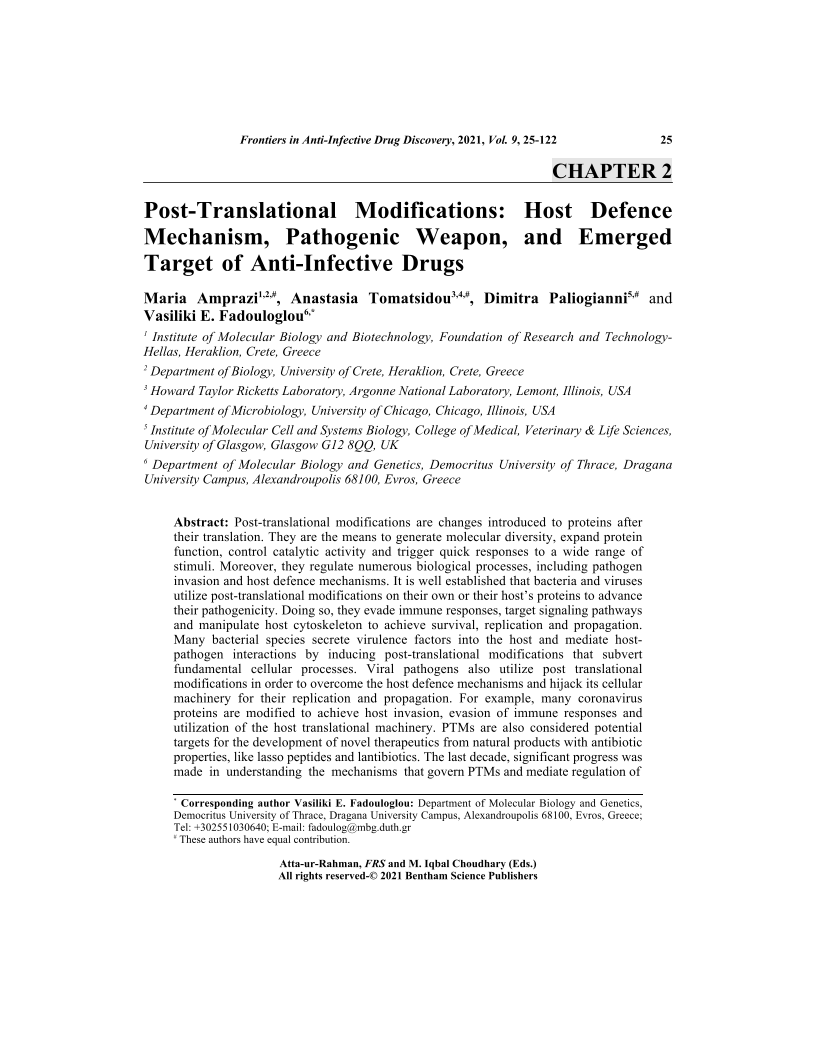
Post-translational modifications are changes introduced to proteins after their translation. They are the means to generate molecular diversity, expand protein function, control catalytic activity and trigger quick responses to a wide range of stimuli. Moreover, they regulate numerous biological processes, including pathogen invasion and host defence mechanisms. It is well established that bacteria and viruses utilize post-translational modifications on their own or their hosts proteins to advance their pathogenicity. Doing so, they evade immune responses, target signaling pathways and manipulate host cytoskeleton to achieve survival, replication and propagation. Many bacterial species secrete virulence factors into the host and mediate hostpathogen interactions by inducing post-translational modifications that subvert fundamental cellular processes. Viral pathogens also utilize post translational modifications in order to overcome the host defence mechanisms and hijack its cellular machinery for their replication and propagation. For example, many coronavirus proteins are modified to achieve host invasion, evasion of immune responses and utilization of the host translational machinery. PTMs are also considered potential targets for the development of novel therapeutics from natural products with antibiotic properties, like lasso peptides and lantibiotics. The last decade, significant progress was made in understanding the mechanisms that govern PTMs and mediate regulation of protein structure and function. This urges the identification of relevant molecular targets, the design of specific drugs and the discovery of PTM-based medicine. Therefore, PTMs emerge as a highly promising field for the investigation and discovery of new therapeutics for many infectious diseases.
-
From This Site
/content/books/9781681088297.chapter-2dcterms_subject,pub_keyword-contentType:Journal -contentType:Figure -contentType:Table -contentType:SupplementaryData105
