


The Use of Nanocatalysts in the Synthesis of Heterocycles: A Contemporary Approach
- Authors: Sharoni Gupta, Chetna Ameta, Kiran Meghwal, Rakshit Ameta, Pinki B. Punjabi5
-
View Affiliations Hide Affiliations5 Department of Chemistry, M. L. Sukhadia University, Udaipur 313002 (Rajasthan), India.
- Source: Advances in Organic Synthesis: Volume 11 , pp 108-155
- Publication Date: October 2018
- Language: English


The Use of Nanocatalysts in the Synthesis of Heterocycles: A Contemporary Approach, Page 1 of 1
< Previous page | Next page > /docserver/preview/fulltext/9781681087474/chapter-3-1.gif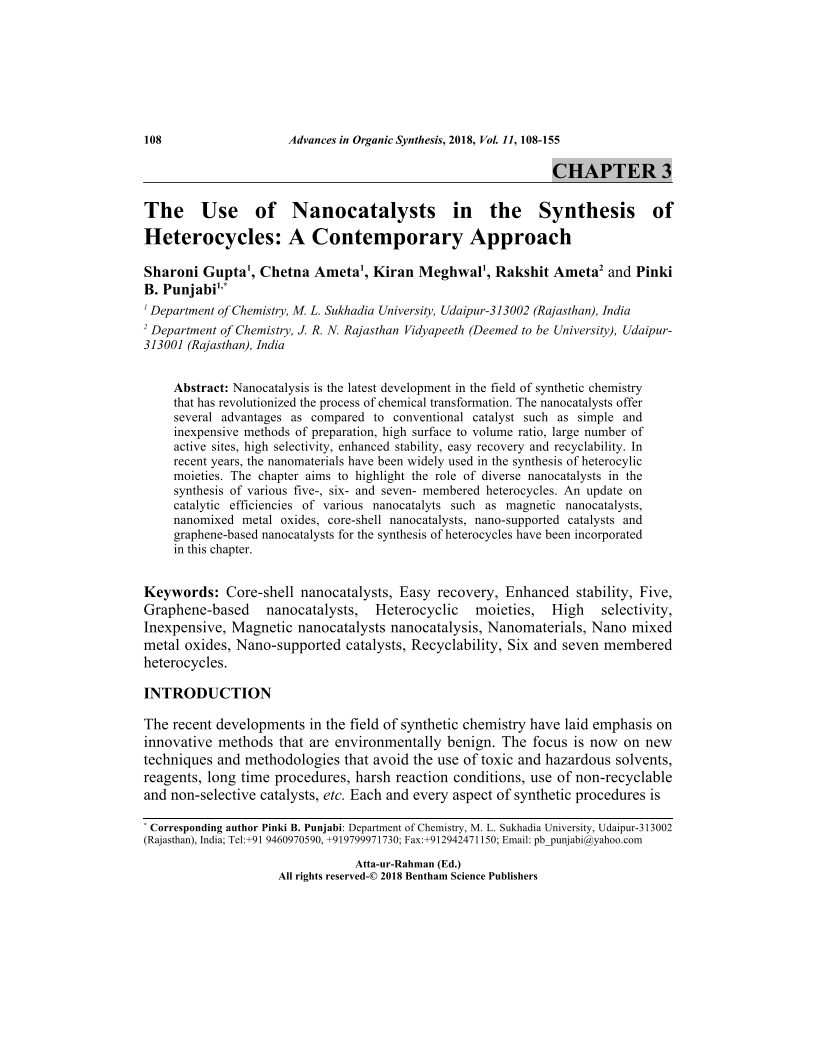
Nanocatalysis is the latest development in the field of synthetic chemistry that has revolutionized the process of chemical transformation. The nanocatalysts offer several advantages as compared to conventional catalyst such as simple and inexpensive methods of preparation, high surface to volume ratio, large number of active sites, high selectivity, enhanced stability, easy recovery and recyclability. In recent years, the nanomaterials have been widely used in the synthesis of heterocylic moieties. The chapter aims to highlight the role of diverse nanocatalysts in the synthesis of various five-, six- and seven- membered heterocycles. An update on catalytic efficiencies of various nanocatalyts such as magnetic nanocatalysts, nanomixed metal oxides, core-shell nanocatalysts, nano-supported catalysts and graphene-based nanocatalysts for the synthesis of heterocycles have been incorporated in this chapter.
-
From This Site
/content/books/9781681087474.chapter-3dcterms_subject,pub_keyword-contentType:Journal -contentType:Figure -contentType:Table -contentType:SupplementaryData105
