


Stereoselective Methodologies for the Synthesis of Acyclic Polyisoprenoids
- By Didier Desmaele1
-
View Affiliations Hide Affiliations1 Institut Galien Paris Sud, UMR 8612, CNRS, Universite Paris-Saclay, Faculte de Pharmacie, Chatenay-Malabry, France.
- Source: Advances in Organic Synthesis: Volume 12 , pp 1-80
- Publication Date: December 2018
- Language: English


Stereoselective Methodologies for the Synthesis of Acyclic Polyisoprenoids, Page 1 of 1
< Previous page | Next page > /docserver/preview/fulltext/9781681086804/chapter-1-1.gif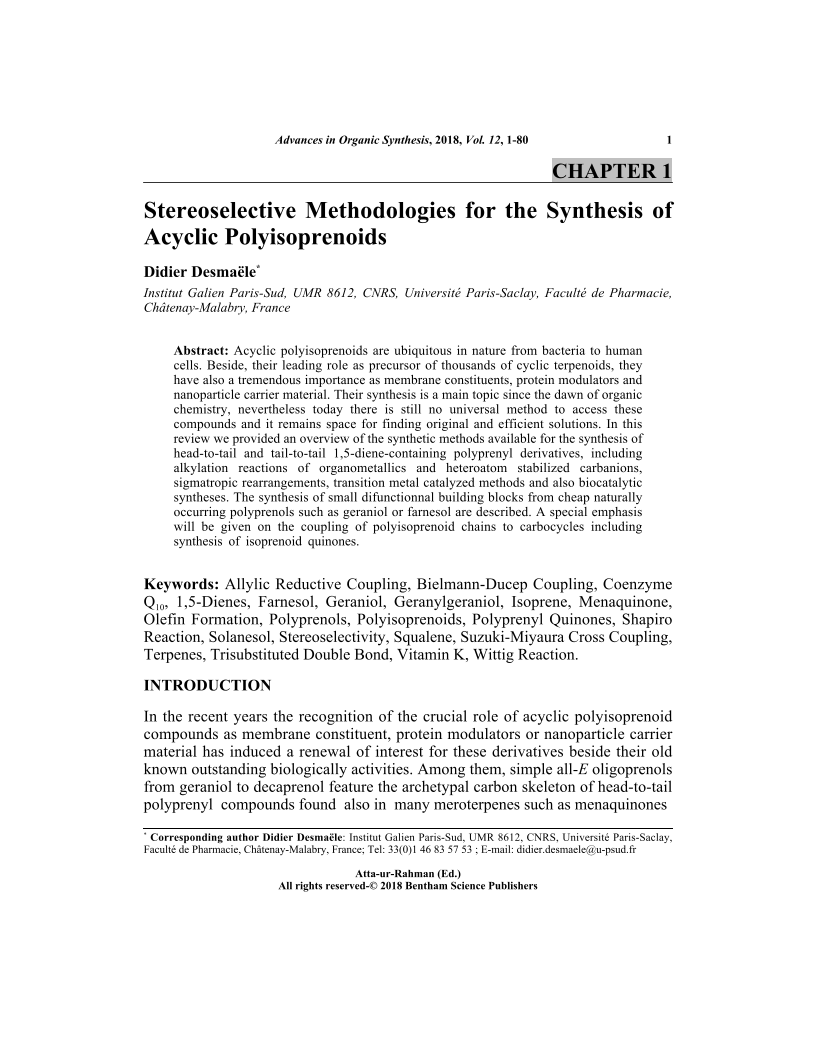
Acyclic polyisoprenoids are ubiquitous in nature from bacteria to human cells. Beside, their leading role as precursor of thousands of cyclic terpenoids, they have also a tremendous importance as membrane constituents, protein modulators and nanoparticle carrier material. Their synthesis is a main topic since the dawn of organic chemistry, nevertheless today there is still no universal method to access these compounds and it remains space for finding original and efficient solutions. In this review we provided an overview of the synthetic methods available for the synthesis of head-to-tail and tail-to-tail 1,5-diene-containing polyprenyl derivatives, including alkylation reactions of organometallics and heteroatom stabilized carbanions, sigmatropic rearrangements, transition metal catalyzed methods and also biocatalytic syntheses. The synthesis of small difunctionnal building blocks from cheap naturally occurring polyprenols such as geraniol or farnesol are described. A special emphasis will be given on the coupling of polyisoprenoid chains to carbocycles including synthesis of isoprenoid quinones.
-
From This Site
/content/books/9781681086804.chapter-1dcterms_subject,pub_keyword-contentType:Journal -contentType:Figure -contentType:Table -contentType:SupplementaryData105
