


Early Diagnosis of Cancer using Nuclear Magnetic Resonance Spectroscopy: A Novel Diagnostic Approach
- Authors: Neetu Talreja, Manjula Nair, Dinesh Kumar3
-
View Affiliations Hide Affiliations3 School of Chemical Sciences, Central University of Gujrat, Gandhinagar 382030, India.
- Source: Applications of NMR Spectroscopy: Volume 7 , pp 164-185
- Publication Date: April 2019
- Language: English


Early Diagnosis of Cancer using Nuclear Magnetic Resonance Spectroscopy: A Novel Diagnostic Approach, Page 1 of 1
< Previous page | Next page > /docserver/preview/fulltext/9781681086415/chapter-6-1.gif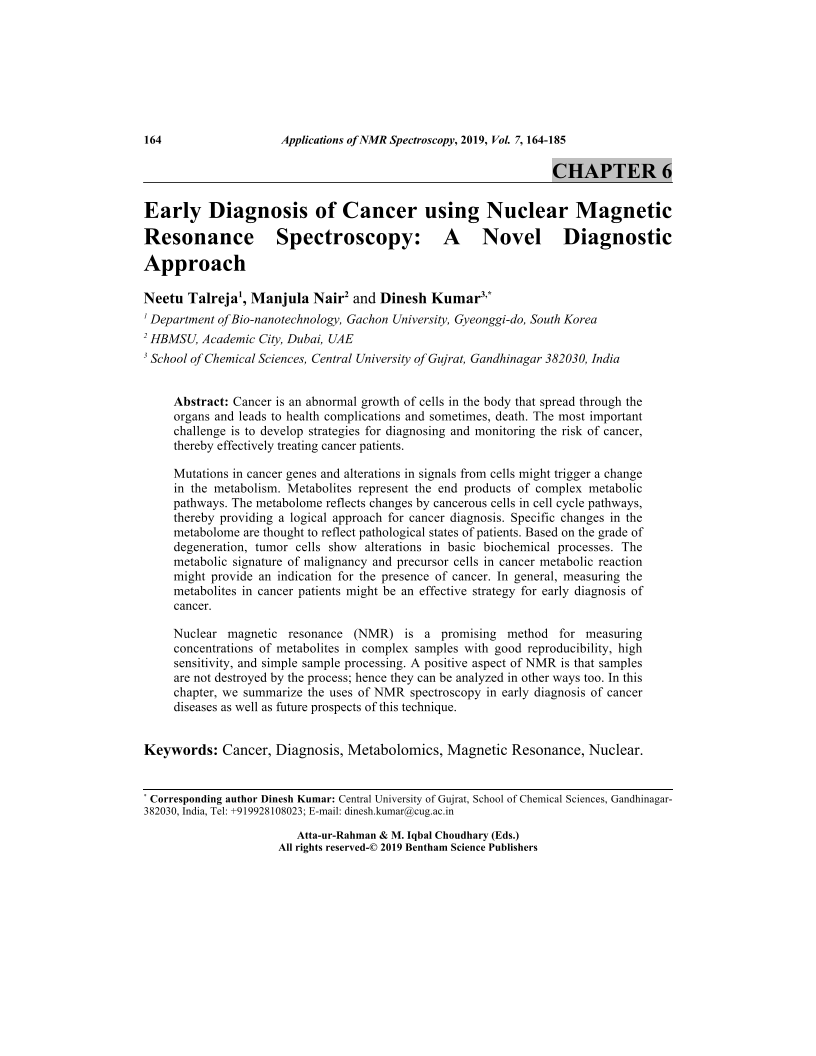
Cancer is an abnormal growth of cells in the body that spread through the organs and leads to health complications and sometimes, death. The most important challenge is to develop strategies for diagnosing and monitoring the risk of cancer, thereby effectively treating cancer patients. Mutations in cancer genes and alterations in signals from cells might trigger a change in the metabolism. Metabolites represent the end products of complex metabolic pathways. The metabolome reflects changes by cancerous cells in cell cycle pathways, thereby providing a logical approach for cancer diagnosis. Specific changes in the metabolome are thought to reflect pathological states of patients. Based on the grade of degeneration, tumor cells show alterations in basic biochemical processes. The metabolic signature of malignancy and precursor cells in cancer metabolic reaction might provide an indication for the presence of cancer. In general, measuring the metabolites in cancer patients might be an effective strategy for early diagnosis of cancer. Nuclear magnetic resonance (NMR) is a promising method for measuring concentrations of metabolites in complex samples with good reproducibility, high sensitivity, and simple sample processing. A positive aspect of NMR is that samples are not destroyed by the process; hence they can be analyzed in other ways too. In this chapter, we summarize the uses of NMR spectroscopy in early diagnosis of cancer diseases as well as future prospects of this technique.
-
From This Site
/content/books/9781681086415.chapter-6dcterms_subject,pub_keyword-contentType:Journal -contentType:Figure -contentType:Table -contentType:SupplementaryData105
