


Nuclear Magnetic Resonance as an Attractive Resource for Monitoring Surveillance Candidates of Acute and Chronic Lung Disorders
- Authors: Simona Viglio, Cristina Airoldi, Carlotta Ciaramelli, Paolo Iadarola4
-
View Affiliations Hide Affiliations4 Department of Biology and Biotechnologies "L.Spallanzani", University of Pavia, Via A.Ferrata 9, Pavia, Italy.
- Source: Applications of NMR Spectroscopy: Volume 7 , pp 100-143
- Publication Date: April 2019
- Language: English


Nuclear Magnetic Resonance as an Attractive Resource for Monitoring Surveillance Candidates of Acute and Chronic Lung Disorders, Page 1 of 1
< Previous page | Next page > /docserver/preview/fulltext/9781681086415/chapter-4-1.gif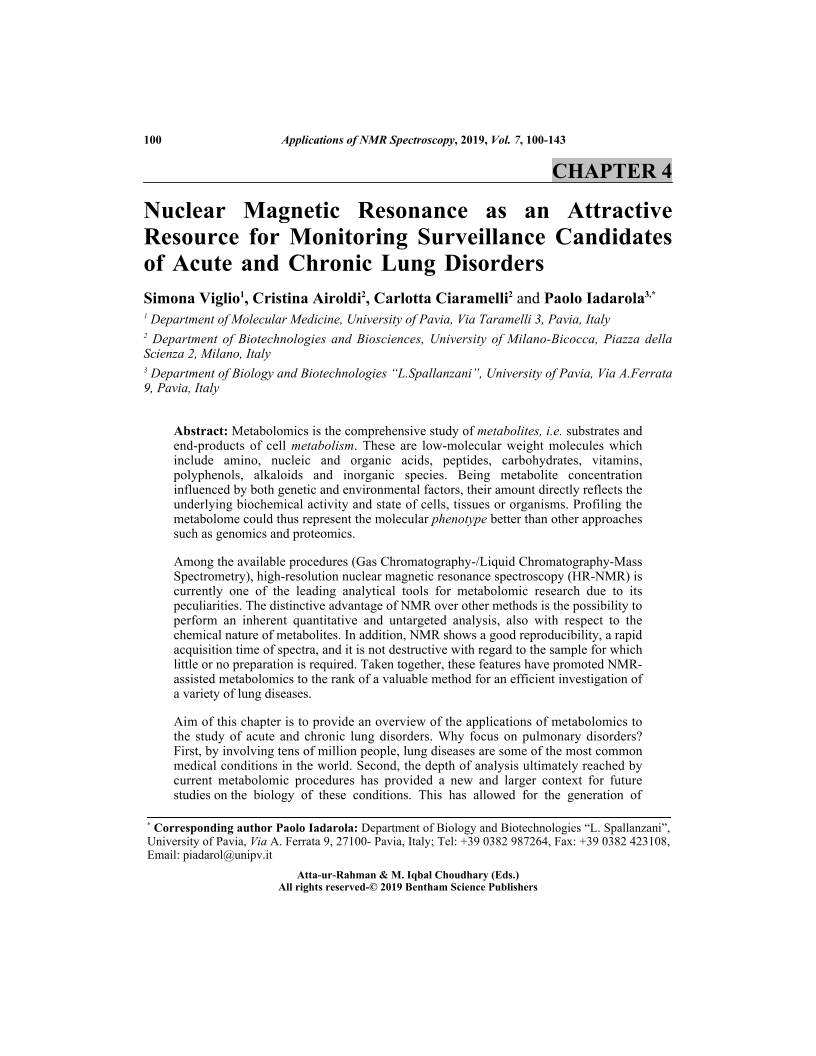
Metabolomics is the comprehensive study of metabolites, i.e. substrates and end-products of cell metabolism. These are low-molecular weight molecules which include amino, nucleic and organic acids, peptides, carbohydrates, vitamins, polyphenols, alkaloids and inorganic species. Being metabolite concentration influenced by both genetic and environmental factors, their amount directly reflects the underlying biochemical activity and state of cells, tissues or organisms. Profiling the metabolome could thus represent the molecular phenotype better than other approaches such as genomics and proteomics. Among the available procedures (Gas Chromatography-/Liquid Chromatography-Mass Spectrometry), high-resolution nuclear magnetic resonance spectroscopy (HR-NMR) is currently one of the leading analytical tools for metabolomic research due to its peculiarities. The distinctive advantage of NMR over other methods is the possibility to perform an inherent quantitative and untargeted analysis, also with respect to the chemical nature of metabolites. In addition, NMR shows a good reproducibility, a rapid acquisition time of spectra, and it is not destructive with regard to the sample for which little or no preparation is required. Taken together, these features have promoted NMRassisted metabolomics to the rank of a valuable method for an efficient investigation of a variety of lung diseases. Aim of this chapter is to provide an overview of the applications of metabolomics to the study of acute and chronic lung disorders. Why focus on pulmonary disorders? First, by involving tens of million people, lung diseases are some of the most common medical conditions in the world. Second, the depth of analysis ultimately reached by current metabolomic procedures has provided a new and larger context for future studies on the biology of these conditions. This has allowed for the generation of metabolite profiles that could be useful for exploring pathological mechanisms and/or discovering new potential therapeutic targets for a variety of pulmonary disorders.
-
From This Site
/content/books/9781681086415.chapter-4dcterms_subject,pub_keyword-contentType:Journal -contentType:Figure -contentType:Table -contentType:SupplementaryData105
