


The Right to Access by Non-Dominant Linguistic Communities to the Mass Media
- By Inigo Urrutia Libarona1
-
View Affiliations Hide Affiliations1 Faculty of Economics and Business Studies, Department of Administrative Law, University of the Basque Country (UPV/EHU), Bilbao, Spain
- Source: The Rights of Minorities: Cultural Groups, Migrants, Displaced Persons and Sexual Identity , pp 254-287
- Publication Date: November 2017
- Language: English


The Right to Access by Non-Dominant Linguistic Communities to the Mass Media, Page 1 of 1
< Previous page | Next page > /docserver/preview/fulltext/9781681085937/chapter-13-1.gif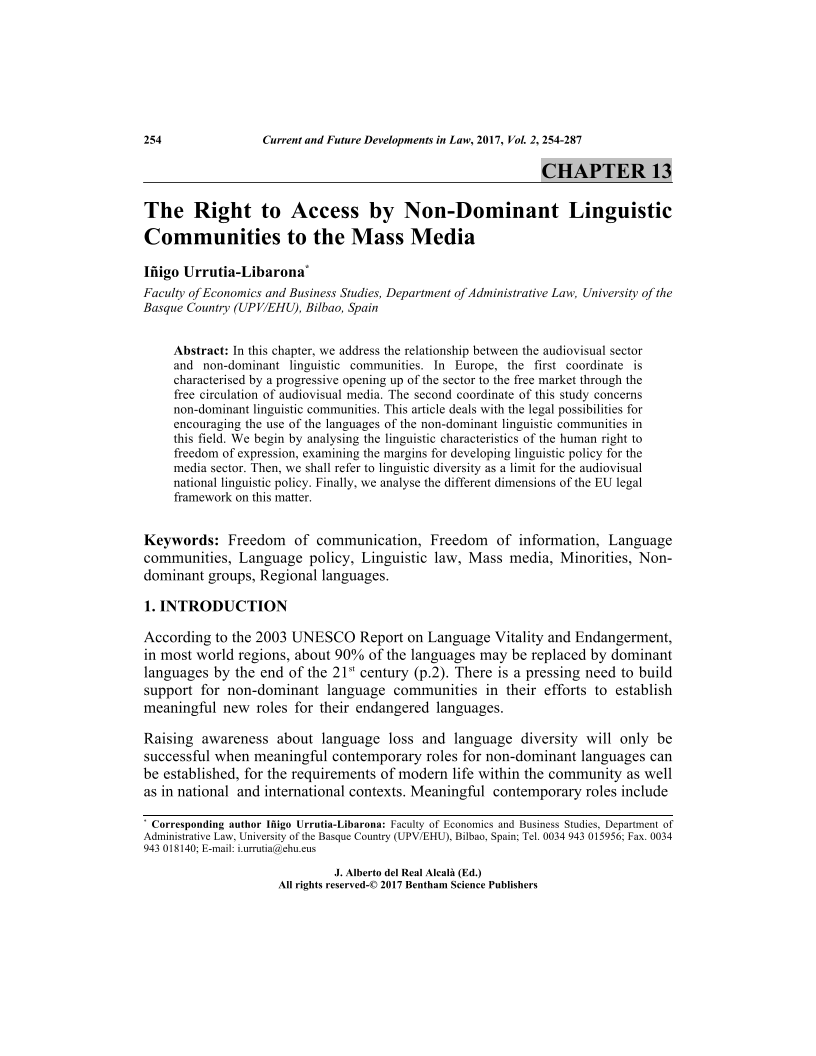
In this chapter, we address the relationship between the audiovisual sector and non-dominant linguistic communities. In Europe, the first coordinate is characterised by a progressive opening up of the sector to the free market through the free circulation of audiovisual media. The second coordinate of this study concerns non-dominant linguistic communities. This article deals with the legal possibilities for encouraging the use of the languages of the non-dominant linguistic communities in this field. We begin by analysing the linguistic characteristics of the human right to freedom of expression, examining the margins for developing linguistic policy for the media sector. Then, we shall refer to linguistic diversity as a limit for the audiovisual national linguistic policy. Finally, we analyse the different dimensions of the EU legal framework on this matter.
-
From This Site
/content/books/9781681085937.chapter-13dcterms_subject,pub_keyword-contentType:Journal -contentType:Figure -contentType:Table -contentType:SupplementaryData105
