


NMR Relaxometry Applied to Food Samples
- By Maria Ines Bruno Tavares1
-
View Affiliations Hide Affiliations1 Institute of Macromolecules, Federal University of Rio de Janeiro, Av. Horacio Macedo, 2030, Block J, CT, Fundo Island, Rio de Janeiro, RJ, CEP 21941 598, Brazil
- Source: Applications of NMR Spectroscopy: Volume 6 , pp 151-176
- Publication Date: December 2017
- Language: English


NMR Relaxometry Applied to Food Samples, Page 1 of 1
< Previous page | Next page > /docserver/preview/fulltext/9781681084398/chapter-4-1.gif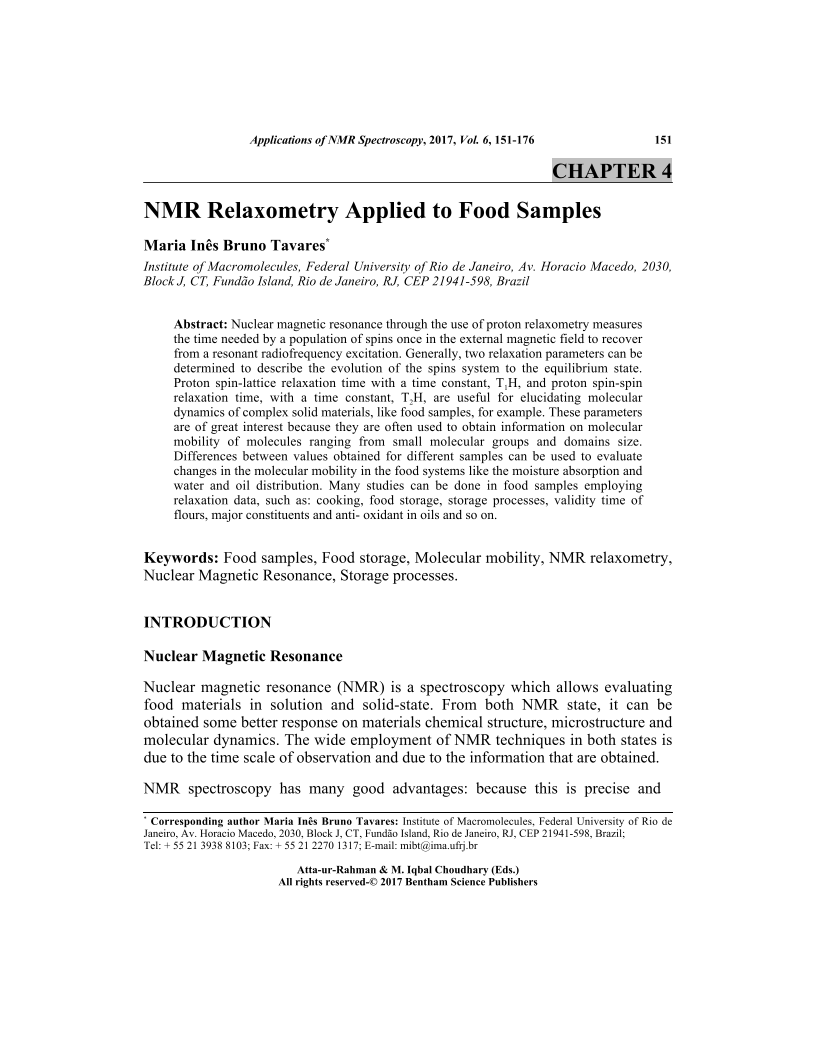
Nuclear magnetic resonance through the use of proton relaxometry measures the time needed by a population of spins once in the external magnetic field to recover from a resonant radiofrequency excitation. Generally, two relaxation parameters can be determined to describe the evolution of the spins system to the equilibrium state. Proton spin-lattice relaxation time with a time constant, T1H, and proton spin-spin relaxation time, with a time constant, T2H, are useful for elucidating molecular dynamics of complex solid materials, like food samples, for example. These parameters are of great interest because they are often used to obtain information on molecular mobility of molecules ranging from small molecular groups and domains size. Differences between values obtained for different samples can be used to evaluate changes in the molecular mobility in the food systems like the moisture absorption and water and oil distribution. Many studies can be done in food samples employing relaxation data, such as: cooking, food storage, storage processes, validity time of flours, major constituents and anti- oxidant in oils and so on.
-
From This Site
/content/books/9781681084398.chapter-4dcterms_subject,pub_keyword-contentType:Journal -contentType:Figure -contentType:Table -contentType:SupplementaryData105
