


Virulence Factors and Immune Evasion in Leishmania spp.
- Authors: Jose M. Requena1, Manuel Soto
-
View Affiliations Hide Affiliations1 Centro de Biologia Molecular Severo Ochoa (CSIC UAM), Universidad Autonoma de Madrid, Madrid, Spain.
- Source: Molecular and Cellular Biology of Pathogenic Trypanosomatids , pp 291-345
- Publication Date: February 2017
- Language: English


Virulence Factors and Immune Evasion in Leishmania spp., Page 1 of 1
< Previous page | Next page > /docserver/preview/fulltext/9781681084053/chapter-7-1.gif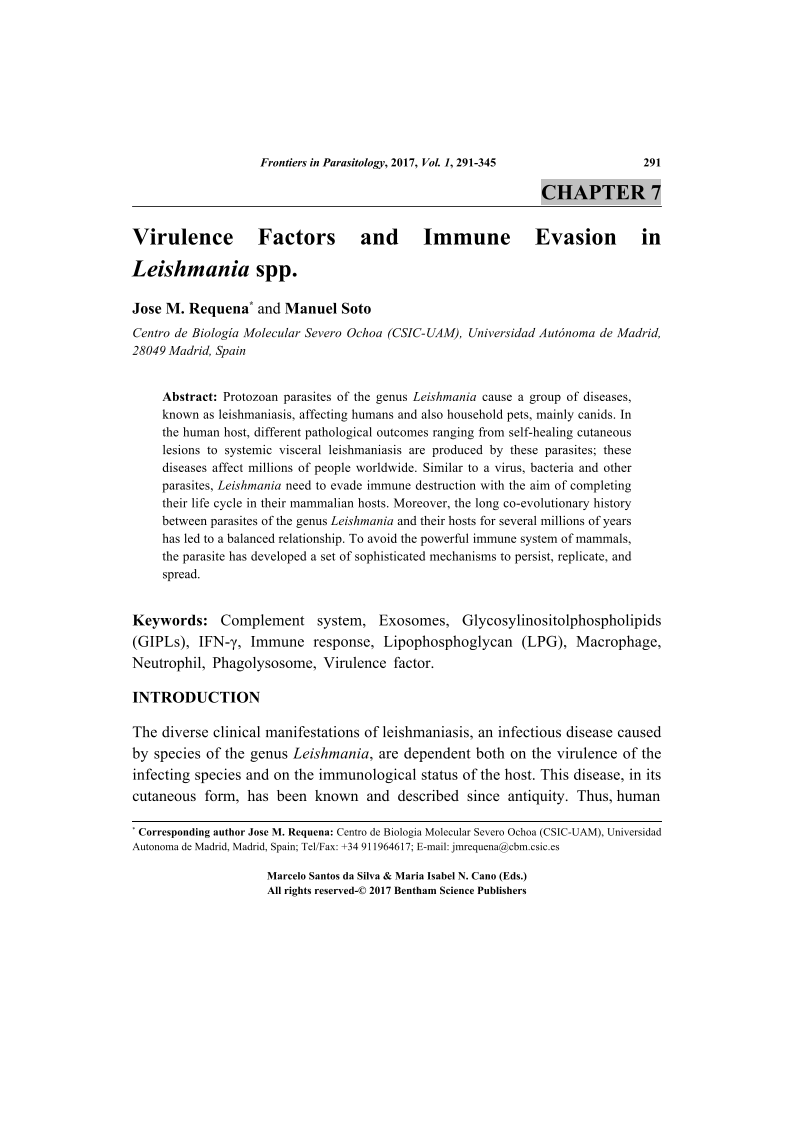
Protozoan parasites of the genus Leishmania cause a group of diseases, known as leishmaniasis, affecting humans and also household pets, mainly canids. In the human host, different pathological outcomes ranging from self-healing cutaneous lesions to systemic visceral leishmaniasis are produced by these parasites; these diseases affect millions of people worldwide. Similar to a virus, bacteria and other parasites, Leishmania need to evade immune destruction with the aim of completing their life cycle in their mammalian hosts. Moreover, the long co-evolutionary history between parasites of the genus Leishmania and their hosts for several millions of years has led to a balanced relationship. To avoid the powerful immune system of mammals, the parasite has developed a set of sophisticated mechanisms to persist, replicate, and spread.
-
From This Site
/content/books/9781681084053.chapter-7dcterms_subject,pub_keyword-contentType:Journal -contentType:Figure -contentType:Table -contentType:SupplementaryData105
