


Bound: An Explorative Auto-Reflexive Case Study
- By Christine Velde1
-
View Affiliations Hide Affiliations1 School of Humanities, Faculty of Arts University of Adelaide, South Australia, 5001., Australia
- Source: Xenotropism and the Awakening of Literary Expatriatism through Writing Memoirs , pp 50-64
- Publication Date: August 2016
- Language: English


Bound: An Explorative Auto-Reflexive Case Study, Page 1 of 1
< Previous page | Next page > /docserver/preview/fulltext/9781681082837/chapter-4-1.gif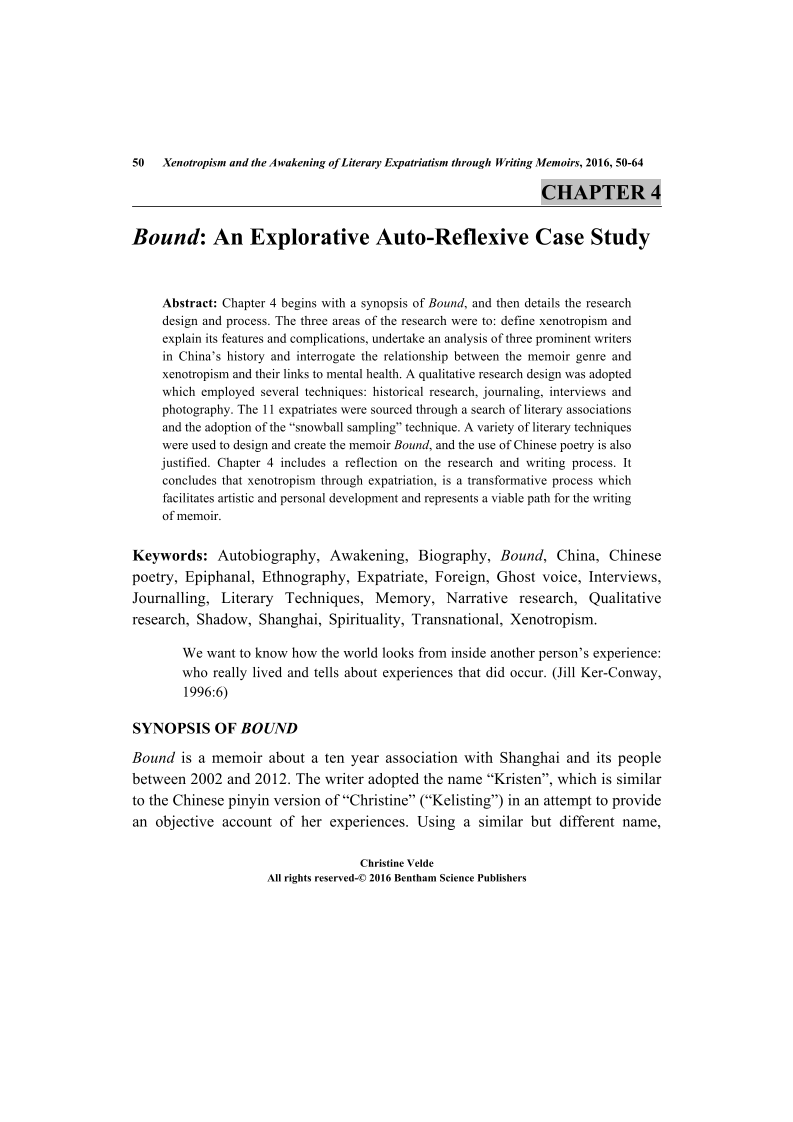
Chapter 4 begins with a synopsis of Bound, and then details the research design and process. The three areas of the research were to: define xenotropism and explain its features and complications, undertake an analysis of three prominent writers in Chinas history and interrogate the relationship between the memoir genre and xenotropism and their links to mental health. A qualitative research design was adopted which employed several techniques: historical research, journaling, interviews and photography. The 11 expatriates were sourced through a search of literary associations and the adoption of the "snowball sampling" technique. A variety of literary techniques were used to design and create the memoir Bound, and the use of Chinese poetry is also justified. Chapter 4 includes a reflection on the research and writing process. It concludes that xenotropism through expatriation, is a transformative process which facilitates artistic and personal development and represents a viable path for the writing of memoir.
-
From This Site
/content/books/9781681082837.chapter-4dcterms_subject,pub_keyword-contentType:Journal -contentType:Figure -contentType:Table -contentType:SupplementaryData105
