


Bioactive Compounds from Brassicaceae as Health Promoters
- Authors: Nieves Baenas, Marta Francisco, Pablo Velasco, María Elena Cartea, Cristina García Viguera, Diego A. Moreno6
-
View Affiliations Hide Affiliations6 Phytochemistry Lab, Food Sci. & Technology Dept., CEBAS-CSIC, Murcia, Spain.
- Source: Natural Bioactive Compounds from Fruits and Vegetables as Health Promoters: Part II , pp 27-47
- Publication Date: May 2016
- Language: English


Bioactive Compounds from Brassicaceae as Health Promoters, Page 1 of 1
< Previous page | Next page > /docserver/preview/fulltext/9781681082431/chapter-2-1.gif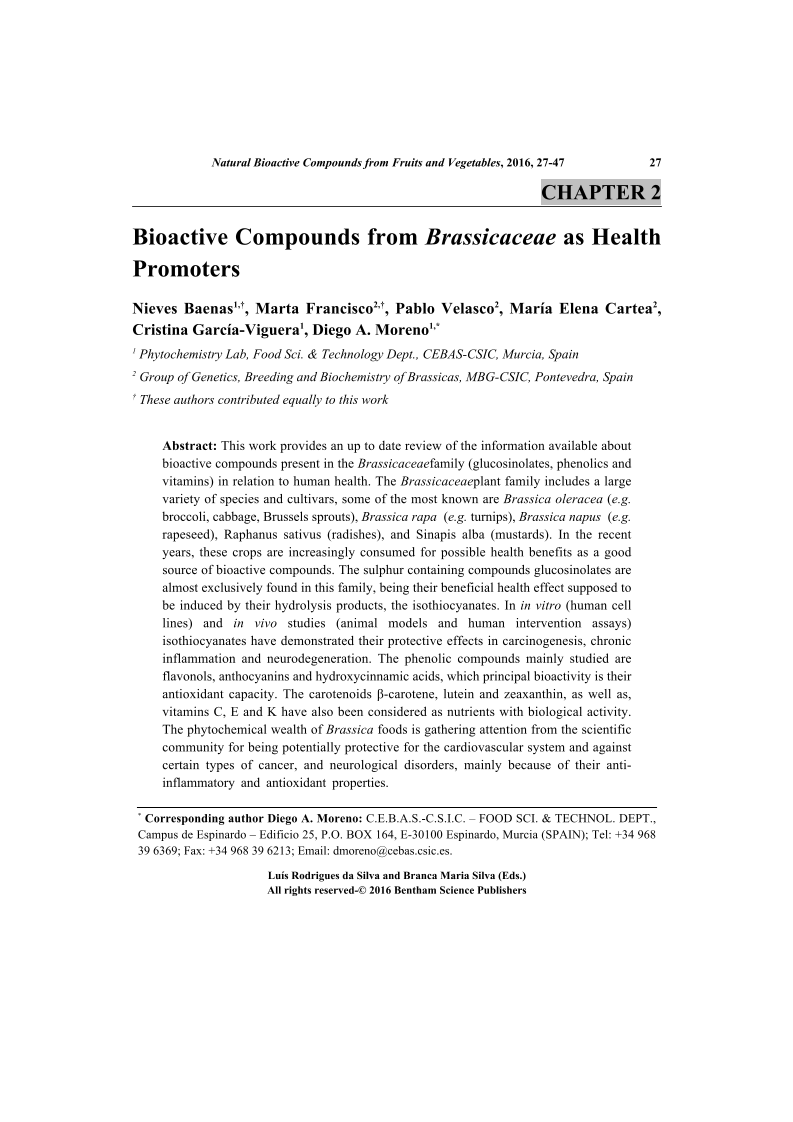
This work provides an up to date review of the information available about bioactive compounds present in the Brassicaceaefamily (glucosinolates, phenolics and vitamins) in relation to human health. The Brassicaceaeplant family includes a large variety of species and cultivars, some of the most known are Brassica oleracea (e.g. broccoli, cabbage, Brussels sprouts), Brassica rapa (e.g. turnips), Brassica napus (e.g. rapeseed), Raphanus sativus (radishes), and Sinapis alba (mustards). In the recent years, these crops are increasingly consumed for possible health benefits as a good source of bioactive compounds. The sulphur containing compounds glucosinolates are almost exclusively found in this family, being their beneficial health effect supposed to be induced by their hydrolysis products, the isothiocyanates. In in vitro (human cell lines) and in vivo studies (animal models and human intervention assays) isothiocyanates have demonstrated their protective effects in carcinogenesis, chronic inflammation and neurodegeneration. The phenolic compounds mainly studied are flavonols, anthocyanins and hydroxycinnamic acids, which principal bioactivity is their antioxidant capacity. The carotenoids β-carotene, lutein and zeaxanthin, as well as, vitamins C, E and K have also been considered as nutrients with biological activity. The phytochemical wealth of Brassica foods is gathering attention from the scientific community for being potentially protective for the cardiovascular system and against certain types of cancer, and neurological disorders, mainly because of their antiinflammatory and antioxidant properties. </p><p> Even it is not yet possible to recommend a particular "daily dose" for human consumption of cruciferous foods for disease prevention, there is growing evidence regarding the protective effects of Brassica bioactive compounds for health via regulation of signaling pathways and cellular metabolism.
-
From This Site
/content/books/9781681082431.chapter-2dcterms_subject,pub_keyword-contentType:Journal -contentType:Figure -contentType:Table -contentType:SupplementaryData105
