


The Trumpet Conchs
- Authors: Riccardo Cattaneo Vietti1, Mauro Doneddu2, Egidio Trainito3
-
View Affiliations Hide Affiliations1 Department of Life and Environmental Sciences Universita Politecnica delle Marche (Ancona Italy)., Italy 2 Department of Life and Environmental Sciences Universita Politecnica delle Marche (Ancona Italy)., Italy 3 Department of Life and Environmental Sciences Universita Politecnica delle Marche (Ancona Italy)., Italy
- Source: MAN and SHELLS: Molluscs in the History , pp 57-66
- Publication Date: February 2016
- Language: English


The Trumpet Conchs, Page 1 of 1
< Previous page | Next page > /docserver/preview/fulltext/9781681082257/chapter-3-1.gif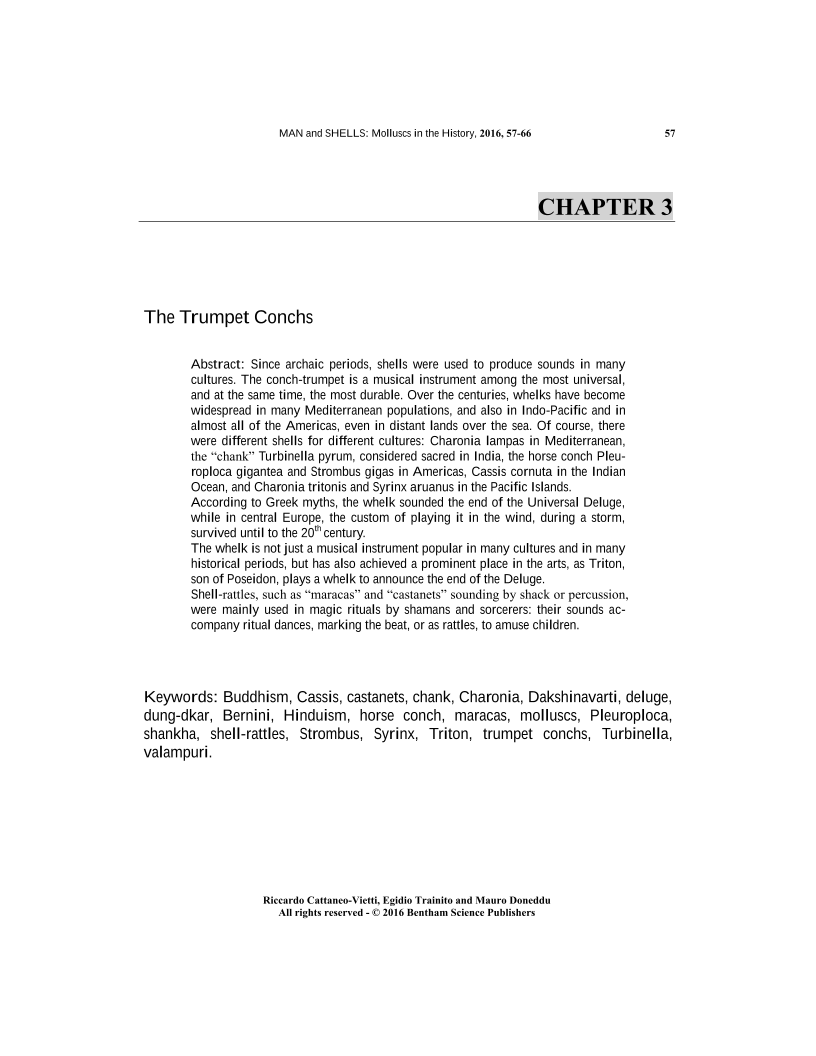
Since archaic periods, shells were used to produce sounds in many cultures. The conch-trumpet is a musical instrument among the most universal, and at the same time, the most durable. Over the centuries, whelks have become widespread in many Mediterranean populations, andalso in Indo-Pacific and in almost all of the Americas, even in distant lands over the sea. Of course, there were different shells for different cultures: Charonia lampasin Mediterranean, the "chank" Turbinella pyrum,considered sacred inIndia, the horse conch Pleu-roploca giganteaand Strombus gigasin Americas, Cassis cornutain the Indian Ocean, and Charonia tritonisand Syrinx aruanusin the Pacific Islands. </p> <p> According to Greek myths, the whelk sounded the end of the Universal Deluge, while in central Europe, the custom of playing it in the wind, during a storm, survived until to the 20th century. </p> <p> The whelk is not just a musical instrument popular in many cultures and in many historical periods, but has also achieved a prominent place in the arts, as Triton, son of Poseidon, plays a whelk to announce the end of the Deluge. </p> <p> Shell-rattles, such as "maracas" and "castanets" sounding by shack or percussion, were mainly used in magic rituals by shamans and sorcerers: their sounds ac-company ritual dances, marking the beat, or as rattles, to amuse children.
-
From This Site
/content/books/9781681082257.chapter-3dcterms_subject,pub_keyword-contentType:Journal -contentType:Figure -contentType:Table -contentType:SupplementaryData105
