


Farming Molluscs
- Authors: Riccardo Cattaneo Vietti1, Mauro Doneddu2, Egidio Trainito3
-
View Affiliations Hide Affiliations1 Department of Life and Environmental Sciences Universita Politecnica delle Marche (Ancona Italy)., Italy 2 Department of Life and Environmental Sciences Universita Politecnica delle Marche (Ancona Italy)., Italy 3 Department of Life and Environmental Sciences Universita Politecnica delle Marche (Ancona Italy)., Italy
- Source: MAN and SHELLS: Molluscs in the History , pp 211-237
- Publication Date: February 2016
- Language: English


Farming Molluscs, Page 1 of 1
< Previous page | Next page > /docserver/preview/fulltext/9781681082257/chapter-11-1.gif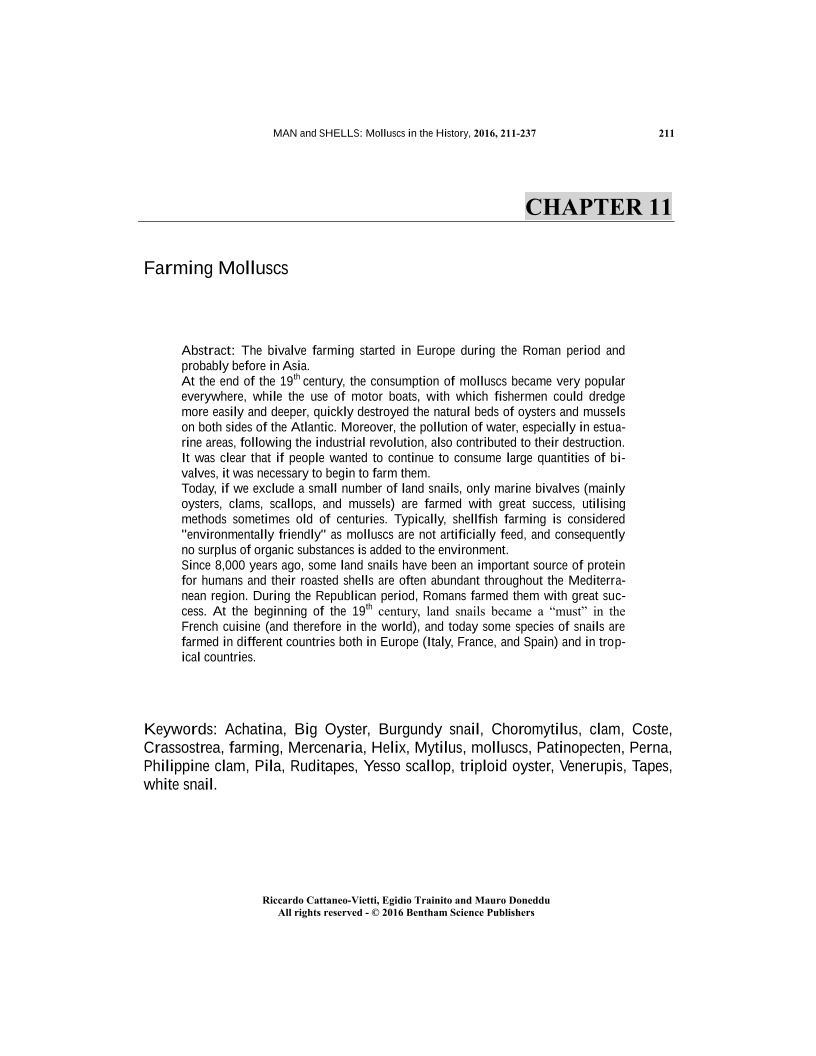
The bivalve farming started in Europe during the Roman period and probably before in Asia. </p> <p> At the end of the 19th century, the consumption of molluscs became very popular everywhere, while the use of motor boats, with which fishermen could dredge more easily and deeper, quickly destroyed the natural beds of oysters and mussels on both sides of the Atlantic. Moreover, the pollution of water, especially in estua-rine areas, following the industrial revolution, also contributed to their destruction. It was clear that if people wanted to continue to consume large quantities of bi-valves, it was necessary to begin to farm them. </p> <p> Today, if we exclude a small number of land snails, only marine bivalves (mainly oysters, clams, scallops, and mussels) are farmed with great success, utilising methods sometimes old of centuries. Typically, shellfish farming is considered "environmentally friendly" as molluscs are not artificially feed, and consequently no surplus of organic substances is added to the environment. </p> <p> Since 8,000 years ago, some land snails have been an important source of protein for humans and their roasted shells are often abundant throughout the Mediterra-nean region. During the Republican period, Romans farmed them with great suc-cess. At the beginning of the 19thcentury, land snails became a "must" in the French cuisine (and therefore in the world), and today some species of snails are farmed in different countries both in Europe (Italy, France, and Spain) and in trop-ical countries.
-
From This Site
/content/books/9781681082257.chapter-11dcterms_subject,pub_keyword-contentType:Journal -contentType:Figure -contentType:Table -contentType:SupplementaryData105
