


Sperm Guidance: Comparison with Motility Regulation in Bikont Species
- Authors: Kazuo Inaba1, Osamu Kutomi2, Kogiku Shiba3, Jacky Cosson4
-
View Affiliations Hide Affiliations1 Shimoda Marine Research Center, University of Tsukuba, 5 10-1, Shimoda, Shizuoka, 415-0025, Japan. 2 Shimoda Marine Research Center, University of Tsukuba, 5 10-1, Shimoda, Shizuoka, 415-0025, Japan. 3 Shimoda Marine Research Center, University of Tsukuba, 5 10-1, Shimoda, Shizuoka, 415-0025, Japan. 4 Shimoda Marine Research Center, University of Tsukuba, 5 10-1, Shimoda, Shizuoka, 415-0025, Japan.
- Source: Flagellar Mechanics and Sperm Guidance , pp 349-389
- Publication Date: November 2015
- Language: English


Sperm Guidance: Comparison with Motility Regulation in Bikont Species, Page 1 of 1
< Previous page | Next page > /docserver/preview/fulltext/9781681081281/chapter-10-1.gif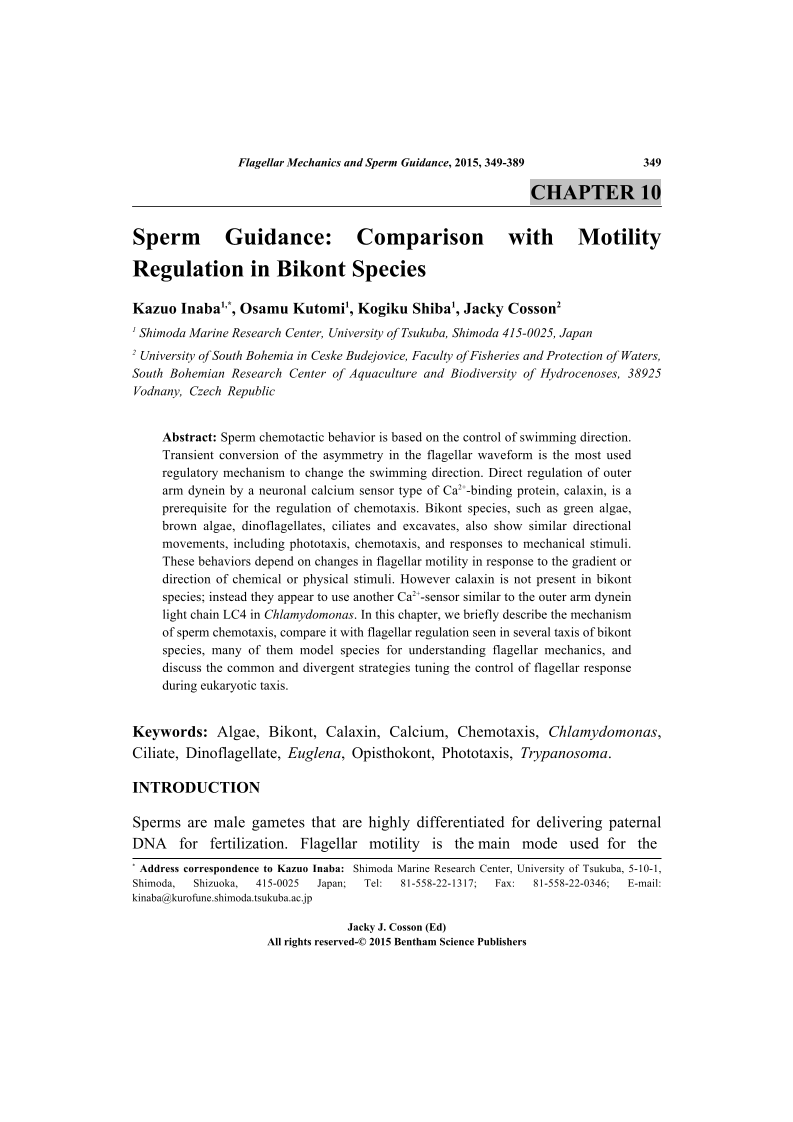
Sperm chemotactic behavior is based on the control of swimming direction. Transient conversion of the asymmetry in the flagellar waveform is the most used regulatory mechanism to change the swimming direction. Direct regulation of outer arm dynein by a neuronal calcium sensor type of Ca2+-binding protein, calaxin, is a prerequisite for the regulation of chemotaxis. Bikont species, such as green algae, brown algae, dinoflagellates, ciliates and excavates, also show similar directional movements, including phototaxis, chemotaxis, and responses to mechanical stimuli. These behaviors depend on changes in flagellar motility in response to the gradient or direction of chemical or physical stimuli. However calaxin is not present in bikont species; instead they appear to use another Ca2+-sensor similar to the outer arm dynein light chain LC4 in Chlamydomonas. In this chapter, we briefly describe the mechanism of sperm chemotaxis, compare it with flagellar regulation seen in several taxis of bikont species, many of them model species for understanding flagellar mechanics, and discuss the common and divergent strategies tuning the control of flagellar response during eukaryotic taxis.
-
From This Site
/content/books/9781681081281.chapter-10dcterms_subject,pub_keyword-contentType:Journal -contentType:Figure -contentType:Table -contentType:SupplementaryData105
