


How New Drugs Are Investigated
- By Robert E. Smith1
-
View Affiliations Hide Affiliations1 Park University, Chemistry Department, 8700 NW River Park Drive Parkville, MO 64152, USA
- Source: Medicinal Chemistry - Fusion of Traditional and Western Medicine, Second Edition , pp 330-341
- Publication Date: November 2014
- Language: English


How New Drugs Are Investigated, Page 1 of 1
< Previous page | Next page > /docserver/preview/fulltext/9781608059744/chapter-9-1.gif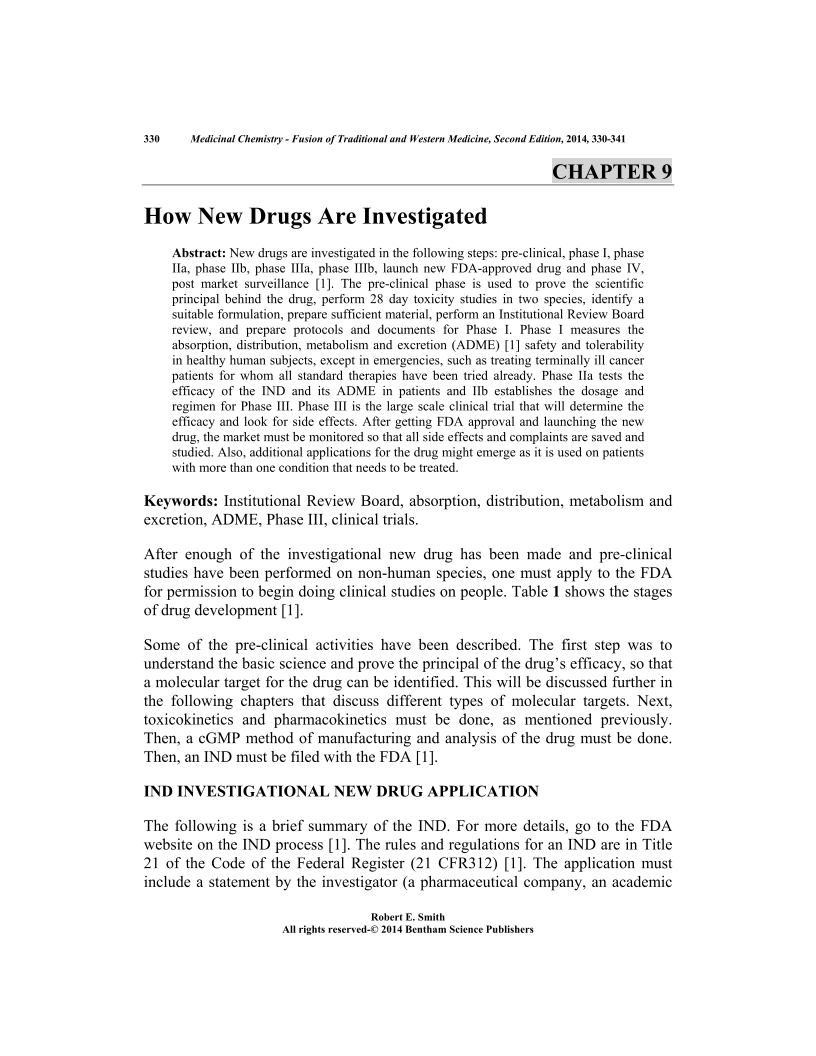
New drugs are investigated in the following steps: pre-clinical, phase I, phase IIa, phase IIb, phase IIIa, phase IIIb, launch new FDA-approved drug and phase IV, post market surveillance [1]. The pre-clinical phase is used to prove the scientific principal behind the drug, perform 28 day toxicity studies in two species, identify a suitable formulation, prepare sufficient material, perform an Institutional Review Board review, and prepare protocols and documents for Phase I. Phase I measures the absorption, distribution, metabolism and excretion (ADME) [1] safety and tolerability in healthy human subjects, except in emergencies, such as treating terminally ill cancer patients for whom all standard therapies have been tried already. Phase IIa tests the efficacy of the IND and its ADME in patients and IIb establishes the dosage and regimen for Phase III. Phase III is the large scale clinical trial that will determine the efficacy and look for side effects. After getting FDA approval and launching the new drug, the market must be monitored so that all side effects and complaints are saved and studied. Also, additional applications for the drug might emerge as it is used on patients with more than one condition that needs to be treated.
-
From This Site
/content/books/9781608059744.chapter-9dcterms_subject,pub_keyword-contentType:Journal -contentType:Figure -contentType:Table -contentType:SupplementaryData105
