


Bioisosteric Replacements in Drug Design

- Authors: Vinicius Barreto da Silva1, Daniel Fábio Kawano2, Ricardo Pereira Rodrigues3, Susimaire Pedersoli Mantoani4, Jonathan Resende de Almeida5, Evandro Pizeta Semighini6, Carlos Henrique Tomich de Paula da Silva7
-
View Affiliations Hide Affiliations1 School of Pharmaceutical Sciences of Ribeirão Preto, University of São Paulo, Ribeirão Preto, Brazil; 2 School of Pharmacy, Federal University of Rio Grande do Sul, Porto Alegre, Rio Grande do Sul, Brazil 3 Fellow, School of Pharmaceutical Sciences of Ribeirão Preto, University of São Paulo, Ribeirão Preto, SP, Brazil 4 Fellow, School of Pharmaceutical Sciences of Ribeirão Preto, University of São Paulo, Ribeirão Preto, SP, Brazil 5 Fellow, School of Pharmaceutical Sciences of Ribeirão Preto, University of São Paulo, Ribeirão Preto, SP, Brazil 6 Ribeirão Preto Medical School, University of São Paulo, Ribeirão Preto, SP, Brazil 7 School of Pharmaceutical Sciences of Ribeirão Preto, University of São Paulo, Ribeirão Preto, Brazil
- Source: New Developments in Medicinal Chemistry: Volume 2 , pp 213-238
- Publication Date: October 2014
- Language: English


Bioisosteric Replacements in Drug Design, Page 1 of 1
< Previous page | Next page > /docserver/preview/fulltext/9781608059546/chapter-4-1.gif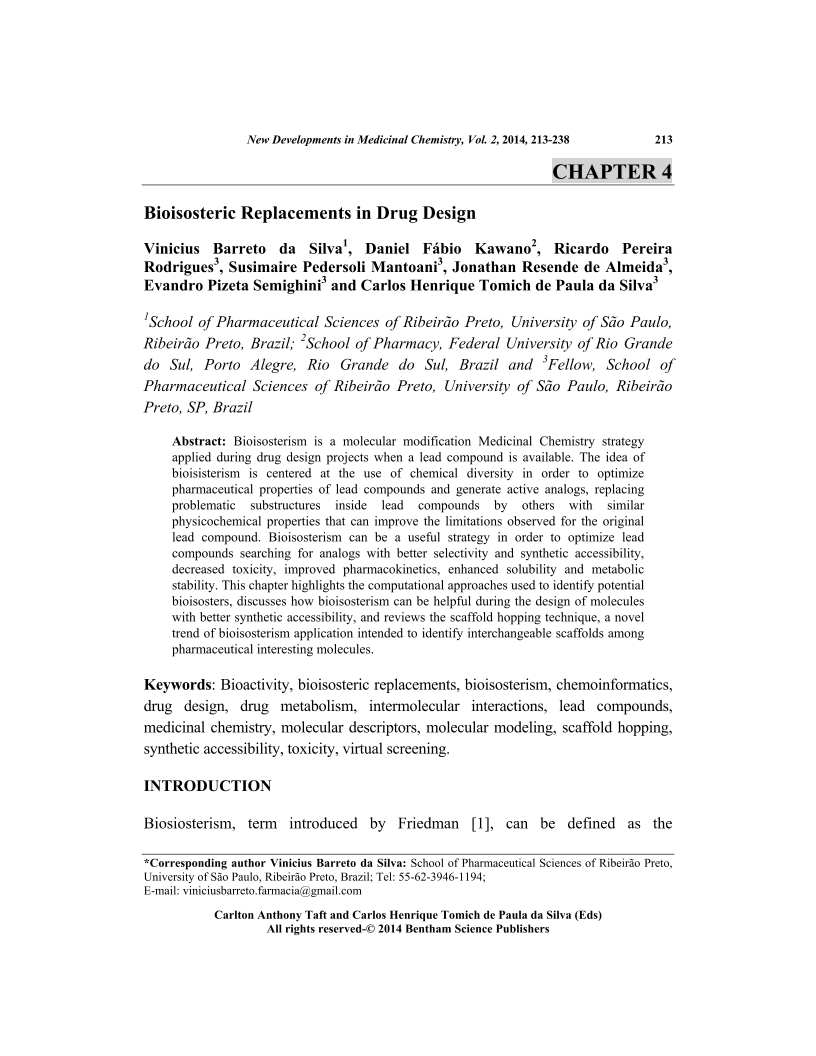
Bioisosterism is a molecular modification Medicinal Chemistry strategy applied during drug design projects when a lead compound is available. The idea of bioisisterism is centered at the use of chemical diversity in order to optimize pharmaceutical properties of lead compounds and generate active analogs, replacing problematic substructures inside lead compounds by others with similar physicochemical properties that can improve the limitations observed for the original lead compound. Bioisosterism can be a useful strategy in order to optimize lead compounds searching for analogs with better selectivity and synthetic accessibility, decreased toxicity, improved pharmacokinetics, enhanced solubility and metabolic stability. This chapter highlights the computational approaches used to identify potential bioisosters, discusses how bioisosterism can be helpful during the design of molecules with better synthetic accessibility, and reviews the scaffold hopping technique, a novel trend of bioisosterism application intended to identify interchangeable scaffolds among pharmaceutical interesting molecules.
-
From This Site
/content/books/9781608059546.chapter-4dcterms_subject,pub_keyword-contentType:Journal -contentType:Figure -contentType:Table -contentType:SupplementaryData105
