


Calcium Signaling and Angiogenesis
- By Luca Munaron1
-
View Affiliations Hide Affiliations1 Department of Life Sciences & Systems Biology, Center for Complex Systems in Molecular Biology and Medicine (SysBioM), Nanostructured Interfaces and Surfaces Centre of Excellence (NIS), University of Torino, Italy
- Source: Topics in Anti-Cancer Research: Volume 3 , pp 179-201
- Publication Date: October 2014
- Language: English


Calcium Signaling and Angiogenesis, Page 1 of 1
< Previous page | Next page > /docserver/preview/fulltext/9781608059089/chapter-5-1.gif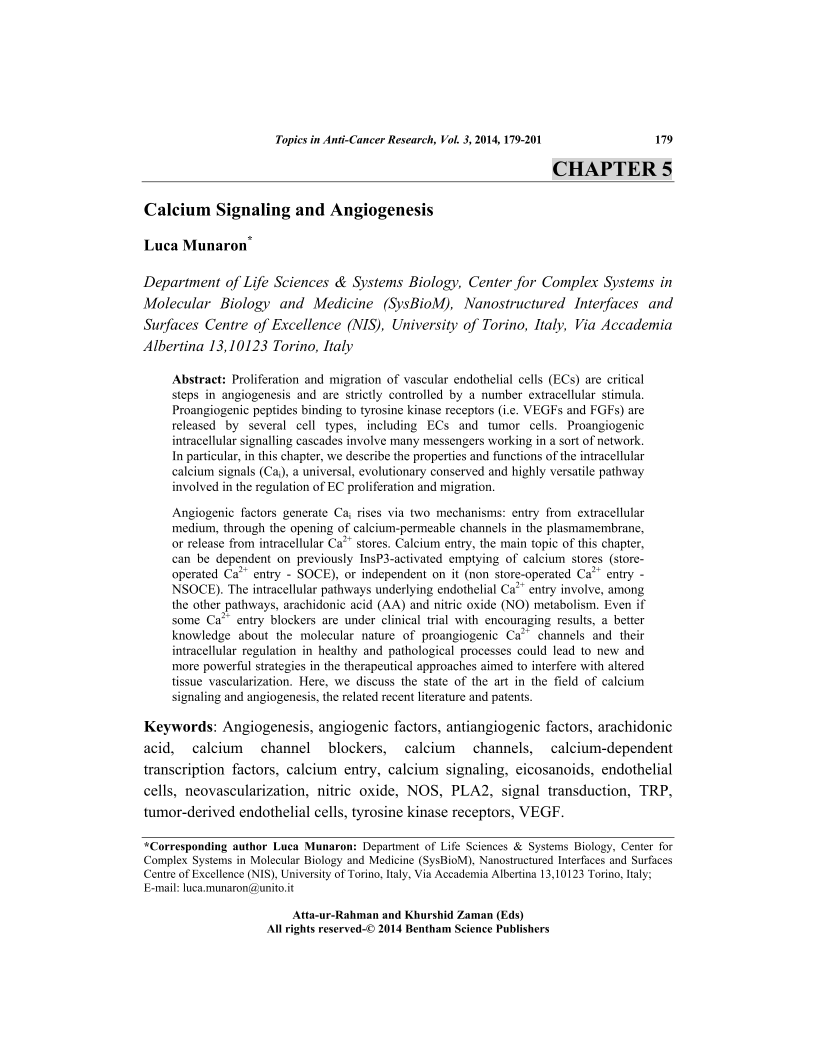
Proliferation and migration of vascular endothelial cells (ECs) are critical steps in angiogenesis and are strictly controlled by a number extracellular stimula. Proangiogenic peptides binding to tyrosine kinase receptors (i.e. VEGFs and FGFs) are released by several cell types, including ECs and tumor cells. Proangiogenic intracellular signalling cascades involve many messengers working in a sort of network. In particular, in this chapter, we describe the properties and functions of the intracellular calcium signals (Cai), a universal, evolutionary conserved and highly versatile pathway involved in the regulation of EC proliferation and migration.
Angiogenic factors generate Cai rises via two mechanisms: entry from extracellular medium, through the opening of calcium-permeable channels in the plasmamembrane, or release from intracellular Ca2+ stores. Calcium entry, the main topic of this chapter, can be dependent on previously InsP3-activated emptying of calcium stores (storeoperated Ca2+ entry - SOCE), or independent on it (non store-operated Ca2+ entry - NSOCE). The intracellular pathways underlying endothelial Ca2+ entry involve, among the other pathways, arachidonic acid (AA) and nitric oxide (NO) metabolism. Even if some Ca2+ entry blockers are under clinical trial with encouraging results, a better knowledge about the molecular nature of proangiogenic Ca2+ channels and their intracellular regulation in healthy and pathological processes could lead to new and more powerful strategies in the therapeutical approaches aimed to interfere with altered tissue vascularization. Here, we discuss the state of the art in the field of calcium signaling and angiogenesis, the related recent literature and patents.
-
From This Site
/content/books/9781608059089.chapter-5dcterms_subject,pub_keyword-contentType:Journal -contentType:Figure -contentType:Table -contentType:SupplementaryData105
