


Proteome-Based Anti-Tumor Cell Therapy
- Authors: Andrey S. Bryukhovetskiy1, Valeriy E. Shevchenko2, Sergey V. Kovalev3, Vladimir G. Polyakov4, Igor S. Bryukhovetskiy5, Maria V. Zhukova6
-
View Affiliations Hide Affiliations1 Federal Research Center for Specialized Types of Medical Assistance and Medical Technologies of FMBA of Russia, 28 Orekhoviy blvd. 115682 Moscow, Russia 2 FGBU Blokhin Russian Cancer Research Center of RAMN,24 Kashirskoe shosse, 115478, Moscow, Russia 3 FGBU Blokhin Russian Cancer Research Center of RAMN,24 Kashirskoe shosse, 115478, Moscow, Russia 4 FGBU Blokhin Russian Cancer Research Center of RAMN,24 Kashirskoe shosse, 115478, Moscow, Russia 5 School of Biomedicine, Far Eastern Federal University, 8 Sukhanova St. 690091, Vladivostok, Russia 6 NeuroVita Clinic of Restorative and Interventional Neurology and Therapy,23 Kashirskoe shosse, 115478, Moscow, Russia
- Source: Topics in Anti-Cancer Research: Volume 3 , pp 484-529
- Publication Date: October 2014
- Language: English


Proteome-Based Anti-Tumor Cell Therapy, Page 1 of 1
< Previous page | Next page > /docserver/preview/fulltext/9781608059089/chapter-13-1.gif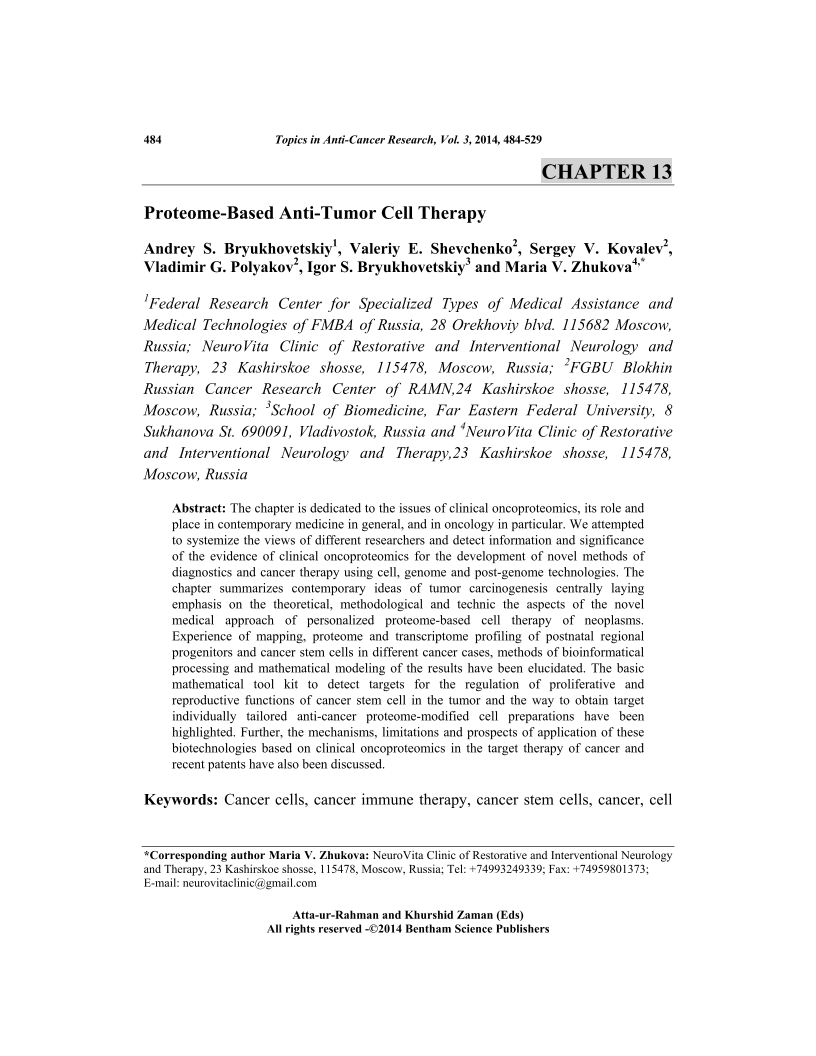
The chapter is dedicated to the issues of clinical oncoproteomics, its role and place in contemporary medicine in general, and in oncology in particular. We attempted to systemize the views of different researchers and detect information and significance of the evidence of clinical oncoproteomics for the development of novel methods of diagnostics and cancer therapy using cell, genome and post-genome technologies. The chapter summarizes contemporary ideas of tumor carcinogenesis centrally laying emphasis on the theoretical, methodological and technic the aspects of the novel medical approach of personalized proteome-based cell therapy of neoplasms. Experience of mapping, proteome and transcriptome profiling of postnatal regional progenitors and cancer stem cells in different cancer cases, methods of bioinformatical processing and mathematical modeling of the results have been elucidated. The basic mathematical tool kit to detect targets for the regulation of proliferative and reproductive functions of cancer stem cell in the tumor and the way to obtain target individually tailored anti-cancer proteome-modified cell preparations have been highlighted. Further, the mechanisms, limitations and prospects of application of these biotechnologies based on clinical oncoproteomics in the target therapy of cancer and recent patents have also been discussed.
-
From This Site
/content/books/9781608059089.chapter-13dcterms_subject,pub_keyword-contentType:Journal -contentType:Figure -contentType:Table -contentType:SupplementaryData105
