


TRAIL Receptor-Induced Cell Death Regulation: An Update to Our Deadly Discussion

- Authors: Olivier Micheau1,2, Sarah Shirley3, Alexandre Morizot4
-
View Affiliations Hide Affiliations1 INSERM, Faculty of Medicine and Pharmacy, University of Bourgogne, U866, Dijon, F 21079, France 2 Centre Georges-François Leclerc, Dijon, F-21000, France 3 1INSERM, Faculty of Medicine and Pharmacy, University Bourgogne, U866, Dijon, F-21079, France 4 1INSERM, Faculty of Medicine and Pharmacy, University Bourgogne, U866, Dijon, F-21079, France
- Source: Topics in Anti-Cancer Research: Volume 3 , pp 3-36
- Publication Date: October 2014
- Language: English


TRAIL Receptor-Induced Cell Death Regulation: An Update to Our Deadly Discussion, Page 1 of 1
< Previous page | Next page > /docserver/preview/fulltext/9781608059089/chapter-1-1.gif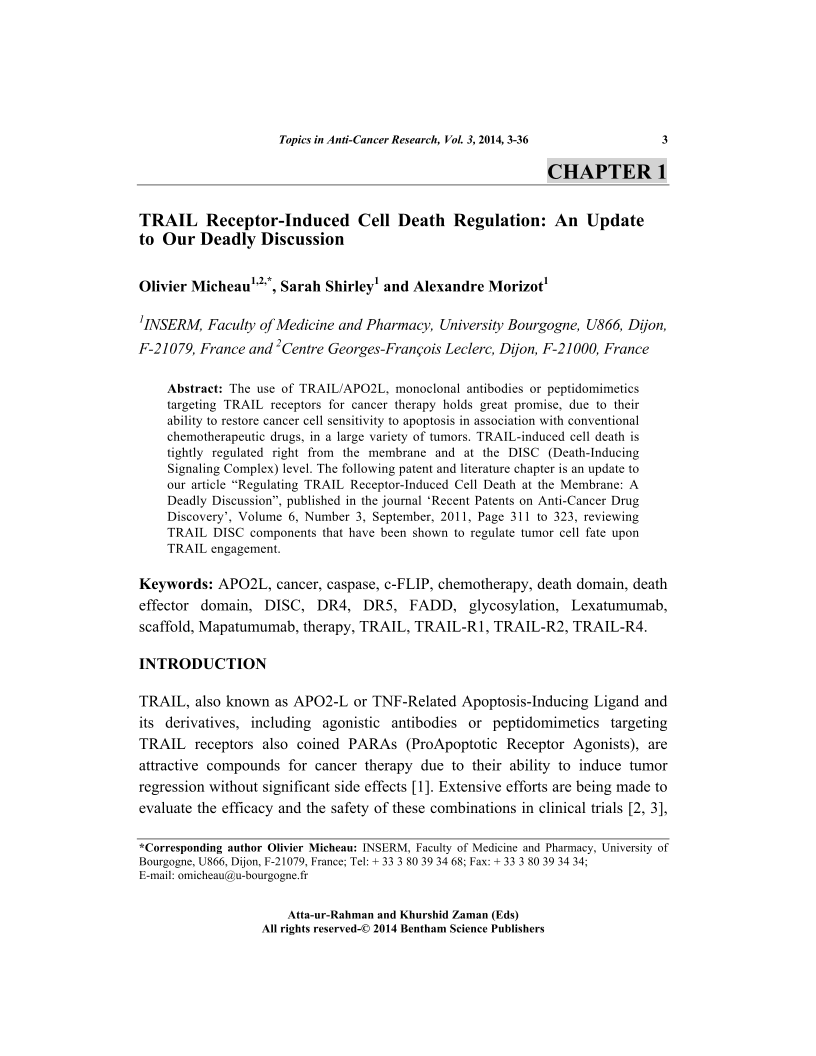
The use of TRAIL/APO2L, monoclonal antibodies or peptidomimetics targeting TRAIL receptors for cancer therapy holds great promise, due to their ability to restore cancer cell sensitivity to apoptosis in association with conventional chemotherapeutic drugs, in a large variety of tumors. TRAIL-induced cell death is tightly regulated right from the membrane and at the DISC (Death-Inducing Signaling Complex) level. The following patent and literature chapter is an update to our article "Regulating TRAIL Receptor-Induced Cell Death at the Membrane: A Deadly Discussion", published in the journal Recent Patents on Anti-Cancer Drug Discovery', Volume 6, Number 3, September, 2011, Page 311 to 323, reviewing TRAIL DISC components that have been shown to regulate tumor cell fate upon TRAIL engagement.
-
From This Site
/content/books/9781608059089.chapter-1dcterms_subject,pub_keyword-contentType:Journal -contentType:Figure -contentType:Table -contentType:SupplementaryData105
