


Nanomaterials and Cardiovascular Implants
- Authors: Constantin V. Uglea1, Marcel Popa2
-
View Affiliations Hide Affiliations1 “Grigore T. Popa” University of Medicine and Pharmacy Iasi, Department of Medical Bioengineering, Universitatii Str., no. 16, 700115 Iasi, Romania 2 “Gheorghe Asachi” Technical University of Iasi, Faculty of Chemical Engineering and Environmental Protection, Department of Natural and Synthetic Polymers, Prof. dr. docent Dimitrie Mangeron Str., no. 73, 700050, Iasi, Romania
- Source: Polymeric Nanomedicines , pp 698-733
- Publication Date: May 2013
- Language: English


Nanomaterials and Cardiovascular Implants, Page 1 of 1
< Previous page | Next page > /docserver/preview/fulltext/9781608054848/chapter-19-1.gif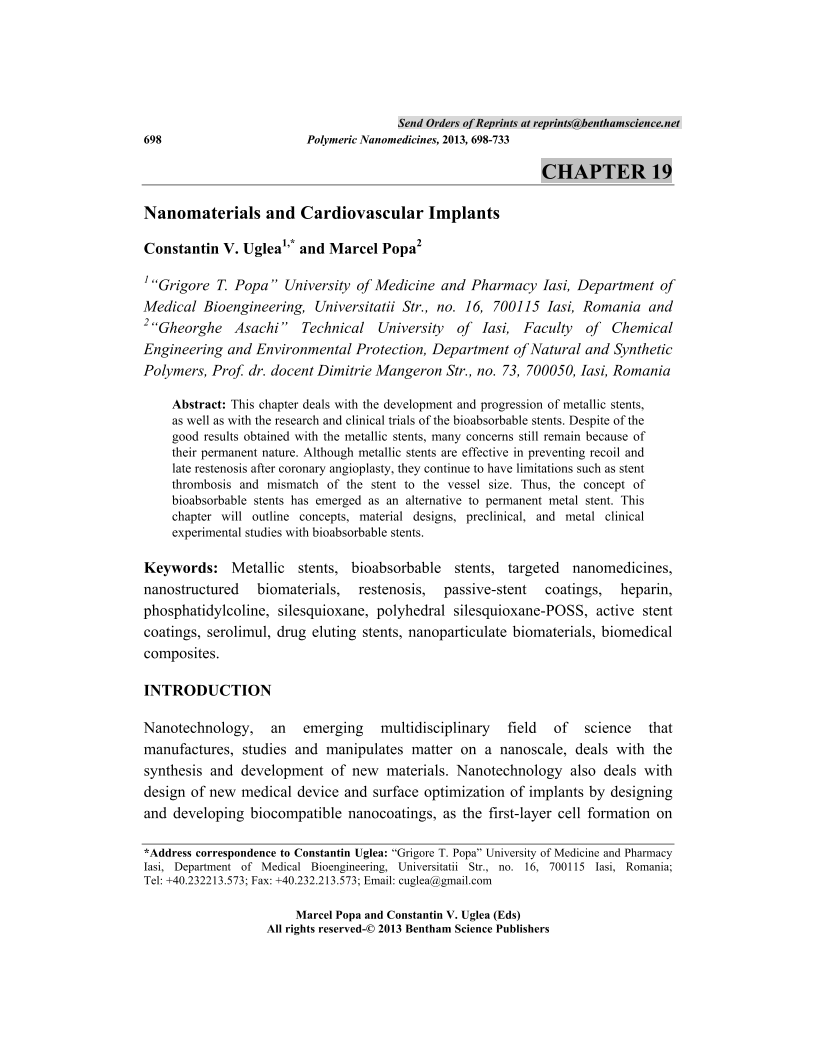
This chapter deals with the development and progression of metallic stents, as well as with the research and clinical trials of the bioabsorbable stents. Despite of the good results obtained with the metallic stents, many concerns still remain because of their permanent nature. Although metallic stents are effective in preventing recoil and late restenosis after coronary angioplasty, they continue to have limitations such as stent thrombosis and mismatch of the stent to the vessel size. Thus, the concept of bioabsorbable stents has emerged as an alternative to permanent metal stent. This chapter will outline concepts, material designs, preclinical, and metal clinical experimental studies with bioabsorbable stents.
-
From This Site
/content/books/9781608054848.chapter-19dcterms_subject,pub_keyword-contentType:Journal -contentType:Figure -contentType:Table -contentType:SupplementaryData105
