


Anticancer Immunotherapy in Combination with Proapoptotic Therapy - Possible Therapeutic Strategies for Enhancement of Anticancer Immune Reactivity in Autologous Immunocompetent Cells and After Allogeneic Stem Cell Transplantation
- Authors: Håkon Reikvam1, Elisabeth Ersvær2, Guro Kristin Melve3, Astrid Olsnes Kittang4, Bjørn Tore Gjertsen5, Øystein Bruserud6
-
View Affiliations Hide Affiliations1 Department of Medicine, Haukeland University Hospital, N 5021 Bergen, Norway, Norway 2 Institute of Medicine, University of Bergen 3 Department of Immunology and Transfusion Medicine, Haukeland University Hospital; Bergen, Norway 4 Department of Medicine, Haukeland University Hospital, N 5021 Bergen, Norway, Norway 5 Department of Medicine, Haukeland University Hospital, N 5021 Bergen, Norway, Norway 6 Department of Medicine, Haukeland University Hospital, N 5021 Bergen, Norway, Norway
- Source: Advances in Cancer Drug Targets: Volume 1 , pp 172-206
- Publication Date: January 2013
- Language: English


Anticancer Immunotherapy in Combination with Proapoptotic Therapy - Possible Therapeutic Strategies for Enhancement of Anticancer Immune Reactivity in Autologous Immunocompetent Cells and After Allogeneic Stem Cell Transplantation, Page 1 of 1
< Previous page | Next page > /docserver/preview/fulltext/9781608054749/chapter-6-1.gif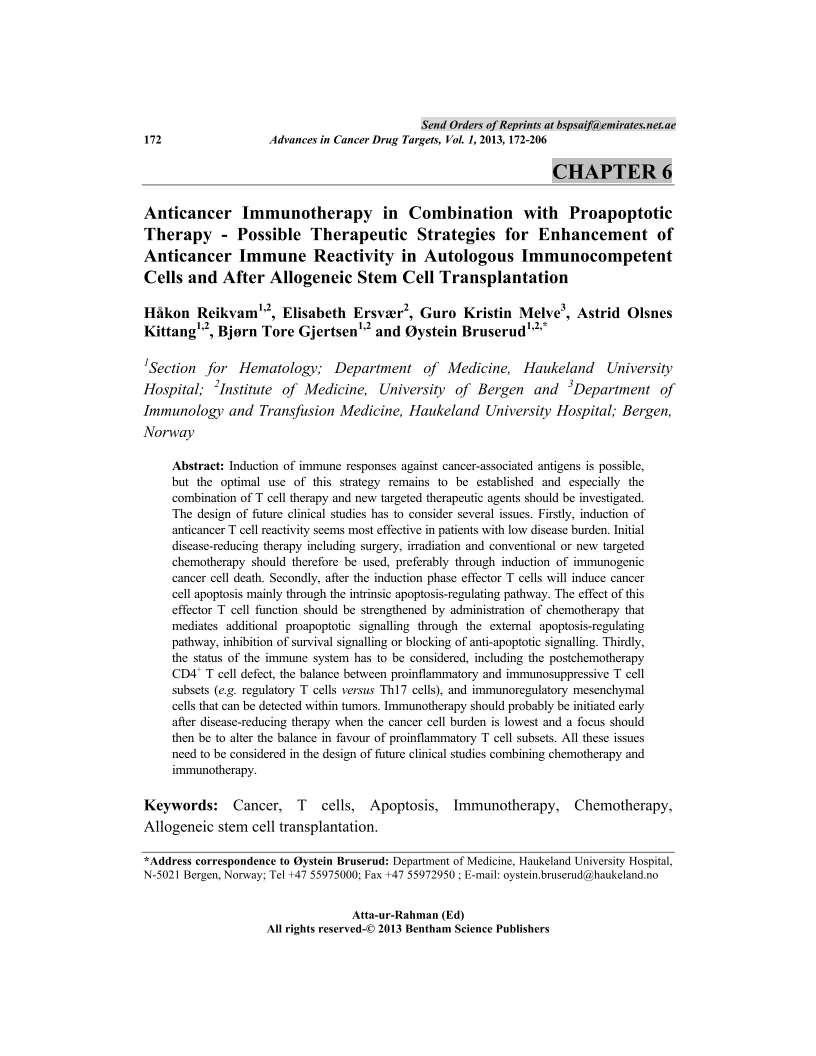
Induction of immune responses against cancer-associated antigens is possible, but the optimal use of this strategy remains to be established and especially the combination of T cell therapy and new targeted therapeutic agents should be investigated. The design of future clinical studies has to consider several issues. Firstly, induction of anticancer T cell reactivity seems most effective in patients with low disease burden. Initial disease-reducing therapy including surgery, irradiation and conventional or new targeted chemotherapy should therefore be used, preferably through induction of immunogenic cancer cell death. Secondly, after the induction phase effector T cells will induce cancer cell apoptosis mainly through the intrinsic apoptosis-regulating pathway. The effect of this effector T cell function should be strengthened by administration of chemotherapy that mediates additional proapoptotic signalling through the external apoptosis-regulating pathway, inhibition of survival signalling or blocking of anti-apoptotic signalling. Thirdly, the status of the immune system has to be considered, including the postchemotherapy CD4+ T cell defect, the balance between proinflammatory and immunosuppressive T cell subsets (e.g. regulatory T cells versus Th17 cells), and immunoregulatory mesenchymal cells that can be detected within tumors. Immunotherapy should probably be initiated early after disease-reducing therapy when the cancer cell burden is lowest and a focus should then be to alter the balance in favour of proinflammatory T cell subsets. All these issues need to be considered in the design of future clinical studies combining chemotherapy and immunotherapy.
-
From This Site
/content/books/9781608054749.chapter-6dcterms_subject,pub_keyword-contentType:Journal -contentType:Figure -contentType:Table -contentType:SupplementaryData105
