


Cellular FLICE-Like Inhibitory Protein (c-FLIP): A Key Anti- Apoptotic Factor and a Target for Cancer Therapy

- By Ahmad R. Safa1
-
View Affiliations Hide Affiliations1 Department of Pharmacology and Toxicology and Indiana University Simon Cancer Center, 980 W. Walnut St. R3 C524, Indianapolis, IN 46202, USA
- Source: Advances in Cancer Drug Targets: Volume 1 , pp 120-145
- Publication Date: January 2013
- Language: English


Cellular FLICE-Like Inhibitory Protein (c-FLIP): A Key Anti- Apoptotic Factor and a Target for Cancer Therapy, Page 1 of 1
< Previous page | Next page > /docserver/preview/fulltext/9781608054749/chapter-4-1.gif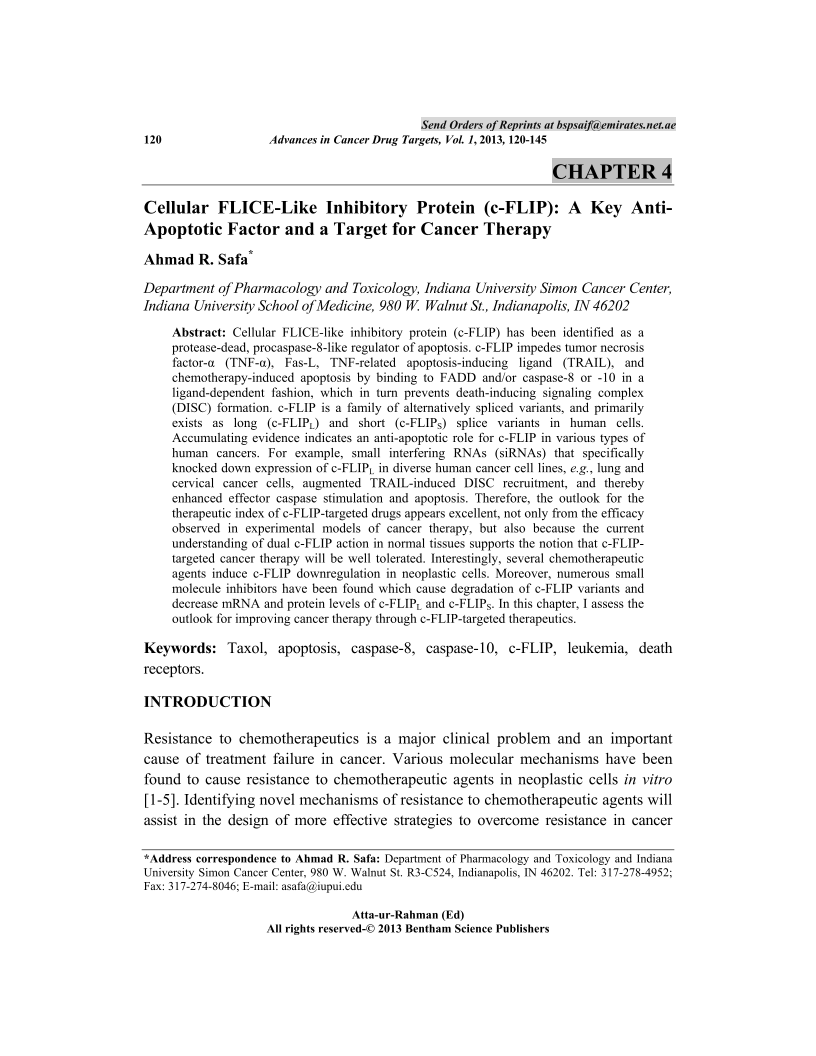
Cellular FLICE-like inhibitory protein (c-FLIP) has been identified as a protease-dead, procaspase-8-like regulator of apoptosis. c-FLIP impedes tumor necrosis factor-α (TNF-α), Fas-L, TNF-related apoptosis-inducing ligand (TRAIL), and chemotherapy-induced apoptosis by binding to FADD and/or caspase-8 or -10 in a ligand-dependent fashion, which in turn prevents death-inducing signaling complex (DISC) formation. c-FLIP is a family of alternatively spliced variants, and primarily exists as long (c-FLIPL) and short (c-FLIPS) splice variants in human cells. Accumulating evidence indicates an anti-apoptotic role for c-FLIP in various types of human cancers. For example, small interfering RNAs (siRNAs) that specifically knocked down expression of c-FLIPL in diverse human cancer cell lines, e.g., lung and cervical cancer cells, augmented TRAIL-induced DISC recruitment, and thereby enhanced effector caspase stimulation and apoptosis. Therefore, the outlook for the therapeutic index of c-FLIP-targeted drugs appears excellent, not only from the efficacy observed in experimental models of cancer therapy, but also because the current understanding of dual c-FLIP action in normal tissues supports the notion that c-FLIP-targeted cancer therapy will be well tolerated. Interestingly, several chemotherapeutic agents induce c-FLIP downregulation in neoplastic cells. Moreover, numerous small molecule inhibitors have been found which cause degradation of c-FLIP variants and decrease mRNA and protein levels of c-FLIPL and c-FLIPS. In this chapter, I assess the outlook for improving cancer therapy through c-FLIP-targeted therapeutics.
-
From This Site
/content/books/9781608054749.chapter-4dcterms_subject,pub_keyword-contentType:Journal -contentType:Figure -contentType:Table -contentType:SupplementaryData105
