


AKT Signaling in Regulating Angiogenesis
- Authors: Bing Hua Jiang1, Ling-Zhi Liu2
-
View Affiliations Hide Affiliations1 Department of Pathology, Anatomy and Cell Biology, Thomas Jefferson University, Philadelphia, PA 19107, USA 2 Department of Pathology, Anatomy and Cell Biology, Thomas Jefferson University, Philadelphia, PA 19107, USA
- Source: Advances in Cancer Drug Targets: Volume 1 , pp 22-50
- Publication Date: January 2013
- Language: English


AKT Signaling in Regulating Angiogenesis, Page 1 of 1
< Previous page | Next page > /docserver/preview/fulltext/9781608054749/chapter-2-1.gif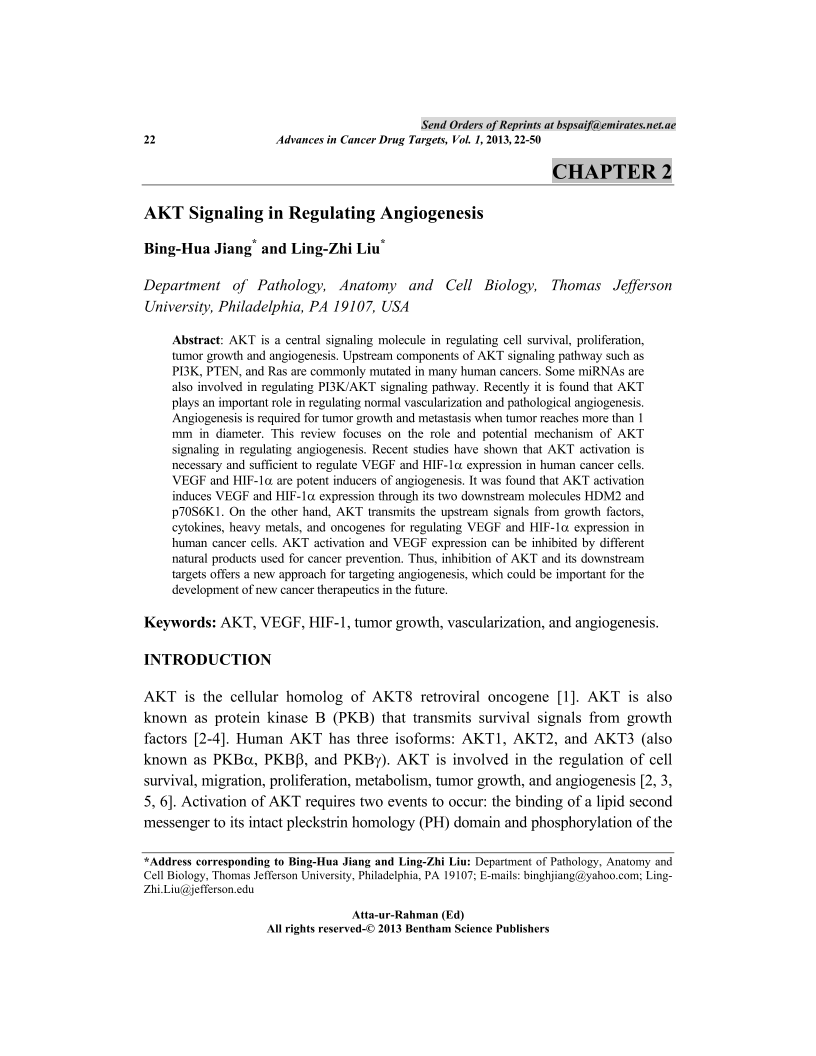
AKT is a central signaling molecule in regulating cell survival, proliferation, tumor growth and angiogenesis. Upstream components of AKT signaling pathway such as PI3K, PTEN, and Ras are commonly mutated in many human cancers. Some miRNAs are also involved in regulating PI3K/AKT signaling pathway. Recently it is found that AKT plays an important role in regulating normal vascularization and pathological angiogenesis. Angiogenesis is required for tumor growth and metastasis when tumor reaches more than 1 mm in diameter. This review focuses on the role and potential mechanism of AKT signaling in regulating angiogenesis. Recent studies have shown that AKT activation is necessary and sufficient to regulate VEGF and HIF-1α expression in human cancer cells. VEGF and HIF-1α are potent inducers of angiogenesis. It was found that AKT activation induces VEGF and HIF-1α expression through its two downstream molecules HDM2 and p70S6K1. On the other hand, AKT transmits the upstream signals from growth factors, cytokines, heavy metals, and oncogenes for regulating VEGF and HIF-1α expression in human cancer cells. AKT activation and VEGF expression can be inhibited by different natural products used for cancer prevention. Thus, inhibition of AKT and its downstream targets offers a new approach for targeting angiogenesis, which could be important for the development of new cancer therapeutics in the future.
-
From This Site
/content/books/9781608054749.chapter-2dcterms_subject,pub_keyword-contentType:Journal -contentType:Figure -contentType:Table -contentType:SupplementaryData105
