


The Efficacy of Viral Capsid Inhibitors in Human Enterovirus Infection and Associated Diseases

- Authors: Shin Ru Shih, Gary Brewer, Peng-Nien Huang, Kuo-Feng Weng, Chin Li, Hongtao Wang, Tzu-Chun Chen, Mei-Ling Li8
-
View Affiliations Hide Affiliations8 Research Center for Emerging Viral Infections, Chang-Gung University, Taiwan
- Source: Frontiers in Medicinal Chemistry: Volume 6 , pp 22-40
- Publication Date: November 2012
- Language: English


The Efficacy of Viral Capsid Inhibitors in Human Enterovirus Infection and Associated Diseases, Page 1 of 1
< Previous page | Next page > /docserver/preview/fulltext/9781608054640/chapter-2-1.gif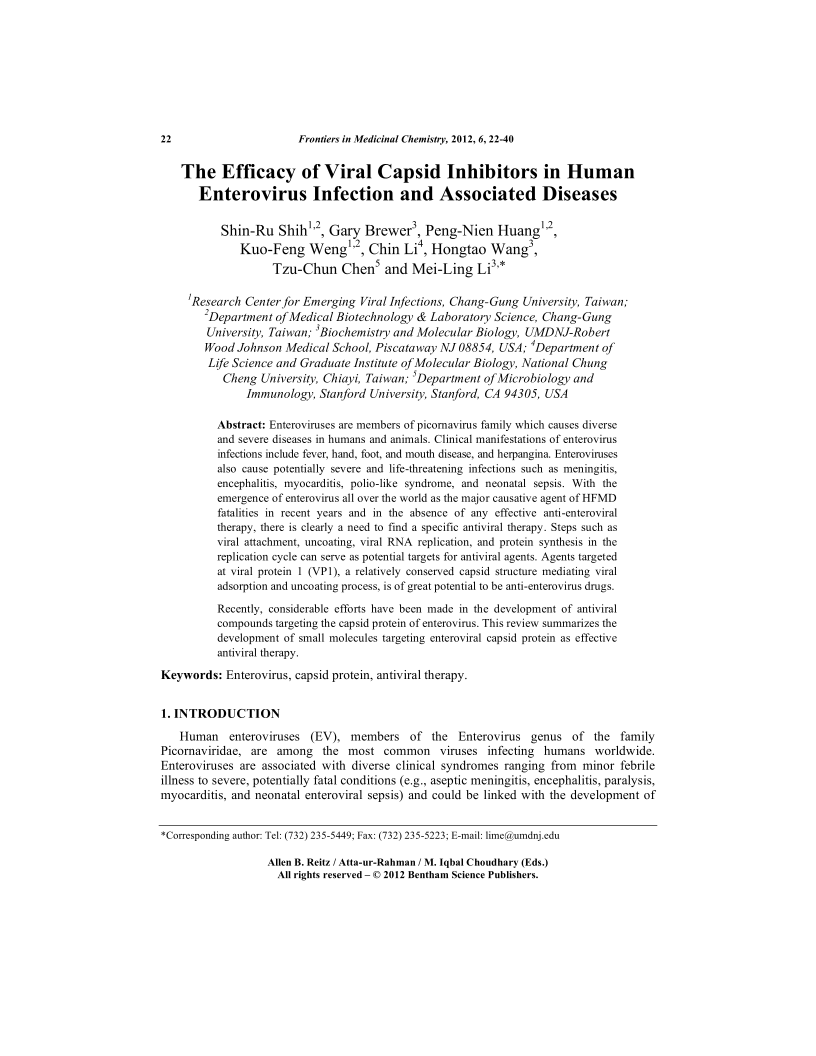
Enteroviruses are members of picornavirus family which causes diverse and severe diseases in humans and animals. Clinical manifestations of enterovirus infections include fever, hand, foot, and mouth disease, and herpangina. Enteroviruses also cause potentially severe and life-threatening infections such as meningitis, encephalitis, myocarditis, polio-like syndrome, and neonatal sepsis. With the emergence of enterovirus all over the world as the major causative agent of HFMD fatalities in recent years and in the absence of any effective anti-enteroviral therapy, there is clearly a need to find a specific antiviral therapy. Steps such as viral attachment, uncoating, viral RNA replication, and protein synthesis in the replication cycle can serve as potential targets for antiviral agents. Agents targeted at viral protein 1 (VP1), a relatively conserved capsid structure mediating viral adsorption and uncoating process, is of great potential to be anti-enterovirus drugs. Recently, considerable efforts have been made in the development of antiviral compounds targeting the capsid protein of enterovirus. This review summarizes the development of small molecules targeting enteroviral capsid protein as effective antiviral therapy.
-
From This Site
/content/books/9781608054640.chapter-2dcterms_subject,pub_keyword-contentType:Journal -contentType:Figure -contentType:Table -contentType:SupplementaryData105
