


Metallic Surfaces for Osteointegration
- Authors: Silvia Spriano1, Sara Ferraris2
-
View Affiliations Hide Affiliations1 Institute of Materials Engineering and Physics, Applied Science and Technology Department DISAT, Politecnico di Torino, Corso Duca degli Abruzzi 24, 10129, Torino, Italy 2 Institute of Materials Engineering and Physics, Applied Science and Technology Department DISAT, Politecnico di Torino, Corso Duca degli Abruzzi 24, 10129, Torino, Italy
- Source: Surface Tailoring of Inorganic Materials for Biomedical Applications , pp 279-296
- Publication Date: October 2012
- Language: English


Metallic Surfaces for Osteointegration, Page 1 of 1
< Previous page | Next page > /docserver/preview/fulltext/9781608054626/chapter-10-1.gif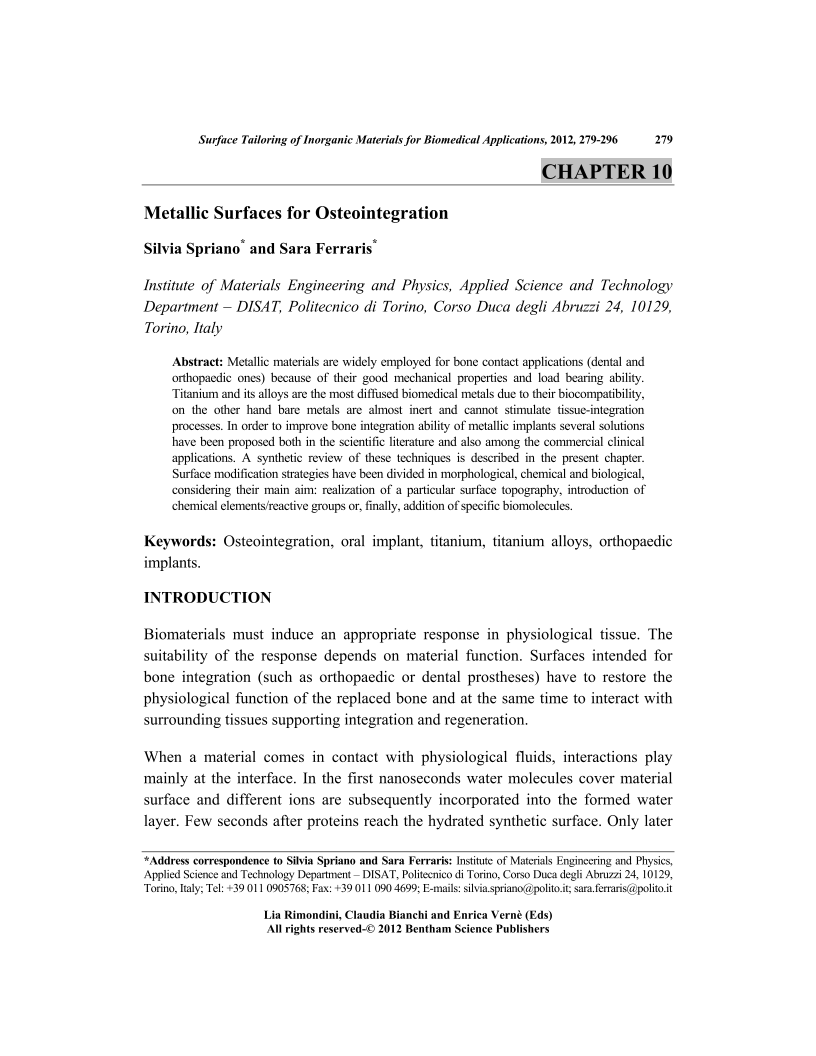
Metallic materials are widely employed for bone contact applications (dental and orthopaedic ones) because of their good mechanical properties and load bearing ability. Titanium and its alloys are the most diffused biomedical metals due to their biocompatibility, on the other hand bare metals are almost inert and cannot stimulate tissue-integration processes. In order to improve bone integration ability of metallic implants several solutions have been proposed both in the scientific literature and also among the commercial clinical applications. A synthetic review of these techniques is described in the present chapter. Surface modification strategies have been divided in morphological, chemical and biological, considering their main aim: realization of a particular surface topography, introduction of chemical elements/reactive groups or, finally, addition of specific biomolecules.
-
From This Site
/content/books/9781608054626.chapter-10dcterms_subject,pub_keyword-contentType:Journal -contentType:Figure -contentType:Table -contentType:SupplementaryData105
