


An Introduction to Fungal Dimorphism
- Authors: Jos Ruiz Herrera1, Eduardo Campos-Góngora2
-
View Affiliations Hide Affiliations1 Departamento de Ingeniera Gentica, Unidad Irapuato, Centro de Investigacin y de Estudios Avanzados del IPN, Mexico, Mexico 2 Centro de Investigacin en Nutricin y Salud Pblica, Universidad Autnoma deNuevo Len, Monterrey, NL, Mxico
- Source: Dimorphic Fungi: Their Importance as Models for Differentiation and Fungal Pathogenesis , pp 3-15
- Publication Date: May 2012
- Language: English


An Introduction to Fungal Dimorphism, Page 1 of 1
< Previous page | Next page > /docserver/preview/fulltext/9781608053643/chapter-1-1.gif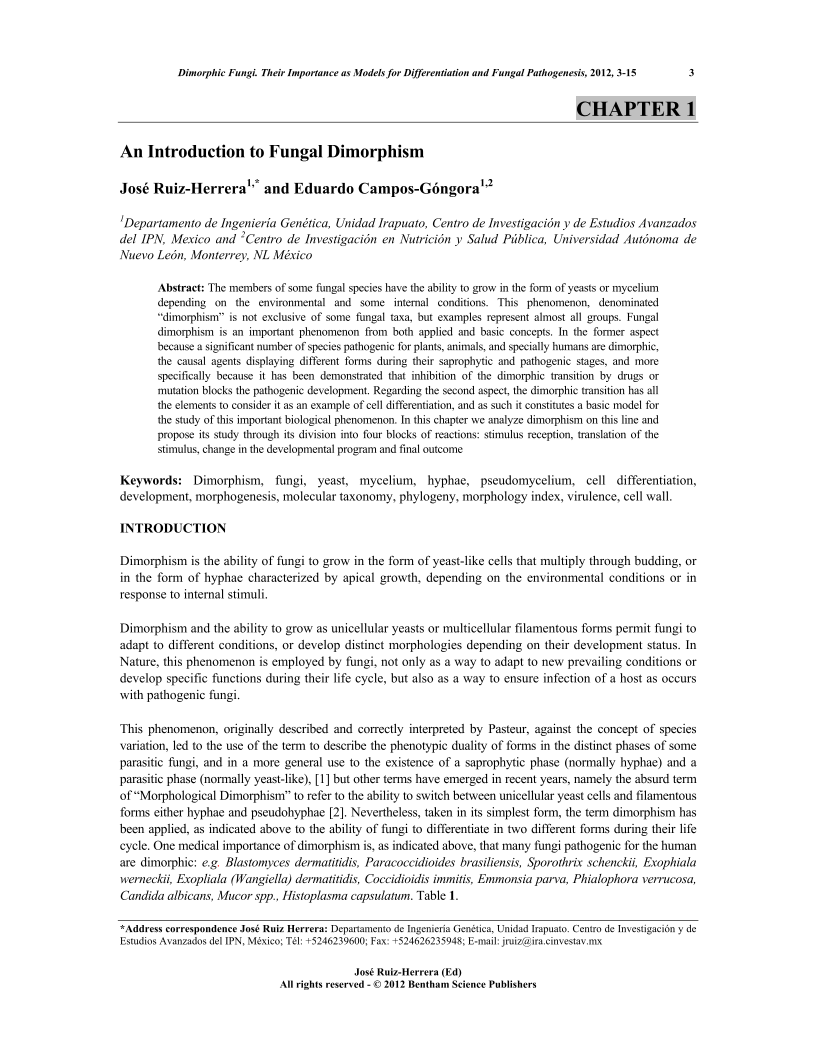
The members of some fungal species have the ability to grow in the form of yeasts or mycelium depending on the environmental and some internal conditions. This phenomenon, denominated "dimorphism" is not exclusive of some fungal taxa, but examples represent almost all groups. Fungal dimorphism is an important phenomenon from both applied and basic concepts. In the former aspect because a significant number of species pathogenic for plants, animals, and specially humans are dimorphic, the causal agents displaying different forms during their saprophytic and pathogenic stages, and more specifically because it has been demonstrated that inhibition of the dimorphic transition by drugs or mutation blocks the pathogenic development. Regarding the second aspect, the dimorphic transition has all the elements to consider it as an example of cell differentiation, and as such it constitutes a basic model for the study of this important biological phenomenon. In this chapter we analyze dimorphism on this line and propose its study through its division into four blocks of reactions: stimulus reception, translation of the stimulus, change in the developmental program and final outcome.
-
From This Site
/content/books/9781608053643.chapter-1dcterms_subject,pub_keyword-contentType:Journal -contentType:Figure -contentType:Table -contentType:SupplementaryData105
