


Recent Advances in Antiviral Agents: Antiviral Drug Discovery for Hepatitis Viruses

- By Kyuichi Tanikawa1
-
View Affiliations Hide Affiliations1 Kurume University, International Institute for Liver Research, Alley II 202, Tsubuku honmachi 636-1, Kurume 830-0047, Japan, Japan
- Source: Frontiers in Medicinal Chemistry: Volume 5 , pp 257-271
- Publication Date: December 2010
- Language: English


Recent Advances in Antiviral Agents: Antiviral Drug Discovery for Hepatitis Viruses, Page 1 of 1
< Previous page | Next page > /docserver/preview/fulltext/9781608052080/chapter-9-1.gif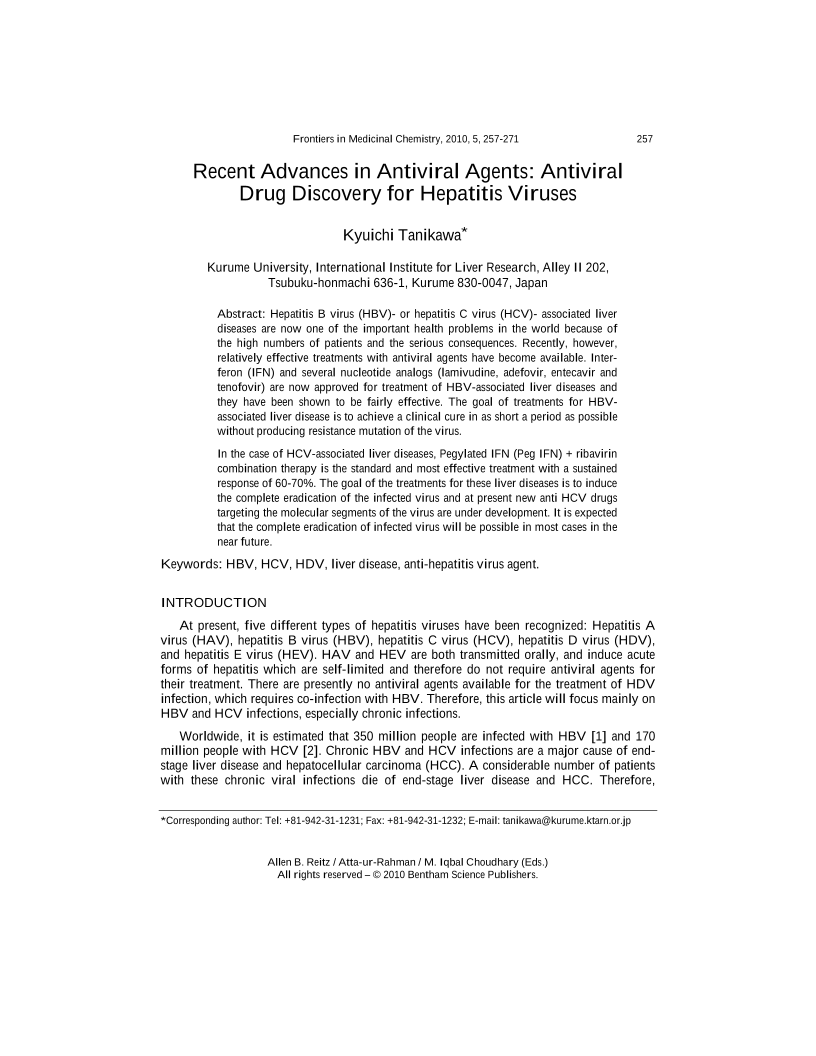
Hepatitis B virus (HBV)- or hepatitis C virus (HCV)- associated liver diseases are now one of the important health problems in the world because of the high numbers of patients and the serious consequences. Recently, however, relatively effective treatments with antiviral agents have become available. Interferon (IFN) and several nucleotide analogs (lamivudine, adefovir, entecavir and tenofovir) are now approved for treatment of HBV-associated liver diseases and they have been shown to be fairly effective. The goal of treatments for HBVassociated liver disease is to achieve a clinical cure in as short a period as possible without producing resistance mutation of the virus. In the case of HCV-associated liver diseases, Pegylated IFN (Peg IFN) + ribavirin combination therapy is the standard and most effective treatment with a sustained response of 60-70%. The goal of the treatments for these liver diseases is to induce the complete eradication of the infected virus and at present new anti HCV drugs targeting the molecular segments of the virus are under development. It is expected that the complete eradication of infected virus will be possible in most cases in the near future.
-
From This Site
/content/books/9781608052080.chapter-9dcterms_subject,pub_keyword-contentType:Journal -contentType:Figure -contentType:Table -contentType:SupplementaryData105
