


oa Novel Neuroprotective Therapies for Alzheimer's and Parkinsons's Disease
- Authors: Kirubakaran Shanmugam, Annette E.Maczurek, Megan L.Steele, Obdulio Benavente García, Julian Castillo, Gerald Munch6
-
View Affiliations Hide Affiliations6 Department of Pharmacology, School of Medicine, and Molecular Medicine Research Group, University of Western Sydney, Campbelltown, Australia
- Source: Frontiers in Medicinal Chemistry: Volume 5 , pp 15-57
- Publication Date: December 2010
- Language: English


Novel Neuroprotective Therapies for Alzheimer's and Parkinsons's Disease, Page 1 of 1
< Previous page | Next page > /docserver/preview/fulltext/9781608052080/chapter-2-1.gif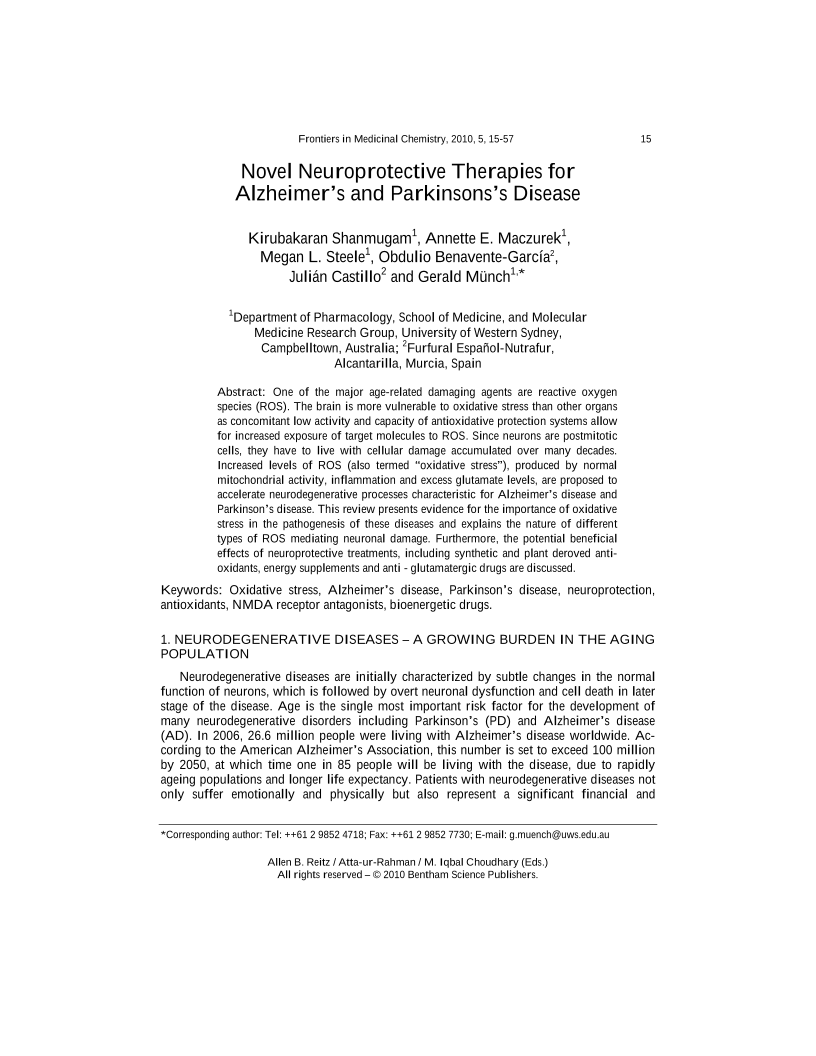
One of the major age-related damaging agents are reactive oxygen species (ROS). The brain is more vulnerable to oxidative stress than other organs as concomitant low activity and capacity of antioxidative protection systems allow for increased exposure of target molecules to ROS. Since neurons are postmitotic cells, they have to live with cellular damage accumulated over many decades. Increased levels of ROS (also termed "oxidative stress"), produced by normal mitochondrial activity, inflammation and excess glutamate levels, are proposed to accelerate neurodegenerative processes characteristic for Alzheimer's disease and Parkinson's disease. This review presents evidence for the importance of oxidative stress in the pathogenesis of these diseases and explains the nature of different types of ROS mediating neuronal damage. Furthermore, the potential beneficial effects of neuroprotective treatments, including synthetic and plant deroved antioxidants, energy supplements and anti - glutamatergic drugs are discussed.
-
From This Site
/content/books/9781608052080.chapter-2dcterms_subject,pub_keyword-contentType:Journal -contentType:Figure -contentType:Table -contentType:SupplementaryData105
