


Applications of Small Molecule Crystallography and the Cambridge Structural Database in Drug Design

- Authors: Johan Wouters1, Frédéric Ooms2
-
View Affiliations Hide Affiliations1 Institut de Recherches Wiame, Campus Ceria, Av E. Gryzon 1, B 1070 Brussels, Belgium, Belgium 2 Institut de Recherches Wiame, Campus Ceria, Av E. Gryzon 1, B 1070 Brussels, Belgium, Belgium
- Source: Frontiers in Medicinal Chemistry: Volume 1 , pp 595-606
- Publication Date: January 2004
- Language: English


Applications of Small Molecule Crystallography and the Cambridge Structural Database in Drug Design, Page 1 of 1
< Previous page | Next page > /docserver/preview/fulltext/9781608052042/chapter-25-1.gif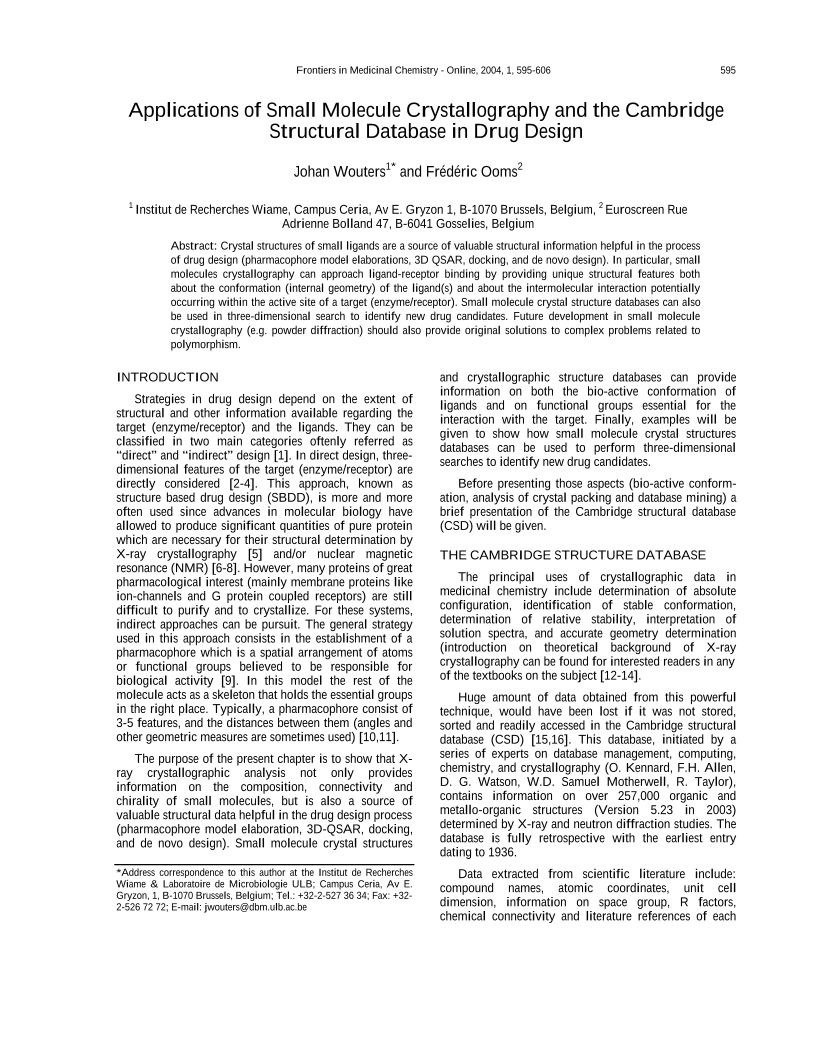
Crystal structures of small ligands are a source of valuable structural information helpful in the process of drug design (pharmacophore model elaborations, 3D QSAR, docking, and de novo design). In particular, small molecules crystallography can approach ligand-receptor binding by providing unique structural features both about the conformation (internal geometry) of the ligand(s) and about the intermolecular interaction potentially occurring within the active site of a target (enzyme/receptor). Small molecule crystal structure databases can also be used in three-dimensional search to identify new drug candidates. Future development in small molecule crystallography (e.g. powder diffraction) should also provide original solutions to complex problems related to polymorphism.
-
From This Site
/content/books/9781608052042.chapter-25dcterms_subject,pub_keyword-contentType:Journal -contentType:Figure -contentType:Table -contentType:SupplementaryData105
