


Strategies to Improve Stability and Bioavailability of Peptide Drugs
- Authors: Céline Adessi1, Claudio Soto2
-
View Affiliations Hide Affiliations1 Hoffmann La Roche Ltd., CNS Research, CH-4070 Basel, Switzerland, Switzerland 2 Hoffmann La Roche Ltd., CNS Research, CH-4070 Basel, Switzerland, Switzerland
- Source: Frontiers in Medicinal Chemistry: Volume 1 , pp 513-528
- Publication Date: January 2004
- Language: English


Strategies to Improve Stability and Bioavailability of Peptide Drugs, Page 1 of 1
< Previous page | Next page > /docserver/preview/fulltext/9781608052042/chapter-21-1.gif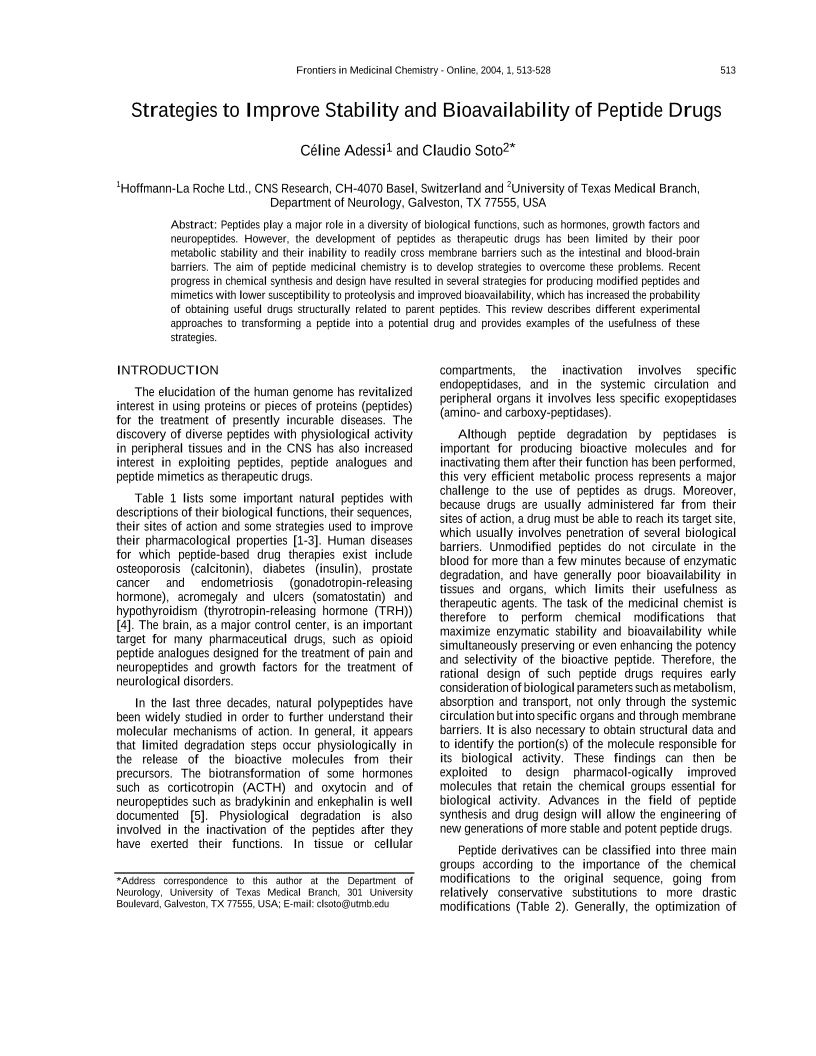
Peptides play a major role in a diversity of biological functions, such as hormones, growth factors and neuropeptides. However, the development of peptides as therapeutic drugs has been limited by their poor metabolic stability and their inability to readily cross membrane barriers such as the intestinal and blood-brain barriers. The aim of peptide medicinal chemistry is to develop strategies to overcome these problems. Recent progress in chemical synthesis and design have resulted in several strategies for producing modified peptides and mimetics with lower susceptibility to proteolysis and improved bioavailability, which has increased the probability of obtaining useful drugs structurally related to parent peptides. This review describes different experimental approaches to transforming a peptide into a potential drug and provides examples of the usefulness of these strategies.
-
From This Site
/content/books/9781608052042.chapter-21dcterms_subject,pub_keyword-contentType:Journal -contentType:Figure -contentType:Table -contentType:SupplementaryData105
