


DAST and Deoxofluor Mediated Nucleophilic Fluorination Reactions of Organic Compounds
- Authors: Rajendra P. Singha, Dayal T. Meshria and Jeanne M. Shreeve
- Source: Advances in Organic Synthesis: Volume 2 , pp 291-326
- Publication Date: January 2006
- Language: English


DAST and Deoxofluor Mediated Nucleophilic Fluorination Reactions of Organic Compounds, Page 1 of 1
< Previous page | Next page > /docserver/preview/fulltext/9781608051984/chapter-9-1.gif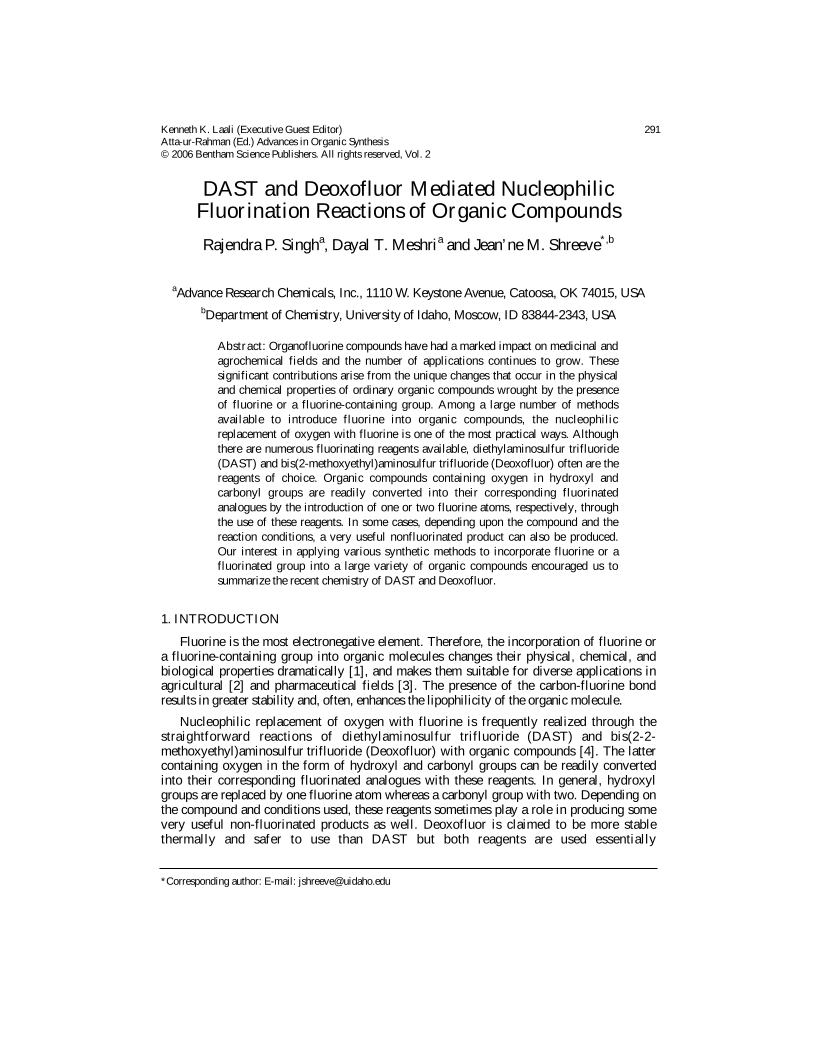
Organofluorine compounds have had a marked impact on medicinal and agrochemical fields and the number of applications continues to grow. These significant contributions arise from the unique changes that occur in the physical and chemical properties of ordinary organic compounds wrought by the presence of fluorine or a fluorine-containing group. Among a large number of methods available to introduce fluorine into organic compounds, the nucleophilic replacement of oxygen with fluorine is one of the most practical ways. Although there are numerous fluorinating reagents available, diethylaminosulfur trifluoride (DAST) and bis(2-methoxyethyl)aminosulfur trifluoride (Deoxofluor) often are the reagents of choice. Organic compounds containing oxygen in hydroxyl and carbonyl groups are readily converted into their corresponding fluorinated analogues by the introduction of one or two fluorine atoms, respectively, through the use of these reagents. In some cases, depending upon the compound and the reaction conditions, a very useful nonfluorinated product can also be produced. Our interest in applying various synthetic methods to incorporate fluorine or a fluorinated group into a large variety of organic compounds encouraged us to summarize the recent chemistry of DAST and Deoxofluor.
-
From This Site
/content/books/9781608051984.chapter-9dcterms_subject,pub_keyword-contentType:Journal -contentType:Figure -contentType:Table -contentType:SupplementaryData105
