


Sleep Apnea and Cerebrovascular Disorders
- By Henry Klar Yaggi
- Source: Contemporary Sleep Medicine For Physicians , pp 302-310
- Publication Date: October 2011
- Language: English


Sleep Apnea and Cerebrovascular Disorders, Page 1 of 1
< Previous page | Next page > /docserver/preview/fulltext/9781608051533/chapter-19-1.gif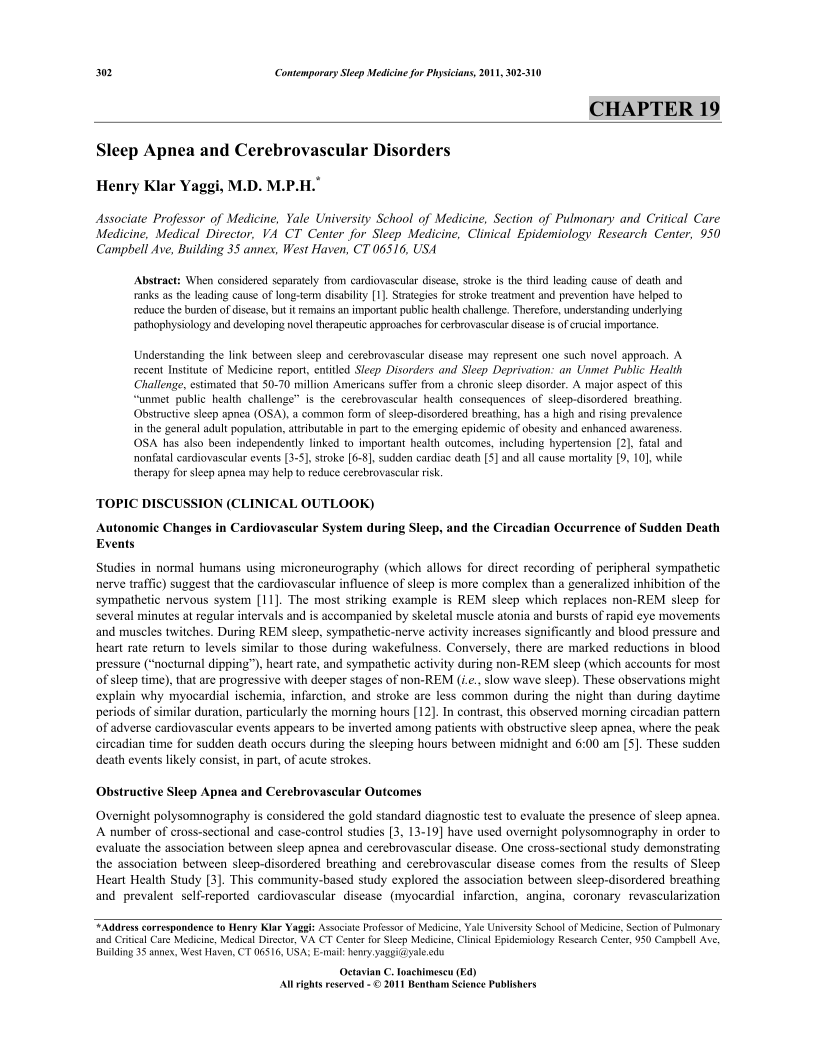
When considered separately from cardiovascular disease, stroke is the third leading cause of death and ranks as the leading cause of long-term disability [1]. Strategies for stroke treatment and prevention have helped to reduce the burden of disease, but it remains an important public health challenge. Therefore, understanding underlying pathophysiology and developing novel therapeutic approaches for cerbrovascular disease is of crucial importance.
Understanding the link between sleep and cerebrovascular disease may represent one such novel approach. A recent Institute of Medicine report, entitled Sleep Disorders and Sleep Deprivation: an Unmet Public Health Challenge, estimated that 50-70 million Americans suffer from a chronic sleep disorder. A major aspect of this "unmet public health challenge" is the cerebrovascular health consequences of sleep-disordered breathing. Obstructive sleep apnea (OSA), a common form of sleep-disordered breathing, has a high and rising prevalence in the general adult population, attributable in part to the emerging epidemic of obesity and enhanced awareness. OSA has also been independently linked to important health outcomes, including hypertension [2], fatal and nonfatal cardiovascular events [3-5], stroke [6-8], sudden cardiac death [5] and all cause mortality [9, 10], while therapy for sleep apnea may help to reduce cerebrovascular risk.
-
From This Site
/content/books/9781608051533.chapter-19dcterms_subject,pub_keyword-contentType:Journal -contentType:Figure -contentType:Table -contentType:SupplementaryData105
