


Pesticides and Environment
- By Dileep K. Singh1
-
View Affiliations Hide Affiliations1 University of Delhi, India
- Source: Toxicology: Agriculture and Environment Pesticide Chemistry and Toxicology , pp 114-121
- Publication Date: March 2012
- Language: English


Pesticides and Environment, Page 1 of 1
< Previous page | Next page > /docserver/preview/fulltext/9781608051373/chapter-7-1.gif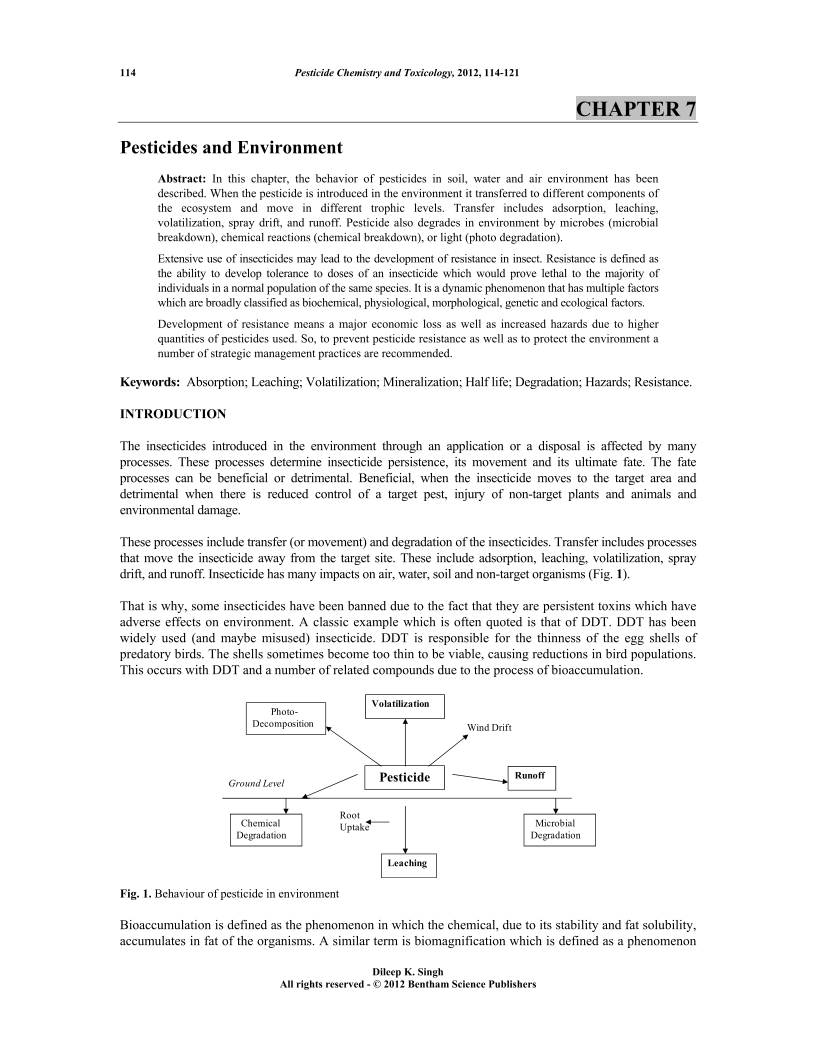
In this chapter, the behavior of pesticides in soil, water and air environment has been described. When the pesticide is introduced in the environment it transferred to different components of the ecosystem and move in different trophic levels. Transfer includes adsorption, leaching, volatilization, spray drift, and runoff. Pesticide also degrades in environment by microbes (microbial breakdown), chemical reactions (chemical breakdown), or light (photo degradation).
Extensive use of insecticides may lead to the development of resistance in insect. Resistance is defined as the ability to develop tolerance to doses of an insecticide which would prove lethal to the majority of individuals in a normal population of the same species. It is a dynamic phenomenon that has multiple factors which are broadly classified as biochemical, physiological, morphological, genetic and ecological factors.
Development of resistance means a major economic loss as well as increased hazards due to higher quantities of pesticides used. So, to prevent pesticide resistance as well as to protect the environment a number of strategic management practices are recommended.
-
From This Site
/content/books/9781608051373.chapter-7dcterms_subject,pub_keyword-contentType:Journal -contentType:Figure -contentType:Table -contentType:SupplementaryData105
