


Optical Coherence Tomography in Neovascular Age-Related Macular Degeneration
- By Victor Chong1
-
View Affiliations Hide Affiliations1 Oxford Eye Hospital, John Radcliffe Hospital, University of Oxford, Oxford, Oxford OX3 9DU, United Kingdom
- Source: Diagnostic Technologies in Ophthalmology , pp 161-169
- Publication Date: May 2012
- Language: English


Optical Coherence Tomography in Neovascular Age-Related Macular Degeneration, Page 1 of 1
< Previous page | Next page > /docserver/preview/fulltext/9781608051335/chapter-10-1.gif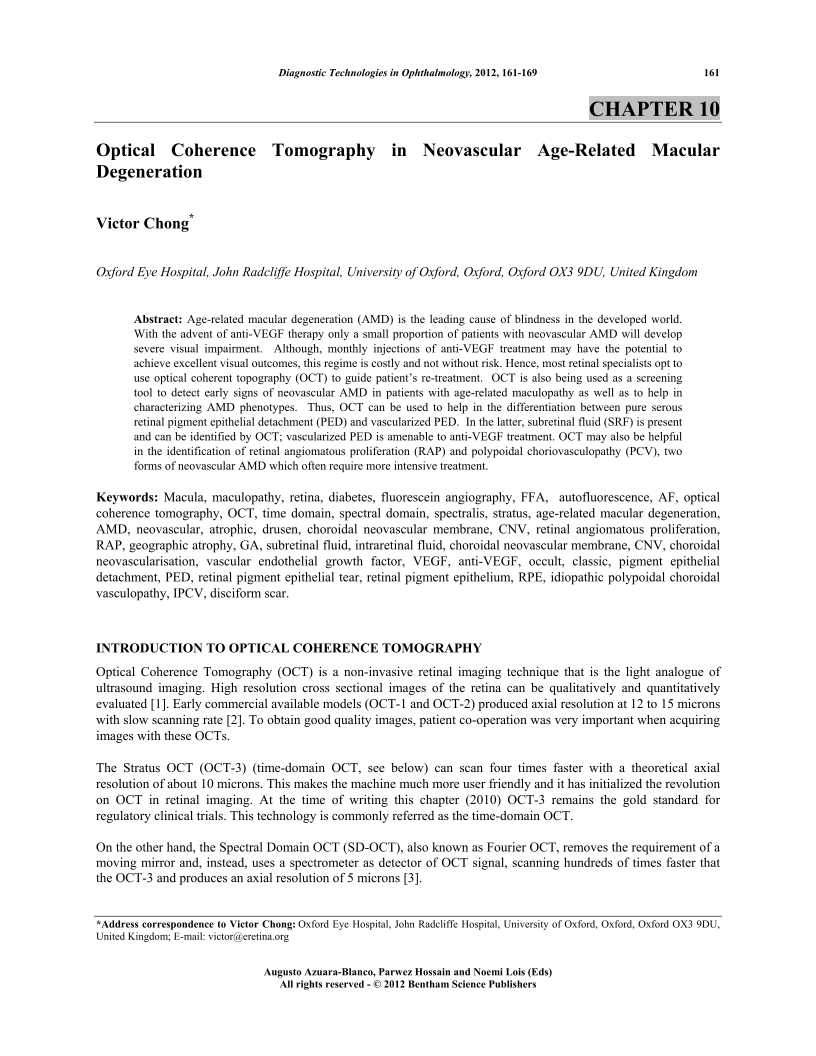
Age-related macular degeneration (AMD) is the leading cause of blindness in the developed world. With the advent of anti-VEGF therapy only a small proportion of patients with neovascular AMD will develop severe visual impairment. Although, monthly injections of anti-VEGF treatment may have the potential to achieve excellent visual outcomes, this regime is costly and not without risk. Hence, most retinal specialists opt to use optical coherent topography (OCT) to guide patients re-treatment. OCT is also being used as a screening tool to detect early signs of neovascular AMD in patients with age-related maculopathy as well as to help in characterizing AMD phenotypes. Thus, OCT can be used to help in the differentiation between pure serous retinal pigment epithelial detachment (PED) and vascularized PED. In the latter, subretinal fluid (SRF) is present and can be identified by OCT; vascularized PED is amenable to anti-VEGF treatment. OCT may also be helpful in the identification of retinal angiomatous proliferation (RAP) and polypoidal choriovasculopathy (PCV), two forms of neovascular AMD which often require more intensive treatment.
-
From This Site
/content/books/9781608051335.chapter-10dcterms_subject,pub_keyword-contentType:Journal -contentType:Figure -contentType:Table -contentType:SupplementaryData105
