


Principles of Sustainability From Ecology
- By Audrey L. Mayer1
-
View Affiliations Hide Affiliations1 School of Forest Resources and Environmental Science and Department of SocialSciences, Michigan Technological University, Houghton, Michigan, USA
- Source: Sustainability: Multi-Disciplinary Perspectives , pp 9-39
- Publication Date: August 2012
- Language: English


Principles of Sustainability From Ecology, Page 1 of 1
< Previous page | Next page > /docserver/preview/fulltext/9781608051038/chapter-2-1.gif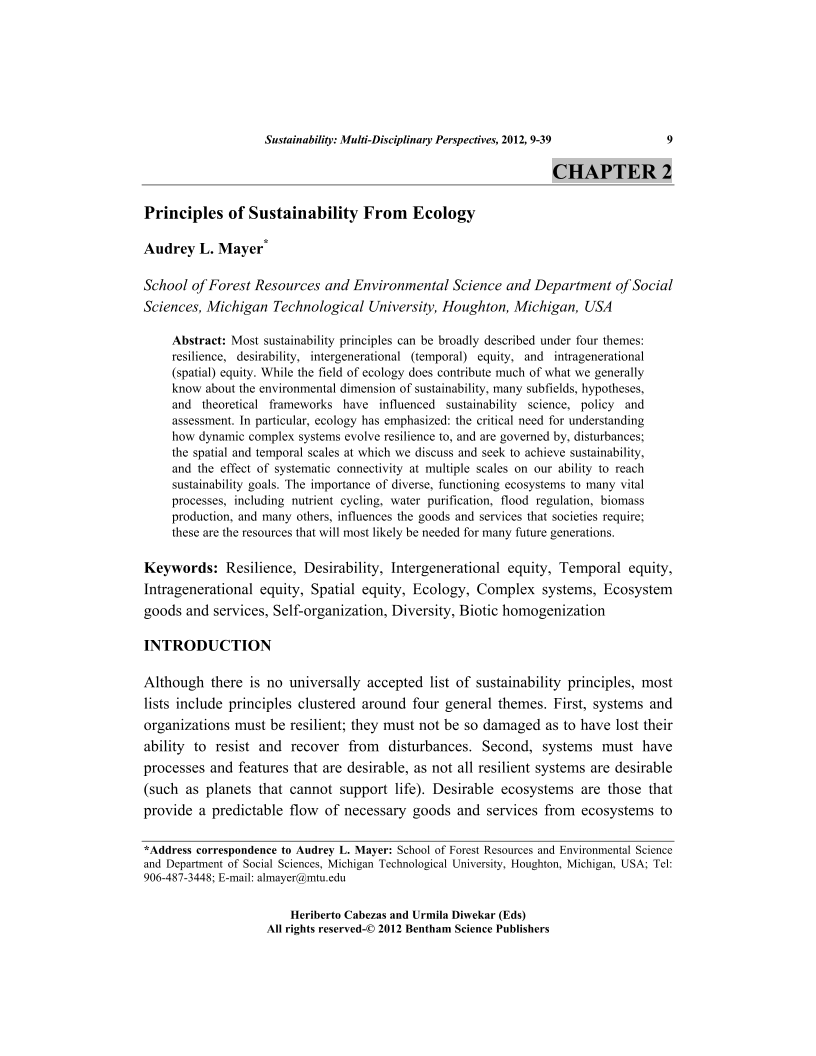
Most sustainability principles can be broadly described under four themes: resilience, desirability, intergenerational (temporal) equity, and intragenerational (spatial) equity. While the field of ecology does contribute much of what we generally know about the environmental dimension of sustainability, many subfields, hypotheses, and theoretical frameworks have influenced sustainability science, policy and assessment. In particular, ecology has emphasized: the critical need for understanding how dynamic complex systems evolve resilience to, and are governed by, disturbances; the spatial and temporal scales at which we discuss and seek to achieve sustainability, and the effect of systematic connectivity at multiple scales on our ability to reach sustainability goals. The importance of diverse, functioning ecosystems to many vital processes, including nutrient cycling, water purification, flood regulation, biomass production, and many others, influences the goods and services that societies require; these are the resources that will most likely be needed for many future generations.
-
From This Site
/content/books/9781608051038.chapter-2dcterms_subject,pub_keyword-contentType:Journal -contentType:Figure -contentType:Table -contentType:SupplementaryData105
