


Transition Metal-Catalyzed [2+2] Cycloaddition Reactions Between Bicyclic Alkenes and Alkynes
![image of Transition Metal-Catalyzed [2+2] Cycloaddition Reactions Between Bicyclic Alkenes and Alkynes](/docserver/fulltext/9781608050291/9781608050291.jpg "image of Transition Metal-Catalyzed [2+2] Cycloaddition Reactions Between Bicyclic Alkenes and Alkynes")
- Authors: William Tam, Kelsey Jack, Jordan Goodreid, Neil Cockburn4
-
View Affiliations Hide Affiliations4 Department of Chemistry, University of Guelph, Ontario, N1G 2W1, Canada.
- Source: Advances in Organic Synthesis: Volume 6 , pp 59-114
- Publication Date: March 2013
- Language: English


Transition Metal-Catalyzed [2+2] Cycloaddition Reactions Between Bicyclic Alkenes and Alkynes, Page 1 of 1
< Previous page | Next page > /docserver/preview/fulltext/9781608050291/chapter-2-1.gif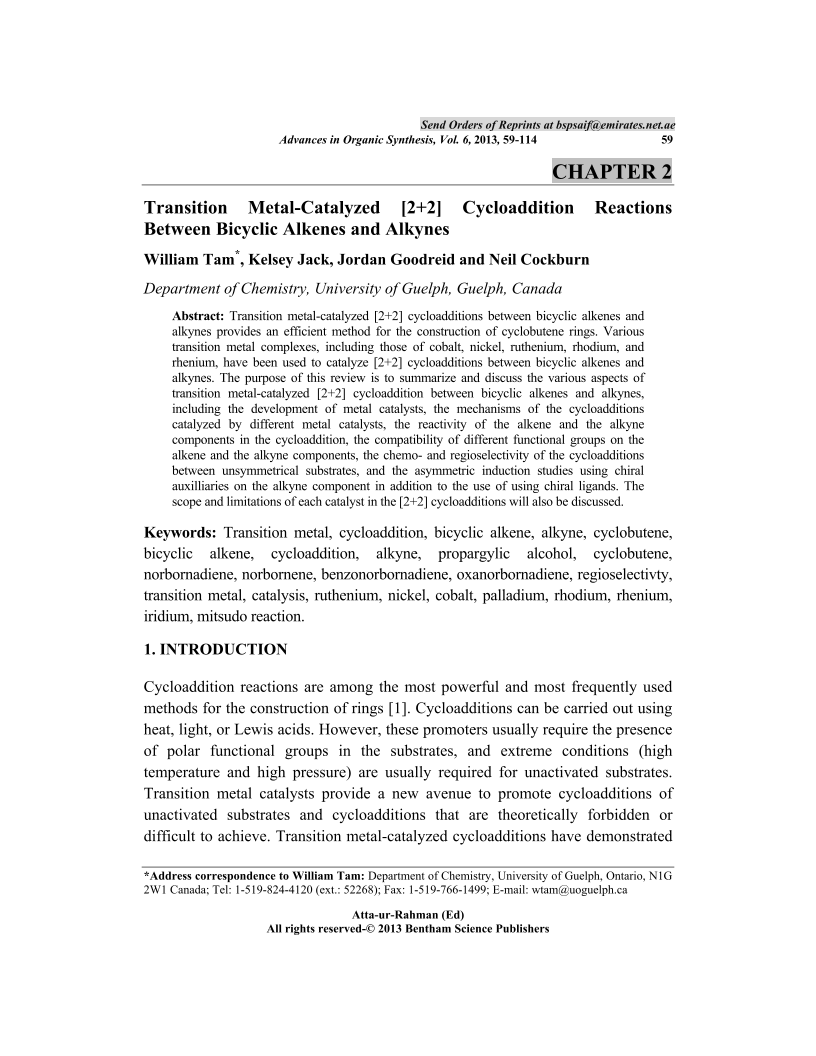
Transition metal-catalyzed [2+2] cycloadditions between bicyclic alkenes and alkynes provides an efficient method for the construction of cyclobutene rings. Various transition metal complexes, including those of cobalt, nickel, ruthenium, rhodium, and rhenium, have been used to catalyze [2+2] cycloadditions between bicyclic alkenes and alkynes. The purpose of this review is to summarize and discuss the various aspects of transition metal-catalyzed [2+2] cycloaddition between bicyclic alkenes and alkynes, including the development of metal catalysts, the mechanisms of the cycloadditions catalyzed by different metal catalysts, the reactivity of the alkene and the alkyne components in the cycloaddition, the compatibility of different functional groups on the alkene and the alkyne components, the chemo- and regioselectivity of the cycloadditions between unsymmetrical substrates, and the asymmetric induction studies using chiral auxilliaries on the alkyne component in addition to the use of using chiral ligands. The scope and limitations of each catalyst in the [2+2] cycloadditions will also be discussed.
-
From This Site
/content/books/9781608050291.chapter-2dcterms_subject,pub_keyword-contentType:Journal -contentType:Figure -contentType:Table -contentType:SupplementaryData105
