


Bentham Science Publishers
Bentham Science Publishers is a major publisher of more than 100 peer-reviewed science, technology and medical (STM) journals, along with a rapidly growing collection of eBooks. Since 1993, Bentham Science Publishers has been catering to the information needs of the pharmaceutical, engineering, biomedical and medical research community.941 - 960 of 1980 results
-
-
Frontiers in Stem Cell and Regenerative Medicine Research: Volume 2
More LessStem cell and regenerative medicine research is a hot area of research which promises to change the face of medicine as it will be practiced in the years to come. Challenges in the 21st century to combat diseases such as tumors, Alzheimer's disease and related neurodegenerative diseases may well be addressed employing stem cell therapies and tissue regeneration. Frontiers in Stem Cell and Regenerative Medicine Research is essential reading for researchers seeking updates in stem cell therapeutics and regenerative medicine.
The second volume of this series features reviews on several key topics in this field including cardiac regeneration strategies, induced pluripotent stem cell therapeutics, stem cell therapy for peripheral nerve and cutaneous injuries, dental tissue regeneration, the potential of stem cell differentiation into ovarian cells and much more.
-
-
-
Frontiers in Stem Cell and Regenerative Medicine Research: Volume 3
More LessStem cell and regenerative medicine research is a hot area of research which promises to change the face of medicine as it will be practiced in the years to come. Challenges in the 21st century to combat diseases such as cancer, Alzheimer and related diseases may well be addressed employing stem cell therapies and tissue regeneration. Frontiers in Stem Cell and Regenerative Medicine Research is essential reading for researchers seeking updates in stem cell therapeutics and regenerative medicine.
The third volume of this series features reviews on the use of stem cells in bone repair, neonatal brain injury and esophageal tissue engineering. The volume also features an update on current knowledge on regenerative medicine for lung tissue in pulmonary disease.
-
-
-
Frontiers in Stem Cell and Regenerative Medicine Research: Volume 4
More LessStem cell and regenerative medicine research is a hot area of research which promises to change the face of medicine as it will be practiced in the years to come. Challenges in the 21st century to combat diseases such as cancer, Alzheimer and related diseases may well be addressed employing stem cell therapies and tissue regeneration. Frontiers in Stem Cell and Regenerative Medicine Research is essential reading for researchers seeking updates in stem cell therapeutics and regenerative medicine.
The fourth volume of this series features reviews on the use of stem cells through retrodifferentiation, mesodermal regeneration, hematopoiesis and mesenchymal stem cells. The volume also features a chapter on current knowledge on cell-based therapy in veterinary medicine.
-
-
-
Frontiers in Stem Cell and Regenerative Medicine Research: Volume 5
More LessStem cell and regenerative medicine research is a hot area of research which promises to change the face of medicine as it will be practiced in the years to come. Challenges in the 21st century to combat diseases such as cancer, Alzheimer and related diseases may well be addressed employing stem cell therapies and tissue regeneration. Frontiers in Stem Cell and Regenerative Medicine Research is essential reading for researchers seeking updates in stem cell therapeutics and regenerative medicine.
The fifth volume of this series features reviews on vascular regeneration, neuronal tissue grafting in animal CNS disease models, template mediated biomineralization in bones, corneal endothelium differentiation and stem cell uses for managing hepatocellular carcinoma.
-
-
-
Frontiers in Stem Cell and Regenerative Medicine Research: Volume 6
More LessStem cell and regenerative medicine research is a hot area of research which promises to change the face of medicine as it will be practiced in the years to come. Challenges in the 21st century to combat diseases such as cancer, Alzheimer and related diseases may well be addressed employing stem cell therapies and tissue regeneration. Frontiers in Stem Cell and Regenerative Medicine Research is essential reading for researchers seeking updates in stem cell therapeutics and regenerative medicine.
The sixth volume of this series features reviews on roles of mesenchymal stem cells in cartilage regeneration and bone regeneration, liver regeneration, cardiogenesis, cardiomyocyte differentiation, and regenerative therapy for neurodegenerative disorders.
-
-
-
Frontiers in Stem Cell and Regenerative Medicine Research: Volume 7
More LessStem cell and regenerative medicine research is a hot area of research which promises to change the face of medicine as it will be practiced in the years to come. Challenges in the 21st century to combat diseases such as cancer, Alzheimer and related diseases may well be addressed employing stem cell therapies and tissue regeneration. Frontiers in Stem Cell and Regenerative Medicine Research is essential reading for researchers seeking updates in stem cell therapeutics and regenerative medicine.
The seventh volume of this series features reviews on roles of mesenchymal stem cells and biomaterials in cartilage regeneration in vivo, liver regeneration, cardiogenesis and magnetic nanoparticles for regenerative therapy.
-
-
-

Frontiers in Stem Cell and Regenerative Medicine Research: Volume 9
More LessStem cell and regenerative medicine research is an important area of clinical research which promises to change the face of medicine as it will be practiced in the years to come. Challenges in the 21st century to combat diseases such as cancer, Alzheimer's disease and retinal disorders, among others, may well be addressed employing stem cell therapies and tissue regeneration techniques. Frontiers in Stem Cell and Regenerative Medicine Research is essential reading for researchers seeking updates in stem cell therapeutics and regenerative medicine.
This volume includes current literature on a variety of topics:
-the utility of exogenous and endogenous neural stem cells in spinal cord injury
-somatic cells for human induced pluripotent stem cells (iPSCs)
-reactive oxygen species (ROS) mediated cellular signaling for stem cell differentiation
-the therapeutic potential of microRNAs in cardiac diseases
-stem cell therapy for the treatment of malaria
-
-
-
Frontiers on Recent Developments in Plant Science: Volume 1
More LessVolume 1 - Frontiers on Recent Developments on Plant Science is an edited, peer-reviewed volume comprised of a collection of individual chapters from leading research groups across different continents. Due to its multidisciplinary nature, the combined experiences and expertise in plant science has an increasing importance both in agriculture and industry. This evidenced by inclusion of plant biotechnology in academic curricula from high school to undergraduate and postgraduate degree levels, and even in Ph.D. courses. Plant Biotechnology encompasses a wide range of narrow research areas such as agricultural biotechnology, industrial and environmental biotechnology, pharmacy and pharmaceutical sciences and drug development from plant sources, plant-microbe host interactions studies, biochemical and molecular studies on gene expression using various plant models, gene targeting, homologous and non-homologous recombination studies on plant models, RNAi technology in plants, cereal biotechnology, biotechnology of endangered plant species, forestry, phytoremediation technologies, genetic engineering, gene delivery approaches, plant tissue culture and biological and biochemical techniques and methods/protocols involved in different focal area of plant science.
-
-
-
Functional Bio-based Materials for Regenerative Medicine From Bench to Bedside (Part 1)
More LessFunctional Bio-based Materials for Regenerative Medicine: From Bench to Bedside explores the use of bio-based materials for the regeneration of tissues and organs. The book presents an edited collection of 28 topics in 2 parts focused on the translation of these materials from laboratory research (the bench) to practical applications in clinical settings (the bedside). Chapter authors highlight the significance of bio-based materials, such as hydrogels, scaffolds, and nanoparticles, in promoting tissue regeneration and wound healing. Topics included in the book include: - the properties of bio-based materials, including biocompatibility, biodegradability, and the ability to mimic the native extracellular matrix. - fabrication techniques and approaches for functional bio-based material design with desired characteristics like mechanical strength and porosity to promote cellular attachment, proliferation, and differentiation - the incorporation of bioactive molecules, such as growth factors, into bio-based materials to enhance their regenerative potential. - strategies for the controlled release of molecules to create a favorable microenvironment for tissue regeneration. - the challenges and considerations involved in scaling up the production of bio-based materials, ensuring their safety and efficacy, and obtaining regulatory approval for clinical use Part 1 covers techniques for tissue engineering, wound healing and skin engineering. It also presents reviews on techniques such as acellular synthesis and 3D bioprinting. Materials highlighted in this part include chitosan-based nanoparticles, nanocollagen-based materials and plant based composites. Functional Bio-based Materials for Regenerative Medicine: From Bench to Bedside is a valuable reference for researchers in biomedical engineering, cell biology, and regenerative medicine who want to update their knowledge on current developments in the synthesis and application of functional biomaterials.
-
-
-
Functional Bio-based Materials for Regenerative Medicine: From Bench to Bedside (Part 2)
More LessFunctional Bio-based Materials for Regenerative Medicine: From Bench to Bedside explores the use of bio-based materials for the regeneration of tissues and organs. The book presents an edited collection of 28 topics in 2 parts focused on the translation of these materials from laboratory research (the bench) to practical applications in clinical settings (the bedside). Chapter authors highlight the significance of bio-based materials, such as hydrogels, scaffolds, and nanoparticles, in promoting tissue regeneration and wound healing.
Topics included in the book include:
- the properties of bio-based materials, including biocompatibility, biodegradability, and the ability to mimic the native extracellular matrix.
- fabrication techniques and approaches for functional bio-based material design with desired characteristics like mechanical strength and porosity to promote cellular attachment, proliferation, and differentiation
- the incorporation of bioactive molecules, such as growth factors, into bio-based materials to enhance their regenerative potential.
- strategies for the controlled release of molecules to create a favorable microenvironment for tissue regeneration.
- the challenges and considerations involved in scaling up the production of bio-based materials, ensuring their safety and efficacy, and obtaining regulatory approval for clinical use
Part 2 covers advanced materials and techniques used in tissue engineering. Topics focus on advanced composite materials for 3D scaffolds and the repair of tissues in different organs such as the heart, cornea, bone and ligaments. Materials highlighted in this part include polyamide composites, electrospun nanofibers, and different bio-based hydrogels.
Functional Bio-based Materials for Regenerative Medicine: From Bench to Bedside is a valuable reference for researchers in biomedical engineering, cell biology, and regenerative medicine who want to update their knowledge on current developments in the synthesis and application of functional biomaterials.
-
-
-
Functional Composite Materials: Manufacturing Technology and Experimental Application
More LessThis book highlights the advancements in the manufacture and testing of functional composites, metal matrix composites and polymer matrix composites. Chapters provide information about machinability studies of metals and composites using a variety of analytical techniques. The 12 book chapters also highlight updates in manufacturing technologies like CNC turning processes, electrical discharge machining, end milling, abrasive jet machining, electro chemical machining, additive manufacturing, and resistance spot welding. Readers will learn how to solve applied problems in industrial processing and applications. The book is of significant interest to industrialists working on the basic and experimental parameters for fabricating functional composites and manufacturing technology. Because of the multidisciplinary nature of the presented topics, the information presented in the book is of value to a broad audience involved in research, including materials scientists, chemists, physicists, manufacturing and chemical engineers and processing specialists who are involved and interested in the frontiers of composite materials.
-
-
-

Functional Foods for Health Maintenance: Understanding their Role in Cancer Prevention
More LessThe comprehensive information about the inverse relationship between the incidence of cancer and the consumption of natural food has impacted our understanding of the biochemical mechanisms behind cancer and its treatment. Functional Foods for Health Maintenance: Understanding their Role in Cancer Prevention is a review of pre-clinical studies unraveling the chemotherapeutic potential of phytochemicals and other food sources. The editors attempt to summarize the evidence, methods and techniques for identifying specific nutraceuticals and foods capable of interfering and reducing the risk of cancer.
The book compiles 19 edited chapters that cover the chemopreventive effects of different phytochemicals, animal and stem cell models for cancer prevention, and novel nanotechnology-based nutraceuticals. The contributors have also highlighted the techniques employed for the detection of cancer with a review on cancer biomarkers. The book is a resource for post-graduate students and researchers working in the field of nutrition, molecular biology, chemoprevention, biochemistry and pharmaceutical sciences.
-
-
-
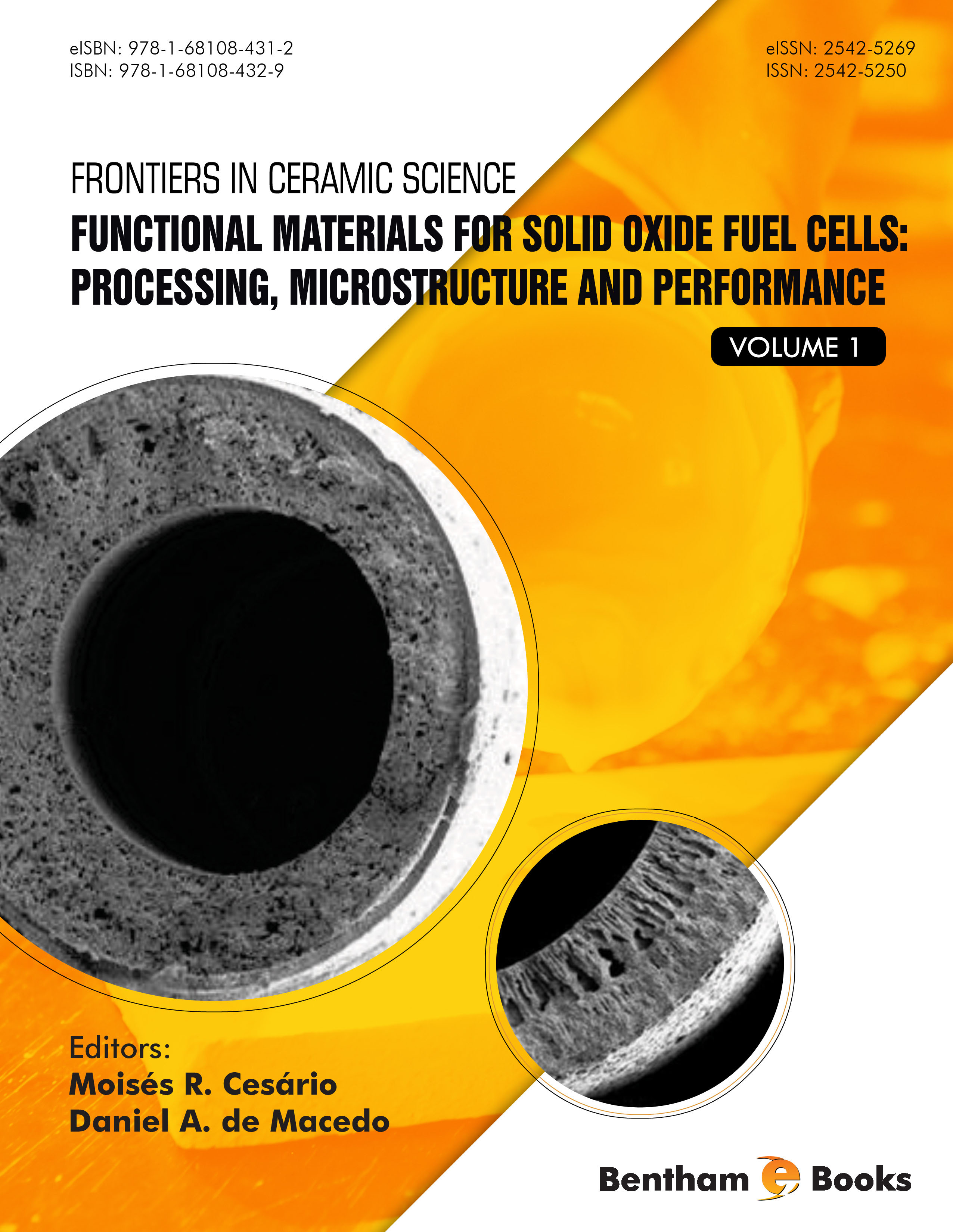
Functional Materials for Solid Oxide Fuel Cells: Processing, Microstructure and Performance
Frontiers in Ceramic Science: Volume 1
More LessFrontiers in Ceramic Science highlights the importance of ceramics and their applications in different fields such as manufacturing, construction, engineering, energy and much more. Each volume of the series brings a themed focus on a specific topic with contributions from experts around the world. The series is essential reading for materials science researchers interested in current developments in ceramic manufacturing and applications.
Solid Oxide Fuel Cells (SOFCs) have received great attention among researchers in the past few decades due to their high electrochemical energy conversion efficiency, environmental friendliness, fuel flexibility and wide range of applications. This volume is a contribution from renowned researchers in the scientific community interested in functional materials for SOFCs. Chapters in this volume emphasize the processing, microstructure and performance of electrolyte and electrode materials. Contributors review the main chemical and physical routes used to prepare ceramic/composite materials, and explain a variety of manufacturing techniques for electrode and electrolyte production and characterization. Readers will also find information about both symmetrical and single fuel cells. The book is a useful reference for students and professionals involved in SOFC research and development.
-
-
-

Functional Molecular Imaging In Hepatology
More LessThe eBook discusses how the special physiology of the liver must be considered when applying functional molecular imaging in hepatology. The main topics of the eBook include the clinical and scientific use and possibilities of functional molecular imaging for investigations of hepatic blood perfusion, substrate metabolism, and biliary secretion as well as for cancer diagnostics (primary and secondary liver cancers). Functional imaging of changes in cerebral blood perfusion and metabolism in patients with liver diseases is also covered. The eBook is written by internationally renowned experts and is intended for everyone who is interested in hepatology or functional molecular imaging.
-
-
-

Fundamental Problems in Quantum Field Theory
More LessQuantum physics is based on four fundamental interactions of electromagnetic, weak, gravitational and strong forces. All the interactions are expressed in terms of fermion and boson fields which can describe the quantum states of electrons, nucleons and photons in atoms or nuclei. Correct behaviors of these particles can now be described by the basic field theory terminology, and this textbook explains, for the first time, quantum field theory in a unifying method.
At present, modern quantum theory is at a critical junction between different theories, and this textbook presents a clear description of fundamental quantum fields with a sound theoretical framework. No exotic theoretical concepts such as general relativity nor spontaneous symmetry breaking nor quantum anomaly are adopted in this textbook, and indeed all the observed physical quantities can be well understood within the standard field theory framework without introducing any non-physical particles or fields.
From this textbook, readers will be guided through a concrete future direction of quantum field theory and will learn how the motion of electrons in any kind of material can be understood in terms of fields or state vectors. Readers will also learn about application of basic field theory in quantum chemistry, quantum biology and so on.
Fundamental Problems in Quantum Field Theory is a handy resource for undergraduate and graduate students as well as supervisors involved in advanced courses in quantum physics.
-
-
-

Fundamentals and Prospects of Catalysis
Catalysis: Current and Future Developments: Volume 1
More LessCatalysis is an area of chemical sciences which has fascinated a wide range of academicians, researchers, chemical technologists and industries throughout the world. Progress in this field has been made owing to the thrust provided by this research and commercial interest. The field of catalysis is interdisciplinary by its nature, as it requires knowledge of organic synthesis, coordination and organometallic chemistry, reaction kinetics and mechanisms, stereochemical concepts and materials science.
Fundamentals and Prospects of Catalysis highlights many important topics and sub-disciplines in catalysis by presenting 7 chapters on different but varied catalytic processes. This volume presents the following topics:
Organocatalytic Asymmetric Synthesis of Spiroacetals and Bridged Acetals
Design and Development of Bimetallic Enantioselective Salen Co Catalysts for The Hydrolytic Kinetic Resolution of Terminal Epoxides
Recent Trend in Asymmetric Heterogeneous Flow Catalysis
Ball Milling: A Green Tool in Synthetic Organic Chemistry
Recent Advances in the Developments of Enantioselective Electrophilic Fluorination Reactions via Organocatalysis
Green and Sustainable Biocatalytic Routes to Prepare Biobased Polyols as Precursors for Polyurethanes with Comparison of Existing Biobased Polyol Technology
Polymers Used as Catalysts
Catalysis: Current and Future Developments is a book series that covers theoretical, experimental and applied research on catalysis and their role in enhancing the rate of chemical reactions. The scope of topics covered by volumes in the series include heterogeneous catalysis, homogeneous catalysis, bio-catalysis, aspects of catalyst preparation, activation, aging, deactivation, rejuvenation, adsorption, synthesis and catalytic functions of new catalysts (which include novel inorganic solids and metal complexes). The series also presents reviews on surface chemistry, and commercially important model catalysts and catalytic processes.
-
-
-

Fundamentals of Analysis In Physics
More LessMany beginners find physics to be a challenging subject to learn, and the difficulty extends to each branch of physics. It would be preferable for beginners to learn about different branches of physics as quickly as possible with a simplified understanding of the relevant mathematical relationships. After learning the position of each field in physics, it becomes easier to learn details of each field. In this book, special functions are not used to explain the solutions of equations.
Fundamentals of Analysis In Physics summarizes the analytical methods in different fields of physics The book covers several known fields of physics and is a useful text for beginners in physics, college and university students, and working professionals who may not have a background in mathematics or physics.
Key features:
- Summarizes information about different fields in physics in 150 pages
- Covers 7 different fields of physics (classical mechanics, electromagnetism, quantum mechanics, relativistic quantum mechanics, statistical mechanics and more) in 7 separate chapters
-Contains simple explanations without the use of special functions.
-
-
-

Fundamentals of Cellular and Molecular Biology
More LessFundamentals of Cellular and Molecular Biology is a comprehensive textbook designed to explain the molecular mechanisms that underpin the functions and structures within living organisms. This resource focuses on improving the reader's understanding and exploration of the cellular and molecular basis of life, emphasizing the latest research findings and technological advancements. The book is structured into 18 chapters that systematically cover topics ranging from the basic structural components of cells to the complex processes of gene expression, protein synthesis, and cell signaling. It offers a detailed examination of DNA replication, repair mechanisms, and the molecular basis of genetic diseases. Additionally, the book explains the application of molecular biology in biotechnology, medicine, and environmental science, as well as advanced topics like cloning, gene therapy, and molecular diagnostics.
Key features:
- Clear explanations of complex concepts, bridging basic biology concepts with applied scientific fields
- Uses real-world examples to illustrate scientific principles
- Includes information on the latest research and technological breakthroughs.
- Glossaries and references for each chapter
- Facilitates learning with diagrams, flowcharts, and tables that summarize critical information, making complex subjects accessible.
Fundamentals of Cellular and Molecular Biology is an essential resource for students in life science courses such as biology, biochemistry, biotechnology, and medicine.
-
-
-

Fundamentals of Computational Methods for Engineers
More LessThis textbook bridges the gap between introductory and advanced numerical methods for engineering students. The book initially introduces readers to numerical methods before progressing to linear and nonlinear equations. Next, the book covers the topics of interpolation, curve fitting and approximation, integration, differentiation and differential equations. The book concludes with a chapter on advanced mathematical analysis which explains methods for finite difference, method of moments and finite elements.
The book introduces readers to key concepts in engineering such as error analysis, algorithms, applied mathematics with the goal of giving an understanding of how to solve engineering problems using computational methods. Each of the featured topics is explained with sufficient detail while retaining the usual introductory nuance. This blend of beginner-friendly and applied information, along with reference listings makes the textbook useful to students of undergraduate and introductory graduate courses in mathematics and engineering.
-
-
-

Fundamentals of Educational Technology
More LessEducational technology refers to the preparation and use of electronic resources, computer applications, and audio-visual aids which are used in the teaching and learning process. For administrators, the term also includes the planning, organization validation, evaluation, and implementation of all kinds of educational programs. Educational technology is now important for the selection of appropriate teaching media as well as the development, and application of curricula. Fundamentals of Educational Technology work explains the basic facts about educational technology to inform teachers and students. The book includes 6 chapters which cover the subject in a simple manner suitable for learners in education programs. Key Features: - 6 organized chapters on the basics of educational technology and media - Simple reader-friendly organization of contents with relevant diagrams - Gives a historical perspective of the field - Gives an overview of digital and electronic tools for educators - Includes information about relevant teaching methods - Gives an overview of the role of electronic and digital media in education - Includes a section on the ethical use of educational technology Fundamentals of Educational Technology serves as a basic guide for educational instructors and administrators on educational technology and its role in teaching and designing educational programs at all levels.
-