


Bentham Science Publishers
Bentham Science Publishers is a major publisher of more than 100 peer-reviewed science, technology and medical (STM) journals, along with a rapidly growing collection of eBooks. Since 1993, Bentham Science Publishers has been catering to the information needs of the pharmaceutical, engineering, biomedical and medical research community.1701 - 1750 of 1975 results
-
-
Soft Robotics
More LessSoft robotics is a subfield of robotics that encompasses the design and fabrication of robots with soft and compliant materials. Soft robots represent components like human prosthetics or biomimicking systems. Soft robotics relies on technically astute designs based on the correct choice of materials to enable a level of dexterity not possible with rigid components alone. The basic prime movers (actuators) and perception (sensors) require control systems capable of accommodating imprecise feedback data and often unpredictable reaction times. Mobility in such robots is more akin to entomological or marine systems than conventional guided vehicles.
This reference is a guide to materials and systems used in soft robotics. If features 6 chapters contributed by robotics experts that review fundamental and applied topics that are important for understanding the requirements of soft robotics design projects and the physics of the polymers involved. Chapters are organized for easy reading and include references.
The topics include:
- Aspects of materials processing and engineering for the development of soft robotic devices
- A review on biological gripping principles and their application to robotics
- Information about self-sensing electroadhesive polymer grippers with magnetically controllable surface geometry
- Theoretical and experimental investigations of magnetic hybrid materials
- Modeling and dynamic analysis of a novel rotary soft robotic arm by transfer matrix method
- Design and control of a portable continuum robot for pipe inspection assisted by a rigid manipulator
This book is a suitable reference for scholars and engineers who are seeking knowledge about materials and design principles in soft robotics with its practical applications.
-
-
-
Software and Programming Tools in Pharmaceutical Research
More LessSoftware and Programming Tools in Pharmaceutical Research is a detailed primer on the use for computer programs in the design and development of new drugs. Chapters offer information about different programs and computational techniques in pharmacology. The book will help readers to harness computer technologies in pharmaceutical investigations. Readers will also appreciate the pivotal role that software applications and programming tools play in revolutionizing the pharmaceutical industry.
The book includes nine structured chapters, each addressing a critical aspect of pharmaceutical research and software utilization. From an introduction to pharmaceutical informatics and computational chemistry to advanced topics like molecular modeling, data mining, and high-throughput screening, this book covers a wide range of topics.
Key Features:
· Practical Insights: Presents practical knowledge on how to effectively utilize software tools in pharmaceutical research.
· Interdisciplinary Approach: Bridges the gap between pharmaceutical science and computer science
· Cutting-Edge Topics: Covers the latest advancements in computational drug development, including data analysis and visualization techniques, drug repurposing, pharmacokinetic modelling and screening.
· Recommendations for Tools: Includes informative tables for software tools
· Referenced content: Includes scientific references for advanced readers
The book is an ideal primer for students and educators in pharmaceutical science and computational biology, providing a comprehensive foundation for this rapidly evolving field. It is also an essential resource for pharmaceutical researchers, scientists, and professionals looking to enhance their understanding of software tools and programming in drug development.
-
-
-
Soil Biology & Ecology: The Basics
More LessSoil Biology & Ecology: The Basics offers an accessible introduction to the diverse and dynamic world beneath our feet. This book explores soil as a thriving habitat, detailing the rich biodiversity of microorganisms and macroorganisms that sustain essential ecological cycles. It covers the key biochemical cycles in soil, including carbon, nitrogen, phosphorus, and sulfur, explaining how these processes contribute to soil fertility and ecosystem health. With a focus on ecological relationships like symbiosis and competition, this guide illuminates the vital role of soil in supporting life and agricultural productivity.
Ideal for students, researchers, and nature enthusiasts, the book is a foundational resource for understanding soil's impact on the biosphere and human food production.
Key Features:
- Comprehensive overview of soil as a living ecosystem
- Detailed coverage of soil microbiota, macrobiota, and biochemical cycles
- Insights into ecological relationships and their practical applications
-
-
-

Soil Improvement and Water Conservation Biotechnology
More LessSoil Improvement and Water Conservation Biotechnology is a comprehensive guide addressing the urgent challenges of soil degradation and water scarcity in agriculture. This book explores innovative biotechnological strategies for enhancing soil health, conserving water, and promoting sustainable agricultural practices. It covers foundational topics like soil composition and water management in arid regions, focusing on Mexico's unique desert environments. Advanced chapters highlight cutting-edge solutions, including biofertilizers, biopesticides, microalgal applications, bioremediation, nanotechnology, and biological desalination. The book also introduces tools like luminescent biosensors for pesticide detection and ethical and social aspects of environmental biotechnology.
Tailored for students, researchers, and professionals in agriculture, biotechnology, and environmental science, this book bridges theoretical insights with practical applications to offer sustainable solutions for global soil and water challenges.
Key Features:
- Biotechnological solutions for soil improvement and water conservation.
- Practical case studies, tools, and methodologies for sustainable agriculture.
- Ethical and social dimensions of environmental biotechnology.
-
-
-
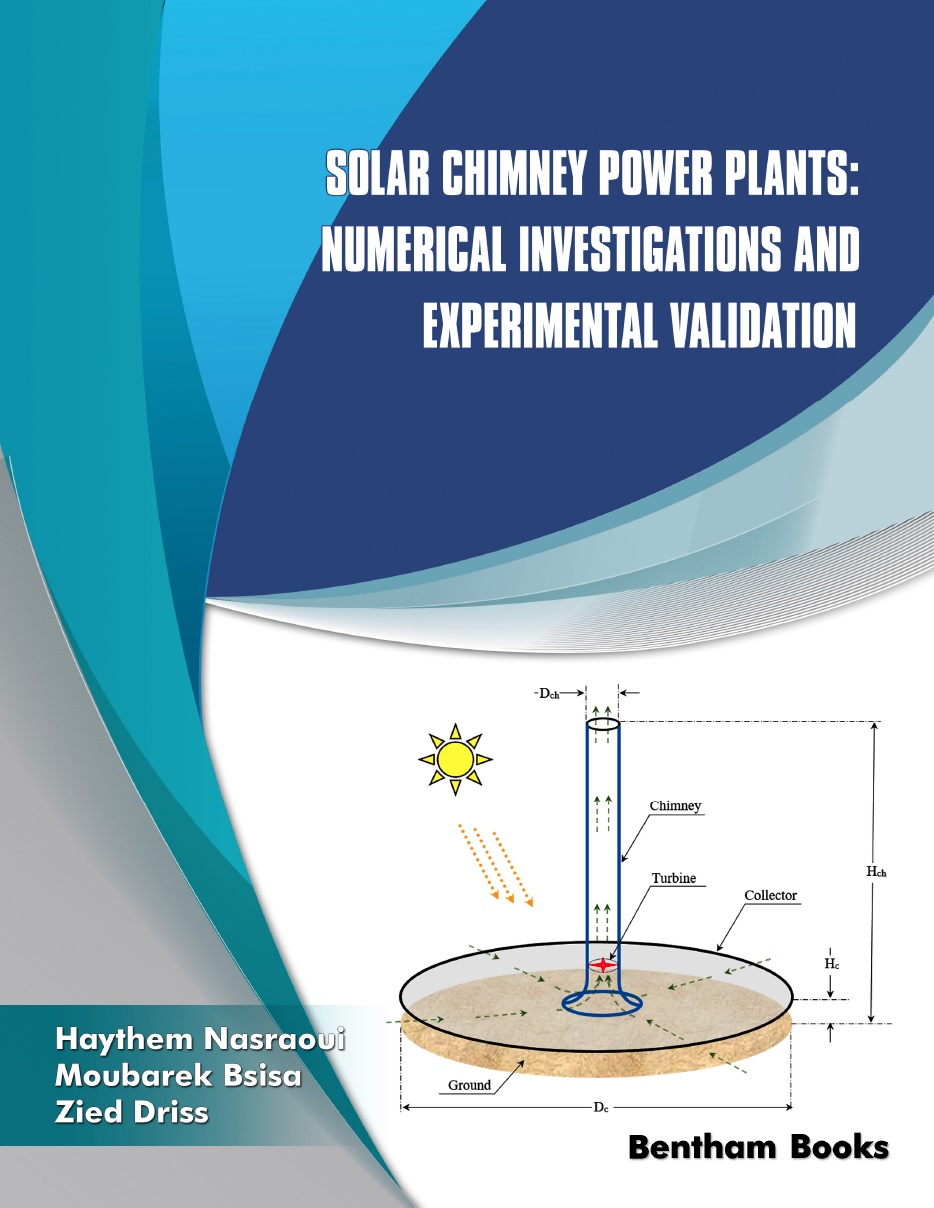
Solar Chimney Power Plants: Numerical Investigations and Experimental Validation
Recent Advances in Renewable Energy: Volume 4
More LessSolar Chimney Power Plants: Numerical Investigations and Experimental Validation summarizes the effect of the geometrical parameters of a solar chimney on the airflow behavior inside a solar chimney power plant. Chapters in this experimental handbook are presented in two parts with the goal of equipping readers with the information necessary to study and determine key factors which affect the performance of the solar chimney power plant.
In the first part, the authors present a simulation developed by using computational fluid dynamics (CFD) modeling software ANSYS Fluent to model the airflow. The adopted CFD models include k-ɛ turbulence model, the DO radiation model and the convection heat flux transfer model. These models have been validated with anterior experimental results.
In the second part, the simulated models are then tested with alternate geometric configurations of the solar chimney power plant. The numerical studies allow readers to consider ways to expand on the design optimizing of the solar chimney when constructing a prototype. Geometrical parameters include the height, the diameter of the chimney and the dimensions of the solar collector and their effect on the temperature and air pressure is documented to validate models used for experimental simulations.
The handbook also includes a study of an experimental prototype, constructed at ENIS. The researchers have gathered data on the environmental temperature, distribution of the temperature, air velocity and the power output generated by the turbine, the solar radiation and the gap of temperature in the collector of the prototype.
-
-
-

Solar Thermal Systems: Thermal Analysis and its Application
More LessThis book encapsulates current information about the science behind solar energy and the solar thermal systems available to meet domestic needs. Several scholars have contributed to the chapters in the text in an effort to distill research-oriented topics for learners.
The book starts with an explainer on the fundamentals of thermodynamics, heat transfer and solar energy in the first 2 chapters. The basics of some solar thermal devices along with their thermal modeling are covered in the next few chapters, along with solar distillation systems. This is followed by information about the design, development and applications of solar cookers along with their thermal modeling. Thermal modeling of semi-transparent PVT systems and their applications are discussed in Chapter 9. Chapter 10 covers the development in solar photovoltaic technology. Chapter 11 and Chapter 12 discusses thermal modeling of greenhouse solar dryers and presents a case study on a hybrid active greenhouse solar dryer. Chapter 13 covers the thermal analysis of photovoltaic thermal (PVT) air heaters employing thermoelectric modules (TEM). The applications of various solar systems in building sectors and the development in this field are covered in Chapter 14. Chapter 15 deals with energy and environ- economics analysis of bio-gas integrated semi-transparent photo-voltaic thermal (Bi-iSPVT) systems for Indian climates.
The book has a broad scope and is intended as a resource for students, researchers and teachers in universities, industries, and national and commercial laboratories to help learn the fundamentals and in-depth knowledge of thermal modeling and recent developments in solar heating systems.
-
-
-
Solid Base Catalysis: A New Frontier in Industrial Sustainability
More LessSolid Base Catalysis: A New Frontier in Industrial Sustainability showcases the efficiency, reusability, and environmental benefits of solid based catalysts in modern green chemistry.
Across ten chapters, the book presents advanced catalyst fabrication techniques, including sol-gel, hydrothermal, vapor deposition, and innovative waste-derived approaches paired with cutting-edge structural and spectroscopic characterization tools. The text highlights catalyst-enabled organic synthesis, biomass conversion, pharmaceutical intermediate production, heterocycle generation, and renewable energy applications, bridging foundational principles with industrial relevance.
Detailed case studies on hydrogenation, multicomponent reactions, transesterification, depolymerization, bond-forming reactions, and CO₂ conversion to methanol connect academic research with industrial practice, positioning solid base catalysts as a cornerstone technology for sustainable chemistry, circular bioeconomy, and clean-energy innovation.
Key Features
Examines cutting-edge synthesis methods for solid base catalysts
Analyzes material structure and functionality via advanced characterization techniques
Demonstrates catalytic pathways for organic synthesis and fine chemicals manufacturing
Enables biomass valorization and renewable feedstock conversion
Facilitates hydrogenation, multicomponent, and C-C/C-N/C-S bond-forming reactions
Advances CO₂ utilization, bio-oil upgrading, and sustainable fuel production
Bridges fundamental catalysis principles with industrial case studies and real-world applications
-
-
-
Solid State & Microelectronics Technology
More LessSolid State & Microelectronics Technology is a comprehensive textbook designed for courses in solid state device physics as part of electronics / electrical engineering and IT courses. The book has two main objectives aimed at students and the future engineer: 1) to deliver knowledge of quantum physics and 2) to familiarize them with modern device types and fabrication processes. The breadth of subjects covered in the book serves a useful integrative function in combining fundamental science with applications. Recent developments are illustrated thoughtfully to encourage the reader to adopt this field as their research area. Key features - Adopts a twin approach to learning about solid state devices by blending information about fundamental science with the latest fabrication technology - Covers topics recently introduced into current curricula to cater to the demands of modern engineering - Provides foundational information on quantum physics, semiconductors and electronics - Provides details about advanced devices such as BiCMOS, MESFET and FinFet devices - Encourages readers to pursue further research with detailed illustrations and references
-
-
-
Solitary waves in fluid media
More LessSince the first description by John Scott Russel in 1834, the solitary wave phenomenon has attracted considerable interests from scientists. The most interesting discovery since then has been the ability to integrate most of the nonlinear wave equations which govern solitary waves, from the Korteweg-de Vries equation to the nonlinear Schrödinger equation, in the 1960's. From that moment, a huge amount of theoretical works can be found on solitary waves. Due to the fact that many physical phenomena can be described by a soliton model, applications have followed each other, in telecommunications first, where the propagation of solitons in fiber optics helps in increasing transmission capacity, thanks to their inherent stability, which make long-distance transmission possible without the use of repeaters.
The aim of this book is to present a state of the art theoretical study of solitary waves. Prominent actual works on solitary waves are described.
-
-
-
Solubility, Delivery and ADME Problems of Drugs and Drug-Candidates
More LessThis comprehensive ebook covers all the aspects of ADME/PK modeling including solubility, absorption, formulation, metabolic stability, drug-drug interaction potential and a special delivery tool of drug candidates. The book provides an integrated view of fundamental ADME issues and challenges in early drug development from the aspect of practicing drug researchers. It also provides valuable help for the medicinal chemist in the process of multiple optimization.
-
-
-
Soluble Factors Mediating Innate Immune Responses to HIV Infection
More LessHuman Immunodeficiency Virus (HIV) infection represents one of the biggest challenges of current years. However, scientists and physicians still do not have an efficient therapy for preventing or eradicating the virus. The selection of drug-resistant strains as well as side-effects, represent common problems encountered in all anti-viral therapies. However, it has been clearly demonstrated that the potency of early immune responses profoundly regulates levels of HIV, and hence also the generation of virus mutants as well as the velocity of disease progression to AIDS.
A prominent feature of this e-book is the focus on interaction between innate immunity and HIV infection. This topic has been investigated by many authors from the late 80's, and many soluble factors responsible for such activity have been discovered, such as suPAR and HMGB1. At present, these two novel factors are the subject of very intense research on HIV infections.
A key advantage of this e-book is the selection of authors, recognized worldwide as leading experts in their field. Because of the comprehensive coverage, as well as the eminence of the authors, this e-book provides a detailed and high quality description about the role of innate immune responses regulating HIV replication. It should prove to be a useful resource for readers interested in immunology and HIV research.
-
-
-
Solutions to Problems of Controlling Long Waves with the Help of Micro-Structure Tools
More LessIn recent times the idea of cloaking has become very popular. After radar and sonar were discovered, problems of "visibility" reduction for physical bodies in air (by electromagnetic waves) or in water (by acoustical waves) have immediately become serious areas of research in physics. New technologies (sensors, actuators) of high spatial-temporal resolution, metamaterials and new computers with fast and accurate calculations, in combination with nontraditional versions of solutions to these boundary problems, have allowed physicists to obtain successful results in some cases. This e-book presents a rare attempt to understand the cloaking problem as a whole. The book should be useful for readers with a strong interest in contemporary problem solving approaches in the physics of waves.
-
-
-

Some Recent Advances in Partial Difference Equations
More LessLately there is an increasing interest in partial difference equations demonstrated by the enormous amount of research papers devoted to them. The initial reason for this increasing interest was the development of computers and the area of numerical analysis, where partial difference equations arise naturally when discretizing a partial differential equation. The aim of this e-book is to provide some recent advances in the field of partial difference equations. Applications of partial difference equations in numerical analysis and systems theory are also presented. This e-book will be of use to high level undergraduate students, graduate students and researchers working in the area of partial difference equations.
-
-
-

Sophie's Cave (Germany) - A Late Pleistocene Cave Bear Den
Famous Planet Earth Caves: Volume 1
More LessFamous Planet Earth Caves - The new series presents important caves or rock shelters in any kind of rock types all over the world. Each book focuses on a single cave presentation covering different and most important disciplines of a cave: Geology (e.g. cave genesis, sedimentology, speleothems) such as Hydrogeology (e.g. speleothems for climate reconstructions, aquifer reconstructions), Paleontology (e.g. cave bear or carnivore dens), Archeology (e.g. Palaeolithic to Medieval camp or burial sites) and modern Biology (e.g. bat caves). The books are scientific chaptered monographs, sometimes of show caves, but often of non- or difficult to access caves. The well-illustrated books are written in a mixed scientific and popular scientific way for a better understanding and larger readership, especially speleologists and natural scientists all over the world.
-
-
-
Spatial Ecology: Patterns and Processes
More LessSpatial Ecology elucidates processes and mechanisms which structure dynamics of real world systems; these include lakes, ponds, forests and rivers. Readers are introduced to contemporary models in ecological literature based on the author's research experience. The e-book starts by presenting an introduction to basic mechanisms of ecological processes. This is followed by chapters explaining these processes responsible for generating observed spatial patterns in detail. The e-book concludes with a chapter on water quality management and its relevance to the spatial setting in a wetland area. This text in spatial ecology is a welcome resource for readers interested in models, methods and methodologies best suited for the study of advanced ecology courses and topics related to ecosystem structure, function and habitat fragmentation.
-
-
-
Sperm-Mediated Gene Transfer: Concepts and Controversies
More LessSperm-mediated gene transfer (SMGT) represents a novel set of technologies for animal (or in the future, human) genetic modification using the sperm as a vector, as opposed to more traditional established routes such as fertilized eggs or embryonic stem cells.
Studies of sperm-mediated gene transfer (SMGT) indicate that sperm cells possess the ability to be utilized as carriers of exogenous genetic sequences, offering the potential of a novel cost-effective route for germline genetic modification. The fate of transgenes borne by sperm cells has been inconsistent, and analysis of offspring from SMGT experiments has shown a mixed picture in terms of genomic integration of the transgene, suggesting an episomal mode of inheritance. Various distinct steps in transgene uptake by the sperm cell have been described or proposed, including a model based upon endogenous reverse transcriptase activity. Although mature sperm cells are naturally protected against uptake of foreign nucleic acid molecules, certain environmental conditions, for example at key times within the reproductive tract, may reduce this protection, suggesting that SMGT may occasionally take place in nature. If correct, this carries profound implications for evolution and human genetic health. This e-book brings together theoretical and empirical reviews from experts in SMGT, providing comprehensive coverage of the major trends, developments and controversies in this novel field. This e-book is intended as a reference for professional researchers in the field of animal genetic modification (transgenesis) as well as teachers, scientists and physicians interested in medical genetics in general and gene therapy in particular.
-
-
-

Spinal Surgery Biomechanics: Principles for Residents and Students
More LessSpinal Surgery Biomechanics: Principles for Residents and Students provides a comprehensive overview of the biomechanical principles essential for understanding spinal surgery techniques. This book explores key topics, including pedicle screw anchorage, lumbar total disc replacement, interbody fusion techniques, and spinal surgery in osteoporotic patients. It also covers degenerative spondylolisthesis, interspinous devices, and spinal stability classification systems.
Written for students, residents, and researchers, this volume simplifies complex biomechanical concepts with clear explanations, clinical insights, and up-to-date research findings.
Key Features:
- Covers essential biomechanics relevant to spinal surgery procedures.
- Discusses surgical approaches, implant selection, and stability mechanisms.
- Examines spine surgery in osteoporotic and degenerative conditions.
- Explores motion-preserving and fusion-based spinal implants.
- Reviews classification systems for spinal trauma and instability.
-
-
-
Spline-Interpolation Solution of One Elasticity Theory Problem
More LessThe book presents methods of approximate solution of the basic problem of elasticity for special types of solids. Engineers can apply the approximate methods (Finite Element Method, Boundary Element Method) to solve the problems but the application of these methods may not be correct for solids with the certain singularities or asymmetrical boundary conditions. The book is recommended for researchers and professionals working on elasticity modeling. It explains methods of solving elasticity problems for special solids. Approximate methods (Finite Element Method, Boundary Element Method) have been used to solve these problems. The interpolation and the spline-interpolation solutions of the 3D problem of the theory of elasticity have been constructed in this work. The spline-interpolation solution can be considered as a variant of the finite element method.
-
-
-

Stability of Geotechnical Structures: Theoretical and Numerical Analysis
Frontiers in Civil Engineering : Volume 1
More LessStability of Geotechnical Structures: Theoretical and Numerical Analysis is a comprehensive introduction to the theory and applications of soil mechanics in structural stability. Chapters explain different mathematical methods to calculate structural stability metrics. Topics covered in the book include upper and lower bound methods, kinematic methods, slip line methods, limit analysis, limit equilibrium, and element methods. Additionally, fundamental principles in plasticity formulation are discussed in sufficient details, and sample computer programs are included to aid the readers in learning the presented theoretical material. The book also features worked examples for easy understanding. Theoretical material in the book is based on actual research conducted by the authors, with additional literature reviews and discussions about important topics in geotechnical engineering.
Stability of Geotechnical Structures: Theoretical and Numerical Analysis is suitable for students undertaking advanced foundation or geotechnical engineering courses at undergraduate or postgraduate levels.
Frontiers in Civil Engineering brings scholarly references on all topics related to civil engineering to the fore. Each volume presents thematic information on theoretical frameworks and practical applications in the field, including (but not limited to) soil and rock mechanics, flood control, road and railway engineering, and the construction of large buildings, bridges and dams. The series aims to compile and present useful information in the form of handbooks and monographs for students involved in technical courses in addition to providing updated references for professional engineers about the latest trends in civil engineering.
-
-
-
Stainless Steels: An Introduction and Their Recent Developments
More LessStainless Steels: An Introduction and Their Recent Developments explains issues related to surface treatment, grain refinement, coloration, defect detection and powder metallurgy of stainless steels in detail with reference to new research findings. It also includes detailed descriptions of various classes of stainless steels (ferritic, austenitic, martensitic, duplex, precipitation-hardening) and introduces readers to new generations of stainless steels such as high-N(Mn), low/no-Ni grades. This e-book is a useful reference for metallurgists and materials scientists who wish to update their knowledge about progress in stainless steels over the last couple of decades.
-
-
-

State of the Art and Progress in Production of Biohydrogen
More LessEnergy is vital to global prosperity, yet dependence on fossil fuels as our primary energy source contributes to global climate change, environmental degradation, and health problems. Hydrogen offers tremendous potential as a clean, renewable energy currency. It has the highest gravimetric energy density of any known fuel and is compatible with electrochemical and combustion processes for energy conversion without the carbon emissions. This e-book summarizes the current state of the art and progress in biohydrogen production. Biohydrogen has significant economical since biological processes are much less energy intensive compared with electrolysis and thermo-chemical processes. Topics covered in this reference include progress in hydrogen production by light-driven processes, dark fermentation, hydrogen production from waste materials, the role of molecular engineering for enhanced hydrogen production, and post-production processing such as hydrogen purification and storage.
-
-
-

Stem Cell Biology and Regenerative Medicine
Frontiers in Biomaterials: Volume 5
More LessTissue engineering is an interdisciplinary field which involves the fabrication of tissues by using a porous protein scaffold, cells and bioactive molecules. The aim of tissue engineering is to enhance medical applications and procedures. This volume introduces the reader to the basics of employing pluripotent stem cells in tissue engineering. Successive chapters present knowledge about relevant tissue engineering techniques in different medical and physiological specialties including dentistry, cardiovascular physiology, hepatology, nephrology, dermatology and orthopedics.
The text offers a wealth of information that will be of use to all students, bioengineers, materials scientists, chemists, physicians and surgeons concerned with the properties, performance, and the application of tissue engineering scaffolds in clinical settings.
-
-
-
Stem Cell Delivery Routes: From Preclinical Models to Clinical Applications
More LessStem Cell Delivery Routes: From Preclinical Models to Clinical Applications covers current knowledge about stem cell delivery for cell-based therapeutics. Starting with an introduction to stem cell technology, the book provides information about the main mesenchymal stem cell (MSC) delivery routes and the cell carrier materials used for delivering the cells. The main delivery routes include the liver, the kidney and the ocular surface. This introductory information is followed up with general information about stem cell based therapeutics, covering relevant topics such as the secretome and optimal delivery strategies in cell-based therapeutics. The book then progresses into the topic of in vivo cell tracking methods in preclinical and clinical studies with specific emphasis on the liver, ocular surface and kidney while also covering factors that affect the residence time, viability, and homing of MSCs with respect to the targeted location. The discussions in these chapters are accompanied by key descriptions of MSC-based therapeutic applications in rodent models and human clinical studies. The advantages and bottlenecks in clinical MSC application, and ways to improve the therapeutic efficacy of transplanted cells are also presented, rounding up the contents of the book.
Key Features:
- A comprehensive summary of stem cell delivery for cell-based therapeutics, suitable for a broad range of readers
- 10 sequential chapters that enhance the reader’s understanding on the subject
- An Introduction to stem cell technology
- Coverage of 3 key stem cell transplantation routes (liver, kidney and eye)
- Coverage of in vivo stem cell tracking
- Inclusion of basic information about MSC delivery and methods of clinical applications
- Discussions about preclinical mouse models
- A perspective on stem cell bottlenecks and recent advances in biomedical engineering that enhance the clinical application of MSCs
The contents are adapted to suit readers learning about advanced stem cells therapies at all academic levels, including undergraduates, lecturers, as well as those who are curious to understand more about the importance of stem cells, and their application in cell-based therapeutics. Professionals involved in allied fields in clinical research, and biomedical engineering will also gain a substantial understanding about regenerative medicine and cell transplantation.
-
-
-
Stem Cell and Regenerative Medicine
More LessThe potential use of stem cells in transplantation for the purpose of tissue regeneration is an exciting area of research currently undergoing rapid development. Implantation of human embryonic or autologous, ex vivo-expanded adult stem cells, particularly in older individuals, could circumvent the limited availability of organs/tissues as well as prevent complications related to immune rejection and disease transmission. Musculoskeletal tissue degeneration is closely associated with aging. Strategies employing autologous adult MSCs from older individuals for transplantation in order to regenerate their own ailing organ or tissues require that we vigorously define MSCs capacity to maintain growth potential and differentiation potential into the desirable cell lineages. We are currently restricted by the limited knowledge about physical parameters, such as biomechanical forces, that influence MSC growth and differentiation capacities. This is particularly important for MSCs isolated from older individuals, for whom little information is available. This special volume aims to serve as an impetus in generating more interest among stem cell researchers and biotechnologists to improve and develop the cell-based therapies of damaged tissue using stem cells.
-
-
-
Stem Cells Between Regeneration and Tumorigenesis
More LessExperts in the field of cellular biology have shown that the reactivation of pluripotency inherent in all cells can allow us to reprogram cells into a specific cell line. This reprogramming paradigm is steadily enhancing our understanding of cell differentiation processes and cellular identity. Consequently, new prospects for cellular therapies of diseases and in vivo regeneration have risen.
Stem Cells Between Regeneration and Tumorigenesis focuses on organ specific molecular pathways that trigger two opposite ways that a stem cell can grow (regeneration and neoplasia). Chapters provide a balanced set of information about tissue regeneration and tumorigenesis in several tissues and biological systems (the nervous, circulatory, oral, skin, digestive and endocrine systems). Additional reviews of the immunological role in regulating the two stem cell growth processes and the role of genomics and proteomics in understanding these processes round up the contents of this monograph.
Readers of this book will gain the following key benefits:
-an insight into the complexity and controversy surrounding the established dual stem cell behavior paradigm (regeneration versus tumorigenesis)
-an understanding of the intricate cellular processes such as stem cells maintenance
-background knowledge of optimizing tailored therapy in personalized and regenerative medicine
Stem Cells Between Regeneration and Tumorigenesis is a useful resource for advanced graduates and researchers undertaking courses in molecular biology and personalized medicine, as well as interns involved in stem cell research programs.
-
-
-

Stem Cells in Clinical Application and Productization
More LessStem cells with self-renewal and multi-lineage differentiation potential have potential for developing medicines for a range of refractory and recurrent disease. This book mainly focuses on the landscape of the biological properties and translational research of stem cells types, including hematopoietic stem cells (HSCs), neural stem cells (NSCs) and mesenchymal stem/stromal cells (MSCs).
The book also introduces readers to the current updates and development prospects of stem cells in singular or combination therapies with advanced biomaterials and technological innovations towards large-scale standardization and productization.
Key Features:
- Introduces readers to stem cell biology and tissue engineering
- Covers innovations in stem cell therapy and biomaterials
- Includes a brief guide to commercialization of stem cell technology
- Includes references for advanced readers
The contents will strengthen the reader’s understanding of stem cell-based therapies. This book is a primer on stem cell and regenerative medicine for a wide readership including students, healthcare professionals, researchers and general readers.
-
-
-
Steroids and their Medicinal Potential
More LessSteroids are an important class of biomolecules with diverse roles and functions. Besides being important as structural and signaling molecules, these molecules hold promise against numerous disorders, including cardiovascular conditions, cancer, inflammation and autoimmune disorders. Many investigations have demonstrated that steroidal frameworks may provide lipid solubility, receptor selectivity or membrane binding properties to non-steroidal pharmacophores. However, the therapeutic use of steroids can be dangerous when they're used incorrectly. Additionally, misconceptions about steroids among athletes or recreational users can lead to steroid abuse and poor health outcomes. Steroids and their Medicinal Potential discusses the classification, distribution, biosynthesis, chemical synthesis and semi-synthesis of different steroids. The medicinal potential of each class is exhaustively discussed in different chapters. The latest advances and developments in steroid-based drug discovery are also discussed thoroughly. The book aims to address general questions and concerns about steroids, providing readers a useful resource on the subject. Key Features
-Provides comprehensive coverage on all aspects of steroids including steroid chemistry, biochemistry, medicinal potential, drug discovery and advances in target-binding interactions of steroid-based drugs
-Includes chapters dedicated to anabolic steroids and their abuse
-Designed as an accessible source of information for understanding steroidal drugs with structured chapters
-Includes references for advanced readers
-
-
-
Stochastic Lagrangian Modeling for Large Eddy Simulation of Dispersed Turbulent Two-Phase Flows
More LessUnderstanding the dispersion and the deposition of inertial particles convected by turbulent flows is a domain of research of considerable industrial interest. Inertial particle transport and dispersion are encountered in a wide range of flow configurations, whether they are of industrial or environmental character. Conventional models for turbulent dispersed flows do not appear capable of meeting the growing needs of chemical, mechanical and petroleum industries in this regard and physical environment testing is prohibitive. Direct Numerical Simulation (DNS) and Large Eddy Simulation (LES) have become powerful tools for the investigation of particle-laden turbulent flows with the help of advances in computing resources. The hybrid Eulerian-Lagrangian approach plays a key role in predicting inertial particle dispersion and deposition. This ebook explains the use of stochastic tools to enhance the accuracy of the Eulerian-Lagrangian large eddy simulation of particle-laden turbulent flows of practical interest. The book should be a useful resource for chemical, mechanical, petroleum and environmental engineering postgraduates and researchers interested in applying tractable yet powerful numerical tools to solve problems involving multiphase flows.
-
-
-

Stress Response and Immunity: Links and Trade Offs
More LessWhen environmental conditions deviate from the optimal range, stress ensues. Stress response is a set of reactions that allow the organism to adjust and survive adverse conditions. Stress can be physical, such as extreme temperature, radiation, injury, or psychological, caused by perceived danger or deprivation. Every living cell has biochemical mechanisms to cope with physical stress. These mechanisms show a degree of similarity among several types of living organisms.
Stress Response and Immunity: Links and Trade Offs explores the functional and evolutionary connections between stress response and immunity. The book introduces the reader to the concept of stress and subsequently examines the connection between stress response and immunity at various evolutionary stages of living organisms - from bacteria to humans. The book also features chapters dedicated to the role of tumor suppressor genes and the immune system of the brain.
The information presented in this reference demonstrates the profound effects of physical and psychological stress on human health. Readers with basic knowledge of molecular biology will learn about the interesting facets of stress responses and the evolutionary trade offs observed in different life forms.
-
-
-
Structural Failure Analysis and Prediction Methods for Aerospace Vehicles and Structures
More LessThis book deals with structural failure (induced by mechanical, aerodynamic, acoustic and aero-thermal, loads, etc.) of modern aerospace vehicles, in particular high-speed aircraft, solid propellant rocket systems and hypersonic flight vehicles, where structural integrity, failure prediction and service life assessment are particularly challenging, due to the increasingly more demanding mission requirements and the use of non-traditional materials, such as non-metallic composites, in their construction. Prediction of the complex loading environment seen in high-speed operation and constitutive / fracture models which can adequately describe the non-linear behaviour exhibited by advanced alloys and composite materials are critical in analyzing the non-linear structural response of modern aerospace vehicles and structures. The state-of-the-art of the different structural integrity assessment and prediction methodologies (including non-destructive structural health monitoring techniques) used for the structural design, service life assessment and failure analysis of the different types of aerospace vehicles are presented. The chapters are written by experts from aerospace / defence research organizations and academia in the fields of solid mechanics, and structural mechanics and dynamics of aircraft, rocket and hypersonic systems. The book will serve as a useful reference document containing specialist knowledge on appropriate prediction methodologies for a given circumstance and experimental data acquired from multi-national collaborative programs.
-
-
-
Structure-Activity Relationship Studies in Drug Development by NMR Spectroscopy
More LessDrug discovery is still a process which involves screening of a large number of chemical compounds against a defined biological target. However, this approach is now being gradually replaced by more rational and knowledge-based approaches, such as in sillico screening and target based drug development. Increase in the cost of development of NME (New Molecular Entities) and productivity crises in pharmaceutical industry are catalyzing this change.
Spectacular advances in the field of use of NMR spectroscopy in drug discovery and development have been triggered by a greater understanding of the disease process at the molecular level.
While NMR is generally valued as an important tool for structure determination and more recently as a non-invasive diagnostic technique, its potential in drug discovery is based on its capacity to map molecular interactions at the atomic level. Chemical shifts, cross relaxation, and exchange of protons are among the NMR parameters which are highly sensitive to the exact molecular environments , and therefore yield information about how a small molecule (candidate compound) binds to a target protein (receptor) or to other macromolecules. These NMR parameters are also used to exactly map the part of the macromolecular target to which the ligand is bound. As a result, NMR is now extensively used as an efficient tool in the drug (ligand) discovery and optimization process or for the assessment of target drug ability. Recent advances in NMR hardware and methodology have provided a fresh impetus in the area of pharmaceutical innovation and productivity. This book is aimed to present recent cutting edge knowledge, practices and experiences in this important field.
The book comprises seven scholarly written articles . Mailavaram and Devarakonda in their introductory review skillfully summarize the broad approaches of NMR-based drug discovery . Park and Kim focus on the use of NMR spectroscopic techniques in the study of drug delivery, drug release and other pharmaceutic parameters. Roberto and Marina provide a chronological account of fragment-based drug discovery by using NMR-based screening methods. Specific utilization of NMR-based techniques in the discovery and development of anticancer drugs is reviewed by Solomon and Lee. Ramalho et al. review another fascinating application of NMR in understanding the behavior and radio sensitizing properties of bioreductive drugs. Zoppetti comprehensively reviews the application of NMR spectroscopy in the study of host-guest cyclodextrin complexes, particularly their use as drug delivery vehicles. A concise review is contributed by Nhat and Hong on recent advances in the field of application of NMR in structure-activity relationship study of nanostructure drugs. These contributions of outstanding group of experts make this a very useful treatise of highly readable articles. Our felicitations and gratitude goes to them. The book will hopefully fulfill an important need of the scientific community by providing comprehensive reviews on cutting edge topics written by leading experts in the field.
We extend our warmest thanks to the staff of Bentham Science Publishers, particularly, to Mr. Mahmood Alam (Director), Ms. Taqdees Malik (Editorial Assistant) and Ms. Sadaf Idrees Khan (Composer) for undertaking the important task of closely coordinating with the contributors and preparing the content lists, index, etc.
-
-
-
Subharmonic Functions, Generalizations, Holomorphic Functions, Meromorphic Functions, and Properties.
More LessThis book explains different types of subharmonic and harmonic functions. The book brings 12 chapters explaining general and specific types of subharmonic functions (eg. quasinearly subharmonic functions and other separate functions), related partial differential equations, mathematical proofs and extension results. The methods covered in the book also attempt to explain different mathematical analyses such as elliptical equations, domination conditions, weighted boundary behavior. The book serves as a reference work for scholars interested in potential theory and complex analysis.
-
-
-

Substance and Non Substance Related Addiction Disorders: Diagnosis and Treatment
More LessSubstance and Non substance Related Addiction Disorders: Diagnosis and Treatment is an accessible handbook about the two main types of addiction disorders. It is divided into three sections which cover 1) the scientific underpinnings of addiction disorders (neurobiology, addiction neural reward pathways, genetic and psychosocial basis of addiction, screening and treatment), 2) information about substances commonly used by addicts (pharmacology, diagnostics and treatment considerations) and 3) current understandings of the diagnosis and treatment of behavioral problems (such as gambling), respectively.
Key features:
-covers both substance abuse and behavioral problems
-uses a reader friendly format with a patient education handout style
-includes key learning points listed in each chapter
-includes clinical vignettes which outline brief history, evaluation, diagnostic considerations with successful pharmacological, psychological and social interventions
-includes references in each chapter
The handbook meets the information needs of medical students and professionals (family physicians, nurses, addiction therapists, psychiatry residents, and other health care professionals) interested in the primary care of patients afflicted with addiction disorders.
-
-
-
Subwavelength Optics: Theory and Technology
More LessFrom the beginning of this century, there has been a dramatic increase in interest in the study of surface plasmon polaritons-based metallic subwavelength structures and learning. This is a refreshing concise book on issues and considerations in designing, nanofabrication and characterization of subwavelength plasmonic structures as well as their applications in imaging, superfocusing, semiconductor lasers, data storage, optical communications, biosensing, and immunoassays. The book can serve as a textbook for education and training as well as a reference book that aids research and development in those areas integrating light, photonics, nanotechnology, semiconductors, chemistry, and biology. Another aim of the book is to stimulate the interest of researchers, engineers, and businessmen to foster collaboration through multidisciplinary programs in this frontier science, leading to development and transition of the resulting technology. Both basic and applied aspects are presented in this book. Many illustrative worked-out examples and instructive exercises are given, which should prove to be particularly useful.
-
-
-

Suicide and Predicament: Life is a Predicament
More Less"Suicide and Predicament: the medical model of suicide is incomplete" takes a broad view of suicide. It argues that a large proportion of people who suicide do not have a mental disorder, and therefore it is essential to know about the predicaments of people. The book draws on sociology and takes issue with the medicalization of distress and suicide. It discusses genetics and draws attention to the importance of alcohol in suicide. It takes as examples, 127 suicide cases found in public record. Unique features include 1) predicament model, 2) pathways model, 3) typology of suicide, and 4) prevention initiatives.
-
-
-

Suicide: A Global Perspective
More LessIn the year 2000, approximately one million people died from suicide: a "global" mortality rate of 16 per 100,000, or one death every 40 seconds.
In the last 45 years suicide rates have increased by 60% worldwide. Suicide is now among the three leading causes of death among those aged 15-44 years (both sexes); these figures do not include suicide attempts up to 20 times more frequent than completed suicide. Suicide worldwide is estimated to represent 1.8% of the total global burden of disease in1998, and 2.4% in countries with market and former socialist economies in 2020. Although traditionally suicide rates have been highest among the male elderly, rates among young people have been increasing to such an extent that they are now the group at highest risk in a third of countries, in both developed and developing countries. Mental disorders (particularly depression and substance abuse) are associated with more than 90% of all cases of suicide; however, suicide results from many complex sociocultural factors and is more likely to occur particularly during periods of socioeconomic, family and individual crisis situations (e.g., loss of a loved one, employment, honour).
The economic costs associated with completed and attempted suicide are estimated to be in the billions of dollars. One million lives lost each year are more than those lost from wars and murder annually in the world. It is three times the catastrophic loss of life in the tsunami disaster in Asia in 2005. Every day of the year, the number of suicides is equivalent to the number of lives lost in the attack on the World Trade Center Twin Towers on 9/11 in 2001.
Everyone should be aware of the warning signs for suicide: Someone threatening to hurt or kill him/herself, or taking of wanting to hurt or kill him/herself; someone looking for ways to kill him/herself by seeking access to firearms, available pills, or other means; someone talking or writing about death, dying or suicide, when these actions are out of the ordinary for the person. Also, high risk of suicide is generally associated with hopelessness; rage, uncontrolled anger, seeking revenge; acting reckless or engaging in risky activities, seemingly without thinking; feeling trapped – like there’s no way out; increased alcohol or drug use; withdrawing from friends, family and society, anxiety, agitation, unable to sleep or sleeping all the time; dramatic mood changes; no reason for living; no sense of purpose in life.
Table 1: Understanding and helping the suicidal individual should be a task for all.
Suicide Myths
How to Help the Suicidal Person
Warning Sights of Suicide
Myth: Suicidal people just want to die.
Fact: Most of the time, suicidal people are torn between wanting to die and wanting to live. Most suicidal individuals don’t want death; they just want to stoop the great psychological or emotional pain they are experiencing
-Listen; -Accept the person’s feelings as they are; -Do not be afraid to talk about suicide directly -Ask them if they developed a plan of suicide;
-Expressing suicidal feelings or bringing up the topic of suicide; -Giving away prized possessions settling affairs, making out a will; -Signs of depression: loss of pleasure, sad mood, alterations in sleeping/eating patterns, feelings of hopelessness;
Myth: People who commit suicide do not warn others.
Fact: Eight out of every 10 people who kill themselves give definite clues to their intentions. They leave numerous clues and warnings to others, although clues may be non-verbal of difficult to detect.
-Remove lethal means for suicide from person's home -Remind the person that depressed feelings do change with time; -Point out when death is chosen, it is irreversible;
-Change of behavior (poor work or school performance) -Risk-taking behaviors -Increased use of alcohol or drugs -Social isolation -Developing a specific plan for suicide
Myth: People who talk about suicide are only trying to get attention. They won’t really do it.
Fact: Few commit suicide without first letting someone know how they feel. Those who are considering suicide give clues and warnings as a cry for help. Over 70% who do threaten to commit suicide either make an attempt or complete the act.
-Express your concern for the person; -Develop a plan for help with the person; -Seek outside emergency intervention at a hospital, mental health clinic or call a suicide prevention center
Myth: Don’t mention suicide to someone who’s showing signs of depression. It will plant the idea in their minds and they will act on it.
Fact: Many depressed people have already considered suicide as an option. Discussing it openly helps the suicidal person sort through the problems and generally provides a sense of relief and understanding.
Suicide is preventable. Most suicidal individuals desperately want to live; they are just unable to see alternatives to their problems. Most suicidal individuals give definite warnings of their suicidal intentions, but others are either unaware of the significance of these warnings or do not know how to respond to them. Talking about suicide does not cause someone to be suicidal; on the contrary the individual feel relief and has the opportunity to experience an empathic contact.
Suicide profoundly affects individuals, families, workplaces, neighbourhoods and societies. The economic costs associated with suicide and self-inflicted injuries are estimated to be in the billions of dollars. Surviving family members not only suffer the trauma of losing a loved one to suicide, and may themselves be at higher risk for suicide and emotional problems.
Mental pain is the basic ingredient of suicide. Edwin Shneidman calls such pain "psychache" [1], meaning an ache in the psyche. Shneidman suggested that the key questions to ask a suicidal person are ‘Where do you hurt?’ and ‘How may I help you?’. If the function of suicide is to put a stop to an unbearable flow of painful consciousness, then it follows that the clinician’s main task is to mollify that pain. Shneidman (1) also pointed out that the main sources of psychological pain, such as shame, guilt, rage, loneliness, hopelessness and so forth, stem from frustrated or thwarted psychological needs. These psychological needs include the need for achievement, for affiliation, for autonomy, for counteraction, for exhibition, for nurturance, for order and for understanding. Shneidman [2], who is considered the father of suicidology, has proposed the following definition of suicide: ‘Currently in the Western world, suicide is a conscious act of self-induced annihilation, best understood as a multidimensional malaise in a needful individual who defines an issue for which the suicide is perceived as the best solution’. Shneidman has also suggested that ‘that suicide is best understood not so much as a movement toward death as it is a movement away from something and that something is always the same: intolerable emotion, unendurable pain, or unacceptable anguish.
Strategies involving restriction of access to common methods of suicide have proved to be effective in reducing suicide rates; however, there is a need to adopt multi-sectoral approaches involving other levels of intervention and activities, such as crisis centers. There is compelling evidence indicating that adequate prevention and treatment of depression, alcohol and substance abuse can reduce suicide rates. School-based interventions involving crisis management, self-esteem enhancement and the development of coping skills and healthy decision making have been demonstrated to reduce the risk of suicide among the youth. Worldwide, the prevention of suicide has not been adequately addressed due to basically a lack of awareness of suicide as a major problem and the taboo in many societies to discuss openly about it. In fact, only a few countries have included prevention of suicide among their priorities.
Reliability of suicide certification and reporting is an issue in great need of improvement. It is clear that suicide prevention requires intervention also from outside the health sector and calls for an innovative, comprehensive multi-sectoral approach, including both health and non-health sectors, e.g., education, labour, police, justice, religion, law, politics, the media.
-
-
-
Summability Theory And Its Applications
More LessThe theory of summability has many uses throughout analysis and applied mathematics. Engineers and physicists working with Fourier series or analytic continuation will also find the concepts of summability theory valuable to their research.
The concepts of summability have been extended to the sequences of fuzzy numbers and also to the theorems of ergodic theory. This ebook explains various aspects of summability and demonstrates applications in a coherent manner. The content can readily serve as a useful series of lecture notes on the subject.
This ebook comprises of 8 chapters starting from classical sequence spaces and covering matrix transformations and fuzzy numbers. An accompanying bibliography with extensive references makes this a valuable source of information for readers interested in summability theory as well as other branches of science.
-
-
-
Supercooling, Crystallization and Melting within Emulsions and Divided Systems: Mass, Heat Transfers and Stability
More LessEmulsions (simple, mixed or multiple) are essentially pure substances, aqueous or organic binary solutions. The have a wide range of uses, including industrial cooling and heat transfer processes. This monograph gives a brief overview of supercooling, crystallization and melting processes within emulsions. Differential scanning calorimetrey (DSC) coupled with RX is the main technique used to demonstrate these processes. Temperature readings in this work have been defined taking into account known nucleation laws. These results have been used to show mass transfers occurring within mixed emulsions (solid ripening) or multiple emulsions (composition ripening), gas hydrate formation due to a chemical reaction between water and a diffuse specific compound, these phenomena being described by diffusive models. Other aspects of heat transfer process covered in this book include the latent energy released at crystallizations or absorbed at the melting (which alters the temperature field through emulsions), the kinetics of phase transformations and self-regulation of temperature in nodules containing phase changing materials. This monograph is intended for advanced chemistry graduates as well as industrial and chemical engineers working with cooling and heat transfer systems.
-
-
-
Supervising and Writing a Good Undergraduate Dissertation
More LessThe considerable increase in numbers of students required to complete undergraduate dissertations as part of their curricula demonstrates a clear need for supporting academic staff from a wide variety of disciplines in this area. There has been limited research published in the realm of undergraduate supervision. Therefore, supervision of academic dissertations in an undergraduate setting still remains to be addressed in a comprehensive manner. The overarching theme of this reference work is the convergence of shared understandings, strategies and reflections of undergraduate supervisors from around the world, from many different subject disciplines. There is also a need today for a mapping of the current landscape of undergraduate supervision.
This text is presented through a series of case studies from a wide variety of subject disciplines in the sciences and arts and is enlightened by research perspectives; it comprises of a focus on development needs for supervisors of undergraduate students, using updated information, modeling exercises and interaction in the form of a series of individual activities, along with a selection geared at programme team development in preparing supervisors for their role, choice key readings, and exploration of online resources. This eBook is intended as a guide for academic staff across various disciplines who are involved with dissertation supervision. It is valuable to those in the early stages of their career who may be supervising for the first time; equally, it provides support, guidance and affirmation to those who have supervised over a number of years.
-
-
-
Surface Enhanced Raman Spectroscopy: Biosensing and Diagnostic Technique for Healthcare Applications
More LessSurface enhanced Raman spectroscopy (SERS) is a technique applied in multidisciplinary research. Its use has tremendously grown in the last 40 years owing to improved nanofabrication, biomolecules extraction and sensitive signal acquisition techniques.
This book focuses on the underlying principles of SERS by emphasizing on basic concepts and background information about the subject. Chapters explain the physics of Raman spectroscopy while also indicating its relevance to designing protocols and methodologies for biosensing and imaging. The book gives updated and recent details on colloids and nanostructures, their fabrication, surface engineering and immobilization methods, all in context to SERS based biosensing.
Key Features:
- Covers basic knowledge and new research about surface enhanced Raman spectroscopy (SERS)
- Provides a complete framework on SERS based biosensing with concise chapters
- Focuses on different active molecules critical to SERS and associated developed nanoassemblies
- Presents information about ongoing research on SERS imaging applications
- Highlights bottlenecks of SERS technique in biosensing
- Includes references for further reading
This book serves as a reference book for researchers and academicians and will also provide a reasonable understanding on the topic of SERS to newcomers irrespective of their background in a simple manner. The book is of interest to all readers within the scientific community involved with Raman spectroscopy, including chemists, physicists, biologists, material scientists as well as biomedical engineers.
-
-
-
Surface Tailoring of Inorganic Materials for Biomedical Applications
More LessInorganic materials have been used for biomedical applications since many decades. They have been utilized successfully because of easy and economic methods for bulk preparation and industrial manufacturing.
Surface modifications significantly improve the success of these materials and enable us to exploit their application in many innovative fields such as tissue engineering, dentistry, nanocarriers for drugs, medical diagnosis and antifouling technologies. This e-book provides comprehensive information on technologies for development and characterization of successful functionalized materials for biomedical applications relevant to surface modification. It is a suitable reference for advanced students and researchers interested in biomaterials science and medical applications of inorganic substances.
-
-
-
Surgical Inflammation
More LessThis monograph offers the reader an integrated point-of-view about the inflammatory response related to injury, infections and tumors. This integration is based on the hypothesis that the multiple pathophysiological mechanisms making up inflammation represent the re-expression of ontogenic mechanisms during early embryo development as well as the recapitulation of ancestral phylogenetic mechanisms. The relevance of the anti-inflammatory treatments is also highlighted with respect to polytraumatic patients, advances in stem cell research, embryology and the wound healing mechanism.
Readers of this book will have the chance of gaining a unique perspective about of the pathophysiological mechanisms involved in the multiple inflammatory conditions. This integrative concept about inflammation can be applied in biological investigation, as well as in clinical research and translational medicine.
-
-
-
Sustainability Practice and Education on University Campuses and Beyond
More LessCampus activities for sustainable development are an effective way of learning and implementing sustainability in surrounding communities and industry. A college campus is an ideal place to practice and test new ideas and to learn valuable lessons from the results and mistakes. Sustainability Practice and Education on University Campuses and Beyond showcases many ideas and endeavors pursued on college campuses in the form of case studies. These case studies include past, current and projected activities to green college campuses.
Specific topics covered in this book include student-driven and college-driven environmental sustainability programs in undergraduate and graduate classes, issues in teaching environmental sustainability, the LEED certification of universities, issues of shrinking cities, and a comparison of sustainable military bases with college campuses.
Readers will be able to clearly understand the concept of sustainable development through a textbook approach to crazy ideas presented in the book. In addition, the pedagogical challenges in sustainability education mentioned in the book address key issues arising due to the multidisciplinary nature of sustainability curricula.
Sustainability Practice and Education on University Campuses and Beyond is a good resource on sustainability in environmental science courses for college students, faculty and sustainability-related researchers. Decision makers in government and industry positions looking for ideas for promoting sustainable development can also benefit from the contents of this book.
-
-
-
Sustainability Studies: Environmental and Energy Management
More LessSustainability Studies: Environmental and Energy Management is a collection of reviews on topics on sustainability with the objective of informing the reader about the environmental impact of industrialization and the ways technology can be implemented to sustain it.
The book presents 11 chapters that focus on the environmental issues, waste management methods, and green chemistry for environmental-friendly production and construction. 2 chapters bring attention to important concepts that are central to sustainability, namely, environmental justice and climate change. The editors have ensured an adequate balance of theoretical concepts and practical information to give readers a broad overview of environmental sustainability. Each chapter is structured into easy-to-read sections that are suitable for readers who are learning about sustainability as part of their educational curriculum.
Sustainability Studies: Environmental and Energy Management is a primer on sustainability and environmental management for students and academics in environmental science, and engineering courses.
-
-
-
Sustainability: Multi-Disciplinary Perspectives
More LessThe concept of sustainability is inherently multi-disciplinary because it concerns a complex system having economic, technological, ecological, political, and other perspectives. Consequently, any effort in the area of sustainability involves concepts, principles, and methods from engineering, the social sciences including economics and social psychology, the biological sciences including ecology, and the physical sciences. Sustainability: Multi-Disciplinary Perspectives discusses multidisciplinary aspects of the salient concepts, principles, and methods relevant to sustainability in a coherent and comprehensive manner. Topics covered range from green engineering and sustainability metrics to infrastructure and environmental policy.
-
-
-
Sustainable Agriculture Applications Using Large Language Models
More LessSustainable Agriculture Applications Using Large Language Models examines how AI-powered tools can enhance decision-making, resource optimization, and knowledge dissemination across diverse agricultural contexts.
Spanning topics from crop management and pest control to water conservation and market analysis, the book features a multidisciplinary approach including real-world applications and case studies. It highlights how LLMs can support sustainable practices by analyzing agricultural data, improving communication with farmers, and enabling predictive insights. Special attention is given to ethical considerations and the responsible deployment of AI tools in rural and technologically evolving regions.
Key Features:
Demonstrates how LLMs support sustainable agriculture practices
Showcases AI-driven approaches in crop, pest, and water management
Presents real-world applications and case studies across regions
Explores ethical considerations and responsible AI deployment in agriculture
Analyzes LLM integration in agricultural education, communication, and policy
-
-
-
Sustainable Investing: Navigating Environmental, Social, and Governance (ESG) Challenges and Opportunities
More LessA comprehensive exploration of how ESG principles are reshaping financial markets, corporate governance, and technological innovation. Emphasizing the growing importance of integrating environmental stewardship, social responsibility, and governance practices into investment decision-making, this book addresses the challenges and opportunities that shape sustainable finance worldwide.
Examining a wide spectrum of themes, the book begins with emerging ESG practices and governance innovations, and extends to case studies in e-governance, sustainable reporting, risk-return analysis of ESG indices, and impact investing. Additional discussions highlight community engagement, green bonds, mutual funds, and the green economy, alongside future trends in regulatory frameworks, investor demand, and technological advancements such as AI, blockchain, and IoT. Special attention is given to ESG practices in emerging markets, air pollution monitoring in smart cities, workplace sustainability, and IoT-enabled environmental effectiveness. Collectively, the work bridges theory, policy, and practice, offering insights that are both academically rigorous and practically relevant.
Key Features
Presents an integrated view of ESG practices, sustainable finance, and impact investing across global and regional contexts.
Showcases the role of emerging technologies-AI, blockchain, IoT-in advancing ESG transparency, reporting, and performance.
Analyzes real-world applications through case studies on green bonds, community engagement, sustainable workplace design, and environmental monitoring.
Provides critical evaluation of challenges such as greenwashing, regulatory gaps, and data standardization.
Highlights opportunities for investors, policymakers, and industry leaders to drive long-term sustainable growth.
-
-
-

Sustainable Solar Energy Systems: Challenges and Economics for the Arab World
More LessThe urgency of exploring alternative energy sources, especially in regions so detrimentally affected by current energy practices on environmental, humanitarian and political levels warrants a crucial effort in raising awareness and activism about renewable energy and sustainable development.
Sustainable Solar Energy Systems is a primer on the application of solar energy technology for sustainable development. This handbook starts with an introduction to basic concepts of solar energy, describes the mechanisms and benefits of related technologies, and presents a case study in an Arabian poultry farm. The book also includes details on how to conduct economic feasibility studies of solar power projects. The book is a suitable reference for general readers or students undertaking environmental science or engineering courses with specific modules on solar energy projects. Readers will be able to understand the benefits of solar energy systems in the context of an increasing concern about the use of renewable energy under conditions of global warming and declining fossil fuel reserves.
-
-
-

Sustainable Utilization of Fungi in Agriculture and Industry
Mycology: Current and Future Developments: Volume 4
More LessSustainable Utilization of Fungi in Agriculture and Industry covers current knowledge about of different fungal microorganisms, including economically important filamentous fungi and yeasts. 22 chapters summarize recent information about scientific investigations and the application of fungi in the production of industrial enzymes, organic acids (citric acid, lactic acid, etc.), biofuel (ethanol, H2 gas) and bioactive compounds for sustainable processes in agriculture, bioremediation, industries and therapeutics.
Each chapter gives an updated and detailed account of knowledge on fungal microbes and their sustainable utilization in agriculture, white biotechnology, and other valuable industrial applications. Contributions are made by academic and professional experts in mycology and industrial biotechnology, presenting a broad perspective of the field in a simple, yet engaging style.
Sustainable Utilization of Fungi in Agriculture and Industry is an informative reference for general readers, trainees, interested in sustainability measures in agriculture and industry. It also serves as reading materials for scholars, students and teachers involved in botany, microbiology, biotechnology and life sciences courses.
-
-
-
Switching Mode Circuit Analysis and Design: Innovative Methodology by Novel Solitary Electromagnetic Wave Theory
More LessI joined NEC in 1968 and was assigned to the circuit development department of the computer division. My first work was the circuit design of the switching mode power supply (SMPS) for the mainframe of the computer system. My job area was expanded to development of the design rule and to standardization of all over the electric and electronics parts for the non-logic circuit. Non-logic circuit was categorized to except the gate-array which forms the logic circuit of the mainframe. The experiment of SMPS was considered to be dangerousness and no one wanted to design. Therefore, my development of the power supply system (PSS) including the circuit design of SMPS was continued. The electric current of the mainframe and the supercomputer was reached to several thousand amperes. The critical problem of PSS was the heat dissipation and the electromagnetic interference (EMI) against the logic circuit. In 1992, the full-scale R&D of EMC became necessary hastily. I was nominated and transferred to the chief managing researcher of the established EMC engineering center in NEC Laboratories. I had believed that the switching mode circuit (SMC) including the digital circuit and SMPS circuit will be improved greatly if the EMC problem is solved. However the deep R&D was difficult because the actual fruits in every year were required strongly. Therefore, his knowledge of the science concerning EMC was not deepened enough. However I could understand the actual status of technologies of the electronics and electrics widely and the basic knowledge about how to approach the science as well as R&D could be learned. During this time, I completed PhD course and received the PhD. degree from Kyushu University, lectured in Kyushu University and Tohoku University for one year each, and executed several national projects by the cooperation of his colleague in NEC and of the supporters in the industrial society and academia. These are considered to be my best harvest in NEC Laboratories. I had decided to continue R&D for solving EMC problem of SMC after his retirement and to try the commercialization of the fruit of R&D. I established ICAST which is the abbreviation of the innovative circuit and system technologies in 2005. The solitary electromagnetic (SEMW) theory was advocated and the novel technologies including the low impedance lossy line (LILL) and the matched impedance lossy line (MILL) were invented based on the SEMW theory.
Two purposes exist in this eBook. The first is to be validated the SEMW theory by the academia and the industrial society. The second is the contribution to the growth of the industry in the world by the technologies of LILL and MILL.
-